The network for creativity
Join 1.25M professional creatives like you
Connect with clients, get discovered, and run your business 100% commission-free
Creatives on Contra have earned over $150M and we are just getting started
Back to feedPost
A lead who doesn't buy today isn't necessarily a lost opportunity. 🏡
Imagine someone inquires about a property but tells you they're not ready to buy yet.
What do you do?
Do you move on to the next lead and forget about them?
Or do you keep the relationship alive?
Here’s an important lesson about lead nurturing:
Not every lead is ready to buy at the same time.
Some people need to save more money. Others are still comparing properties or waiting for the right opportunity.
As a real estate professional, you can:
→ Understand what the person needs.
→ Share relevant information when appropriate.
→ Follow up at a suitable time.
→ Keep accurate notes so you remember the conversation.
A CRM can help you organize these interactions and remind you when it's time to reconnect.
The goal isn't to pressure people into buying.
It's to be helpful and stay connected until they're ready to take the next step.
Question: How do you stay in touch with potential buyers who aren't ready to purchase yet?
#RealEstate #LeadNurturing #CRM #HubSpot #LeadManagement

Not every lead is ready today. Sometimes, consistent follow-up and a little patience make all the difference.
The network for creativity
Join 1.25M professional creatives like you
Connect with clients, get discovered, and run your business 100% commission-free
Creatives on Contra have earned over $150M and we are just getting started



Related posts

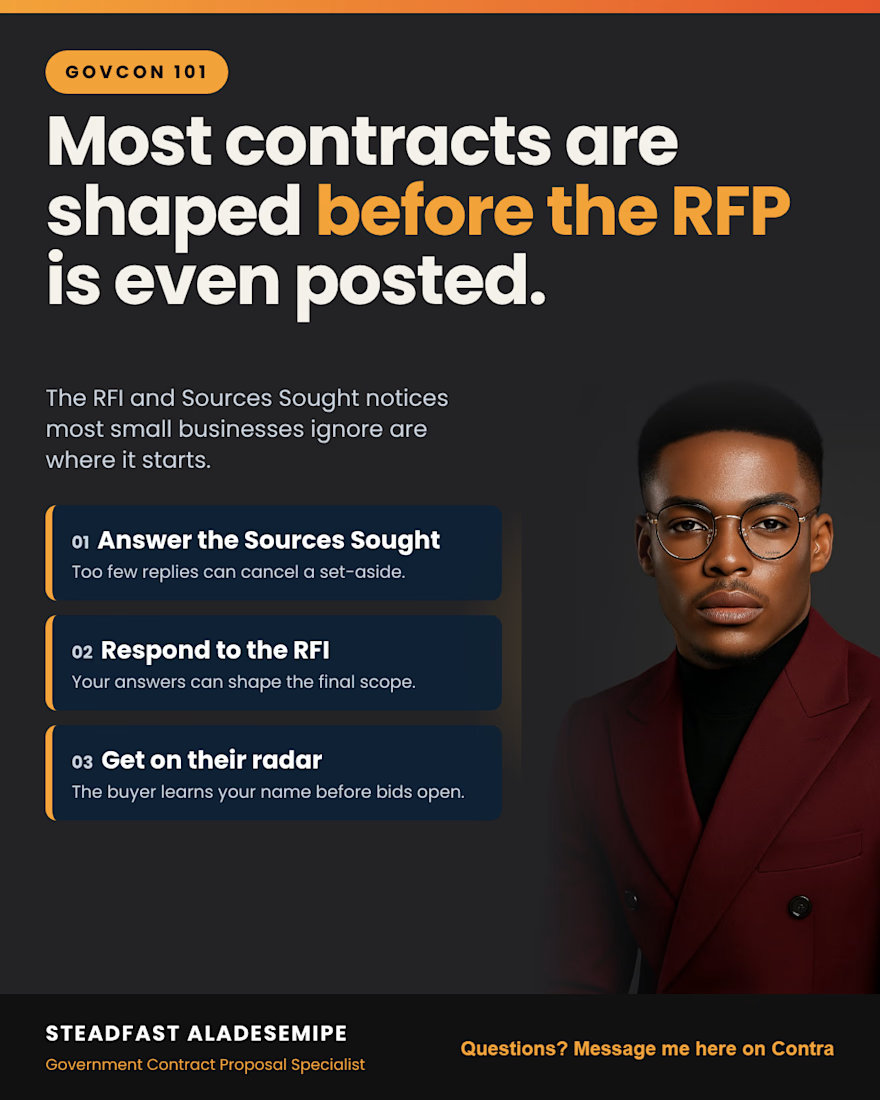
Quick GovCon lesson for small business owners 👇
Government contracts are often shaped months before the RFP is posted. Agencies publish Sources Sought and RFI notices to find out who can do the work and how the scope should look.
If you answer them:
✅ You help keep the contract set aside for small businesses
✅ You can influence the scope and requirements
✅ The contracting officer knows your name before bidding opens
A good response is 2 to 5 pages: who you are, relevant experience, capacity, NAICS codes, set-aside status and a clear answer to every question.
Most small firms skip these notices. That is your advantage.
I help businesses find these notices, write the responses and prepare the full bid when the RFP drops. Message me here if you have one open right now.

A landing page can look finished and still lose the sale.
Read your ad and the first screen of the page back to back. Does the page pick up the same promise? Can someone see the strongest evidence before they have to decide? Does the CTA tell them what happens after the click?
I start a campaign build with those three questions. They shape the copy hierarchy, the form, and the one event worth tracking.


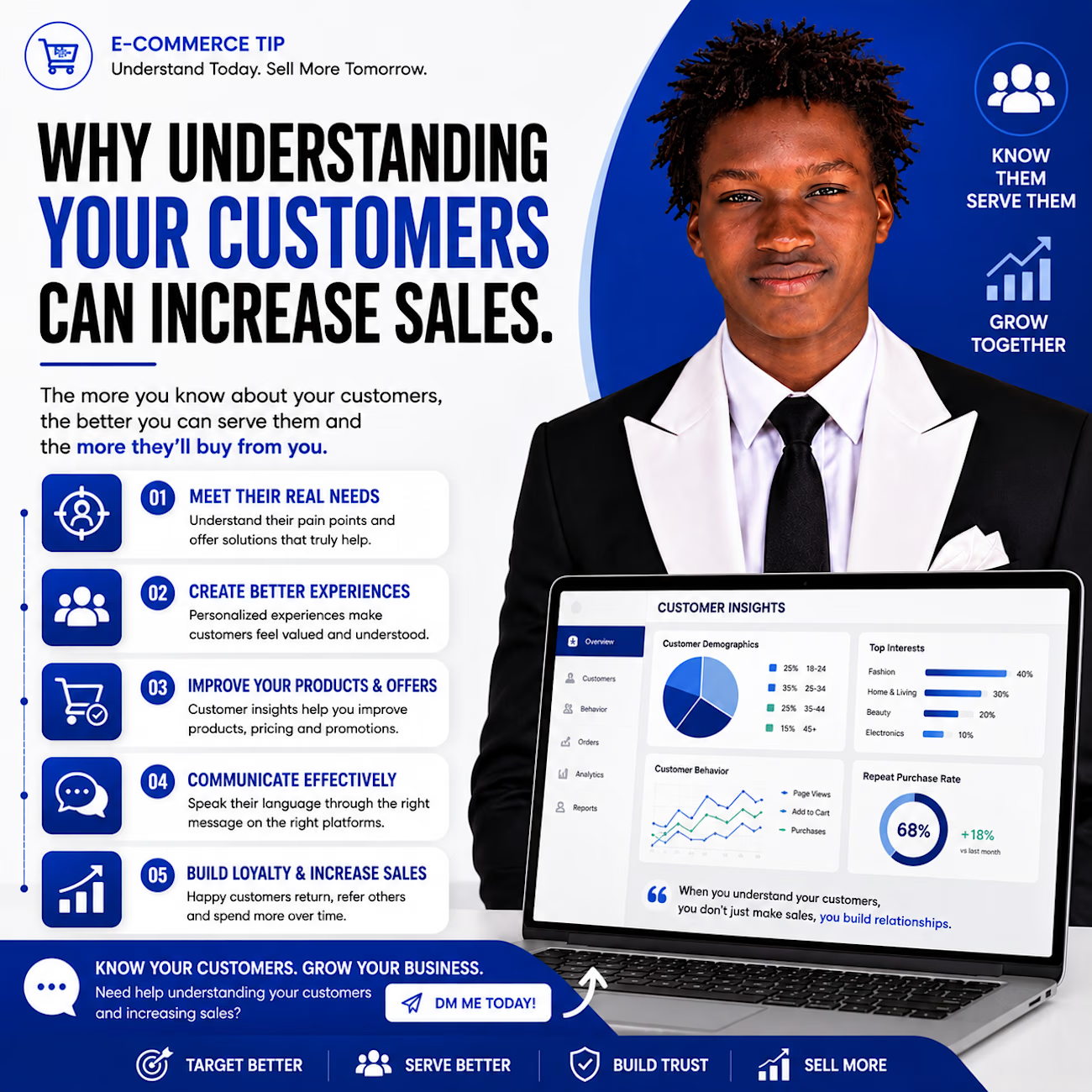
💡 Want to increase your online store sales? Start by understanding your customers!
The more you understand your customers, the better you can serve them.
Here are 5 reasons why customer understanding matters:
1️⃣ Identify their real needs and problems.
2️⃣ Create better shopping experiences.
3️⃣ Improve your products and offers.
4️⃣ Communicate with the right message.
5️⃣ Build customer loyalty and encourage repeat purchases.
Remember, successful businesses don't just sell products. They understand the people buying them.
📩 Need help improving your online store? Send me a DM. Let's grow your business together!
#EcommerceExpert #ShopifyStore #CustomerExperience #OnlineBusiness #DigitalMarketing