The network for creativity
Join 1.25M professional creatives like you
Connect with clients, get discovered, and run your business 100% commission-free
Creatives on Contra have earned over $150M and we are just getting started
Back to feedPost

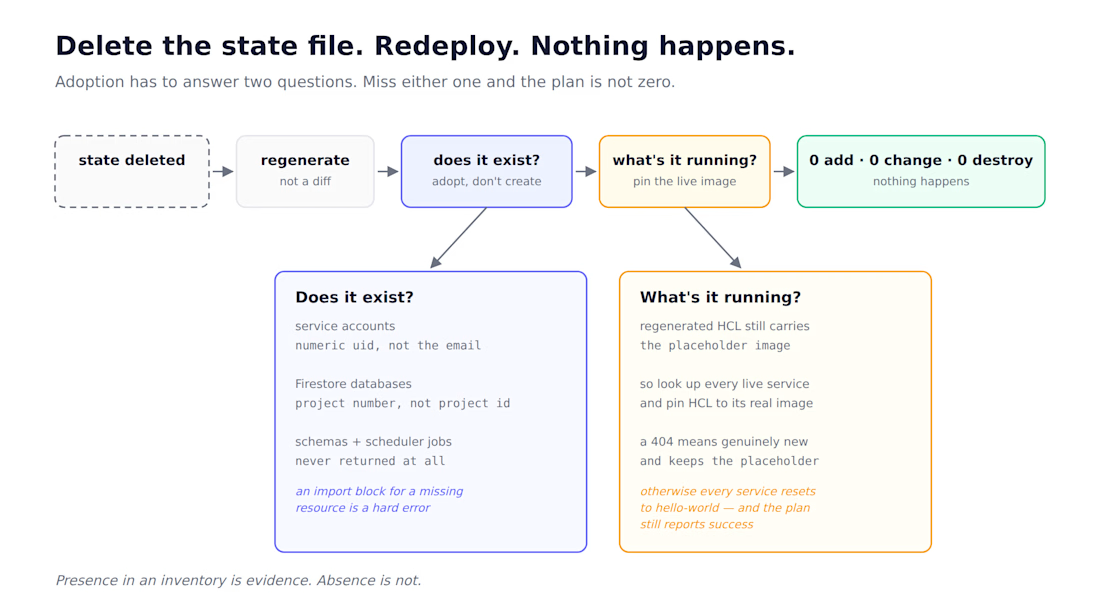
Delete the Terraform state file. Redeploy. Nothing happens.
That's the acceptance test: 0 to add, 0 to change, 0 to destroy. It's the only one I trust here, because it exercises every path at once.
We generate Terraform into customer's own GCP projects, so the starting state is never empty. Rather than create, the generator emits import blocks and adopts what is already there.
But an import block for a resource that doesn't exist is a hard error, so something has to answer "does this exist?" first. That answer is one Cloud Asset Inventory scan, and three times the inventory and Terraform disagreed about what a resource is even called: service accounts by numeric uid rather than email, Firestore by project number rather than project id, and Pub/Sub schemas and Scheduler jobs never returned at all.
Absence from an inventory looks exactly like absence from the cloud. That one cost the most.
Existence isn't enough either. A clean plan would have put a whole tenant on hello-world, because regenerated HCL still carries the placeholder image. Adoption has to ask what each service is actually running, and pin to that.
What's your acceptance test for losing state?


The network for creativity
Join 1.25M professional creatives like you
Connect with clients, get discovered, and run your business 100% commission-free
Creatives on Contra have earned over $150M and we are just getting started

Challenges
View all


Related posts

Been building a medical assistant for a client, where you can ask a question and get answers from sources like MedlinePlus, StatPearls, and FDA drug labels, with citations you can check yourself.
This is the empty state. Added a few suggested questions so you have somewhere to start instead of staring at a blank box.
How does the UI feel for a medical product, too sparse, or does the simplicity work?


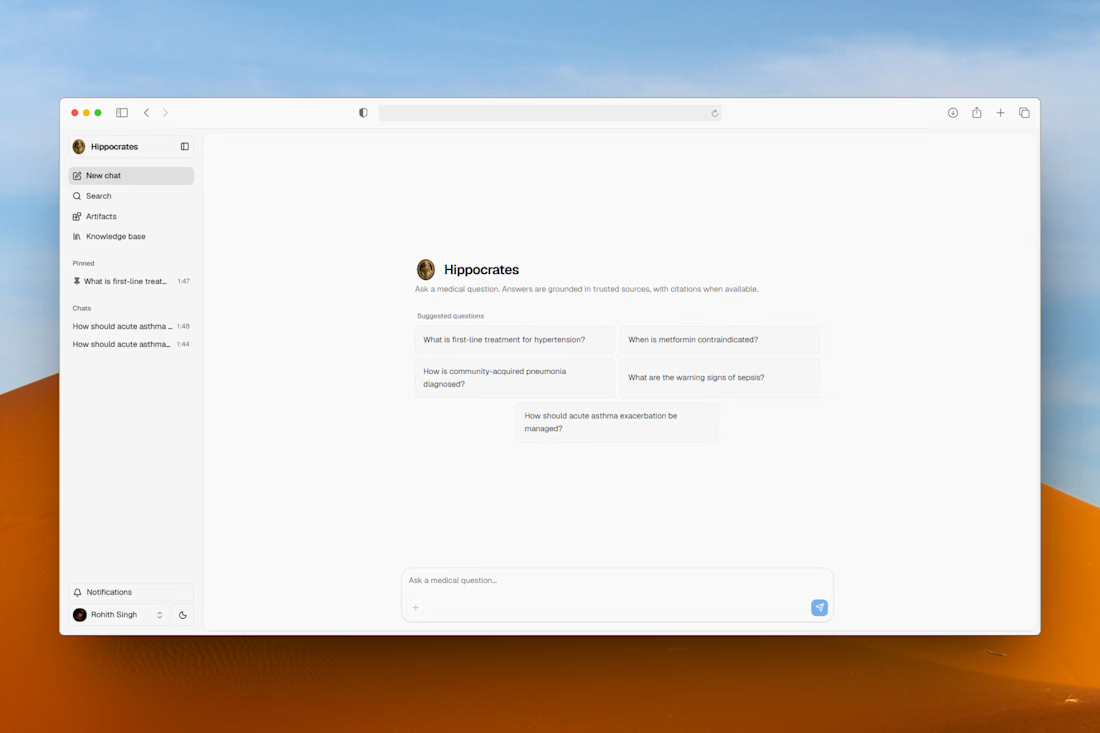

The empty state doesn't wait for a blank query box - it seeds real suggested questions so the first interaction is answering, not figuring out what to ask.

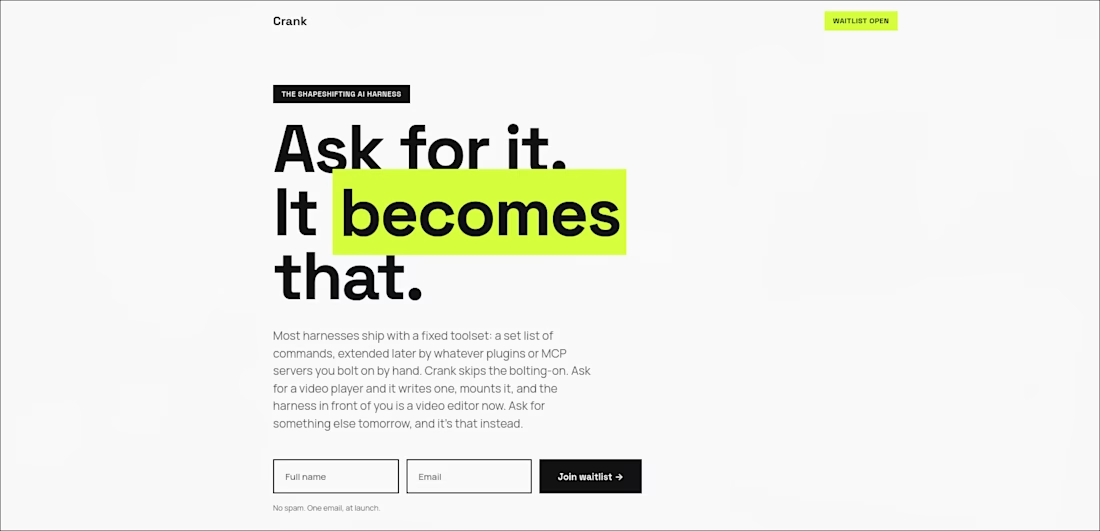
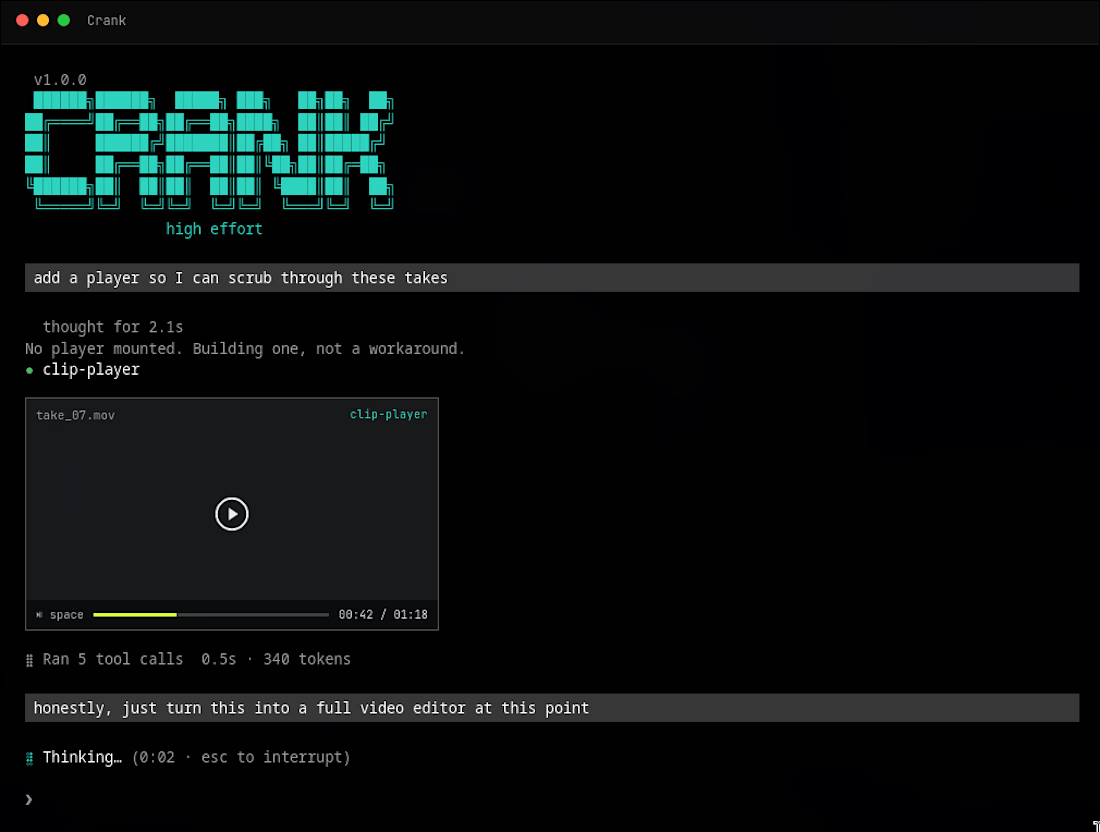
Just deployed a waitlist for my upcoming product Crank. It's what I like to claim as the ultimate developer tool. Well not just for devs ofcourse.
Imagine an AI Harness that can reshape itself to your needs!
Are you a video editor? Are you a frontend dev? Maybe you're a trader? or do you you just want an AI harness to run as your server and autofix issues when an error occurs?
And if that doesnt sell you, it uses 64% less tokens than other harnesses, generates clean uncluttered code. its coding strictly forbids cutting corners or generating any slop.
Join the Waitlist HERE




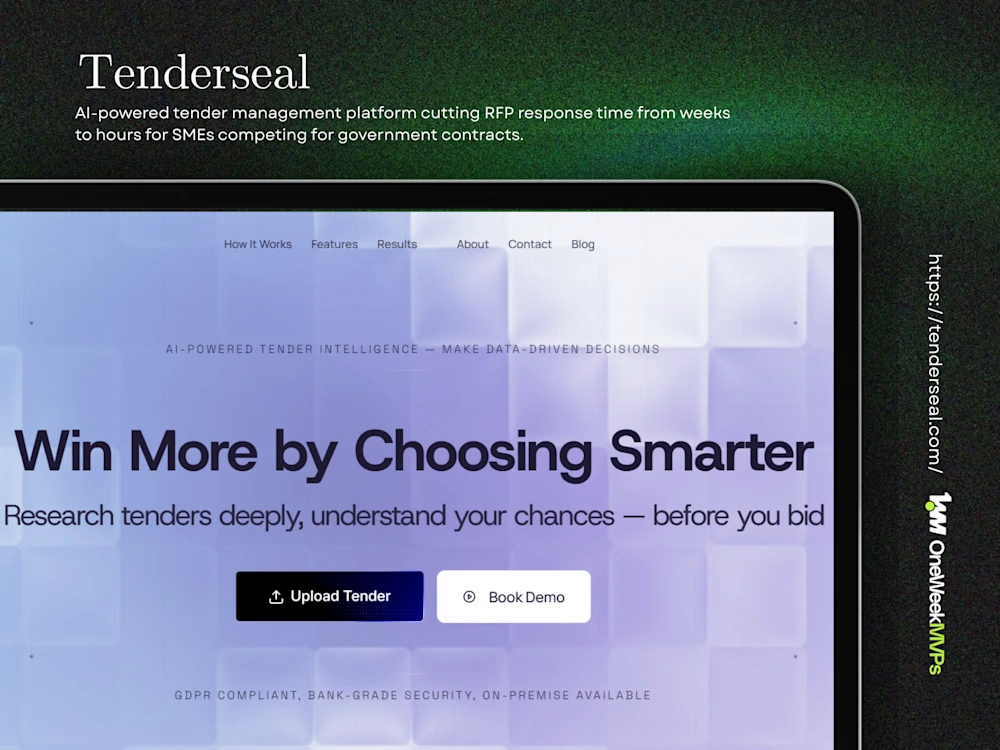
AI Agent Developer work is most useful when context survives the handoff. On Tenderseal, I structured the flow around reading source material, asking focused questions, and drafting from that context. The product has supported 15+ European companies, while the workflow stays traceable back to the material. I build real integrations with approval points and read-back rather than hiding the hard step behind a chat box. Message me if a document workflow is losing context between people and systems.