The network for creativity
Join 1.25M professional creatives like you
Connect with clients, get discovered, and run your business 100% commission-free
Creatives on Contra have earned over $150M and we are just getting started
Back to feedPost

Creating a Fintech App with Contra: How to Find the Right Talent and Ship with Confidence
Building a fintech app means building trust. Users hand over their money, their identity documents, and their financial history, so every design choice, line of code, and compliance decision matters. That's why most founders in this space don't just need "a developer." They need a small, capable team that understands secure, regulated products.
For many founders, Contra is a practical way to assemble that team. Here's how to plan and launch a fintech app using the platform, from first idea to first release.
Start with a clear scope
Before you post a project or message a freelancer, get specific about what you're building. A vague brief attracts vague proposals. Write down:
The core problem: Are you building a digital wallet, a lending platform, a budgeting tool, or a payments product?
Your users: Consumers, small businesses, or both?
Must-have features: Onboarding, identity verification, payments, dashboards, notifications.
Regulatory context: The markets you'll operate in and any licensing or partner requirements.
Constraints: Budget, timeline, and technology preferences.
Even a one-page brief helps you compare candidates fairly and speeds up every conversation that follows.
Decide which roles you actually need
A fintech MVP rarely needs a large team. Most early-stage products can start with a few focused specialists:
Product designer: Maps user flows and designs interfaces that make financial tasks feel simple and safe.
Mobile or web developer: Builds the front end in your chosen stack.
Backend engineer: Handles transactions, integrations, and data architecture.
QA and security specialist: Tests workflows and checks for vulnerabilities before launch.
Technical writer or content designer: Keeps disclosures, error messages, and help content clear.
You may not need all of these on day one. Starting lean and adding specialists as the product matures keeps costs manageable.
Find talent on Contra
Contra gives clients a couple of ways to find people. You can post an opportunity describing your project and let independents come to you, or you can browse the Discover feed and filter by category, role, or tools to find people whose portfolios match your needs.
When reviewing profiles for fintech work, look beyond the headline skills:
Relevant portfolio projects: Payments, banking, lending, or other finance-adjacent work is a strong signal.
Evidence of secure engineering: Ask how they've handled authentication, data protection, and sensitive user information.
Communication quality: Fintech projects involve many decisions, and clear communication prevents expensive misunderstandings.
Recommendations and past client feedback: These help you judge reliability beyond the portfolio.
Shortlist a few candidates, share your project brief, and ask each one how they'd approach your specific problem. Their questions often reveal as much as their answers.
Structure the work in phases
Fintech projects go smoothly when they're broken into stages with clear deliverables. A simple structure looks like this:
Discovery: Refine requirements, map user journeys, and identify compliance needs.
Design: Produce wireframes and prototypes, then test them with real users.
Build: Develop core features in short cycles with regular demos.
Testing and security review: Verify functionality, performance, and protections.
Launch and iterate: Release to a limited audience, gather feedback, and improve.
Each phase can have its own scope, timeline, and payment milestone. That keeps expectations aligned and lets you adjust course without derailing the whole project.
Use contracts and communication tools to stay organized
Contra is built around managing freelance work in one place, including contracts, payments, and communication with the people you hire. For a project with several contributors, that structure helps. You can define scope in a contract, keep conversations tied to the project, and avoid scattered files and messages across multiple tools.
If you're already working with a freelancer outside the platform, you can invite them to Contra so your project management and payments live in one place.
A few habits make this even more effective:
Write down decisions. Especially those about security, data handling, and compliance.
Hold regular check-ins. Short weekly updates catch problems early.
Agree on acceptance criteria. Define what "done" means for each deliverable.
Document as you go. Clear documentation makes it easier to onboard new contributors later.
Plan for compliance from day one
The biggest mistake in fintech app development is treating compliance as something to bolt on before launch. Requirements around identity verification, anti-money laundering, data privacy, and payment security shape your architecture and user flows from the start.
Bring compliance into the discovery phase, and involve legal or regulatory advisors early. When freelancers know the regulatory context upfront, they can design and build with it in mind instead of reworking features later. Remember that the platform helps you find and manage talent. The responsibility for meeting legal and regulatory requirements stays with you as the product owner.
Launch, learn, and keep improving
Your first release isn't the finish line. Once real users start interacting with your app, you'll see where onboarding stalls, which features get used, and where trust breaks down. Keep your core team engaged for a post-launch period to fix issues quickly, then decide whether to expand the team as the product grows.
Final thoughts
Creating a fintech app with Contra comes down to a few disciplines: a clear brief, the right specialists, phased delivery, organized collaboration, and compliance built in from the beginning. Get those right, and a small, well-chosen team can take a fintech idea from concept to a product people trust with their money.
Ready to start? Post your project on Contra, review your shortlist carefully, and begin with a focused discovery phase.
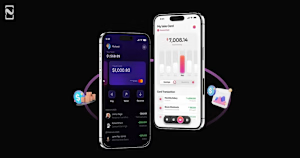
nimbleappgenie.com
Fintech App Development Company | 5.0 Rated | Nimble AppGenie
Top fintech app development company trusted by startups & enterprises. 150+ Fintech solutions delivered. AI-powered, PCI-DSS & NDA-ready. Get a free quote.
The network for creativity
Join 1.25M professional creatives like you
Connect with clients, get discovered, and run your business 100% commission-free
Creatives on Contra have earned over $150M and we are just getting started





Related posts


we need the contra mobile app! how can I help

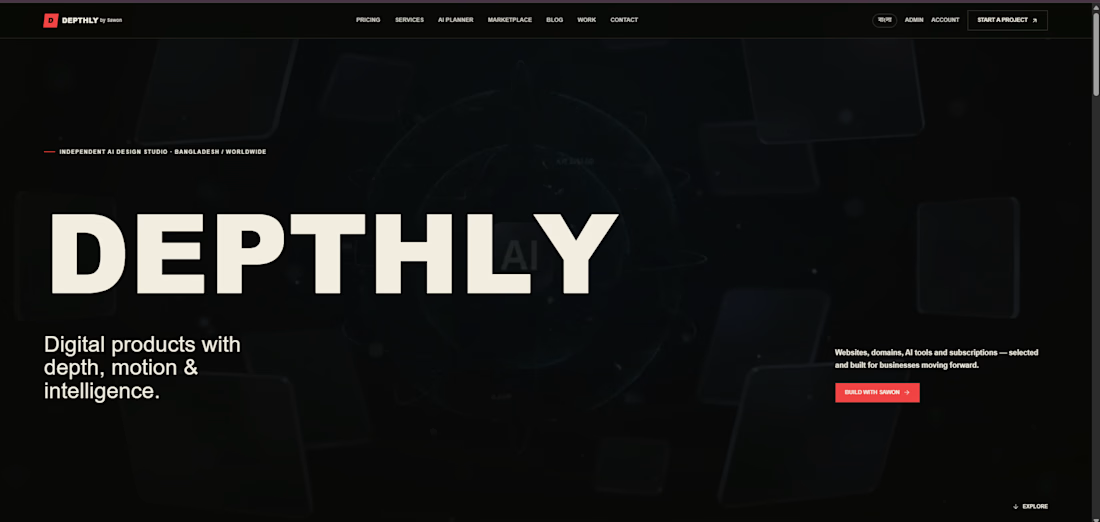
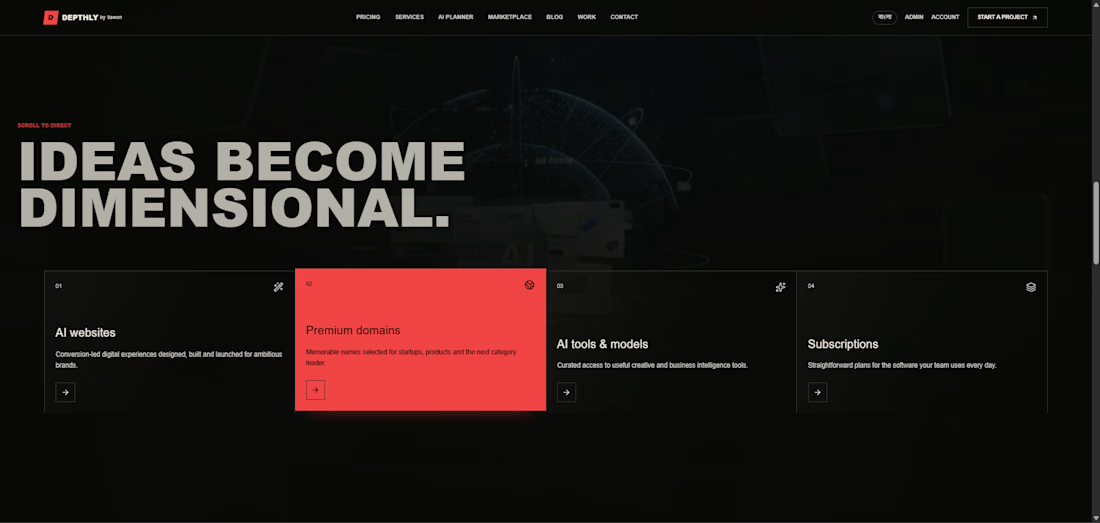
I built DEPTHLY (https://depthly.cognilist.site) — a modern, high-performance agency platform designed for small businesses, creators, and entrepreneurs to access custom web design, curated domain choices, and AI tool integrations.
Why I built it:
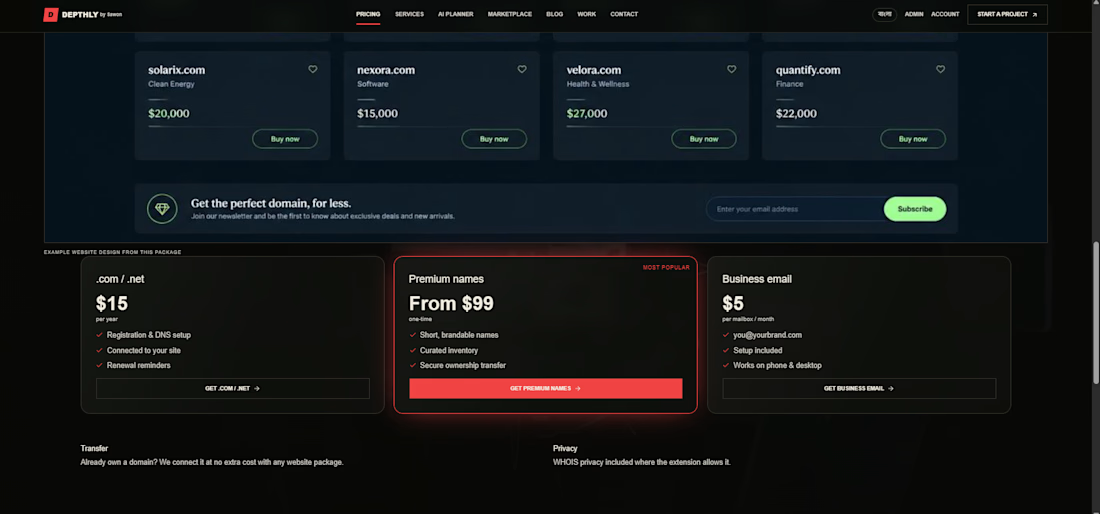
Small businesses often struggle to establish a professional digital presence quickly and affordably. DEPTHLY solves this by unifying website offer packages, interactive subscription plans (with monthly/yearly billing choices), domain discovery powered by Namecheap, and seamless UI/UX interactions into a single platform.
Key Features:
• Tiered pricing system with flexible Build + Care add-ons and subscription toggles
• Domain search and referral workflow integrated with Namecheap
• Modern visual interactions with lightweight performance-focused animations
• Clean, responsive UI tailored for high conversion and clear user guidance
Built completely with Lovable to deliver an executive-grade web experience for small business growth.
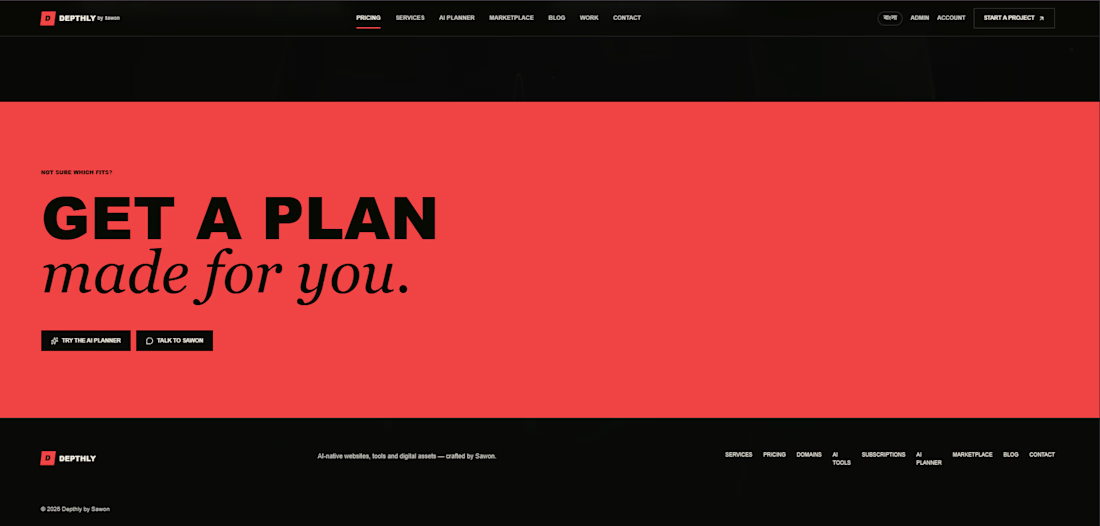


The navigation and content structure make this particularly easy to understand.