The network for creativity
Join 1.25M professional creatives like you
Connect with clients, get discovered, and run your business 100% commission-free
Creatives on Contra have earned over $150M and we are just getting started
Back to feedPost

Infrastructure as code for multi cloud



The network for creativity
Join 1.25M professional creatives like you
Connect with clients, get discovered, and run your business 100% commission-free
Creatives on Contra have earned over $150M and we are just getting started











Related posts

A booking platform is more than a calendar.
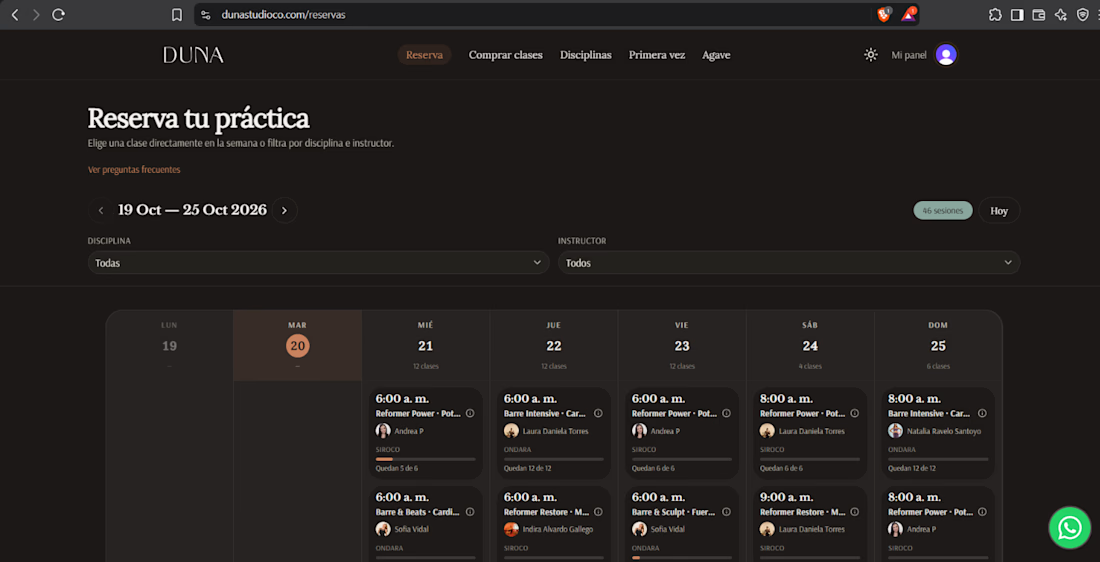
I worked on Duna, a Pilates scheduling platform with an integrated payment gateway.
What interests me about projects like this is the connection between the software and the actual business workflow: how people book, how payments fit into that process, and how the experience works for both customers and the team.
It’s the kind of development I enjoy—turning an operational need into a usable web product.
I’m open to projects involving booking systems, API integrations, and custom business applications.



The tricky part is keeping a class spot reserved while payment is still pending, then releasing it cleanly if checkout expires. Did you use a temporary booking hold for that?

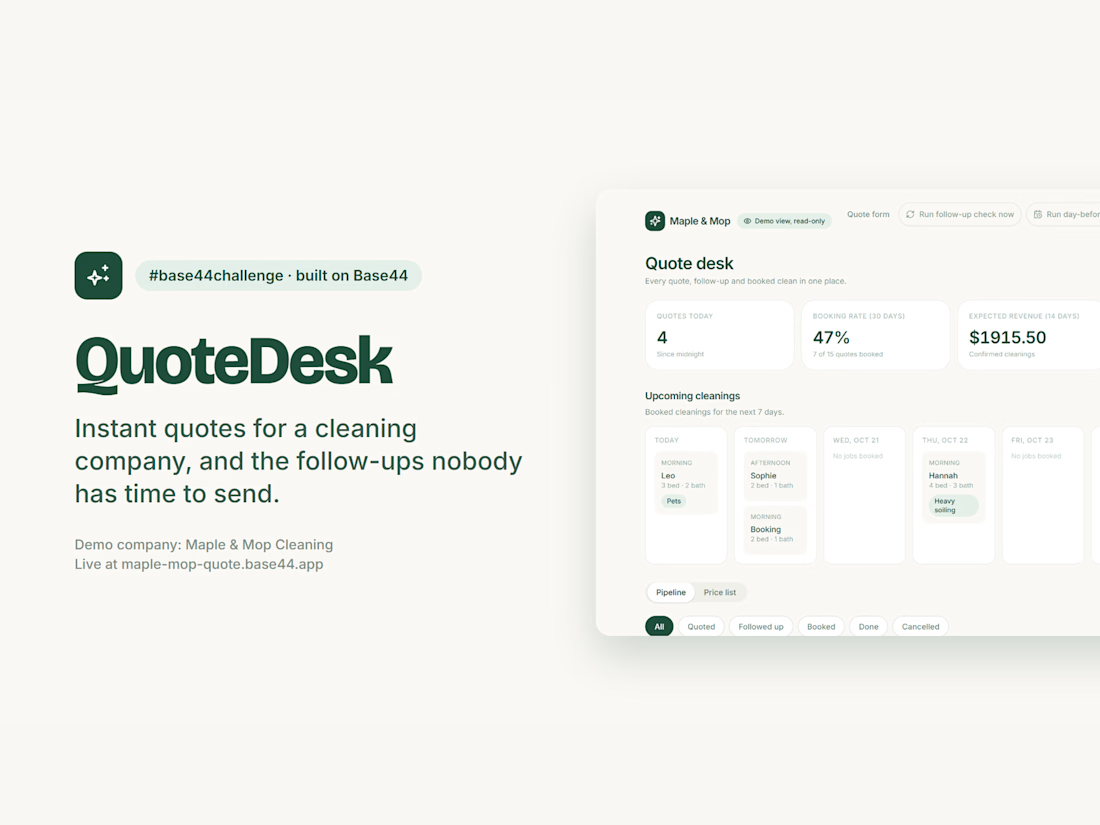
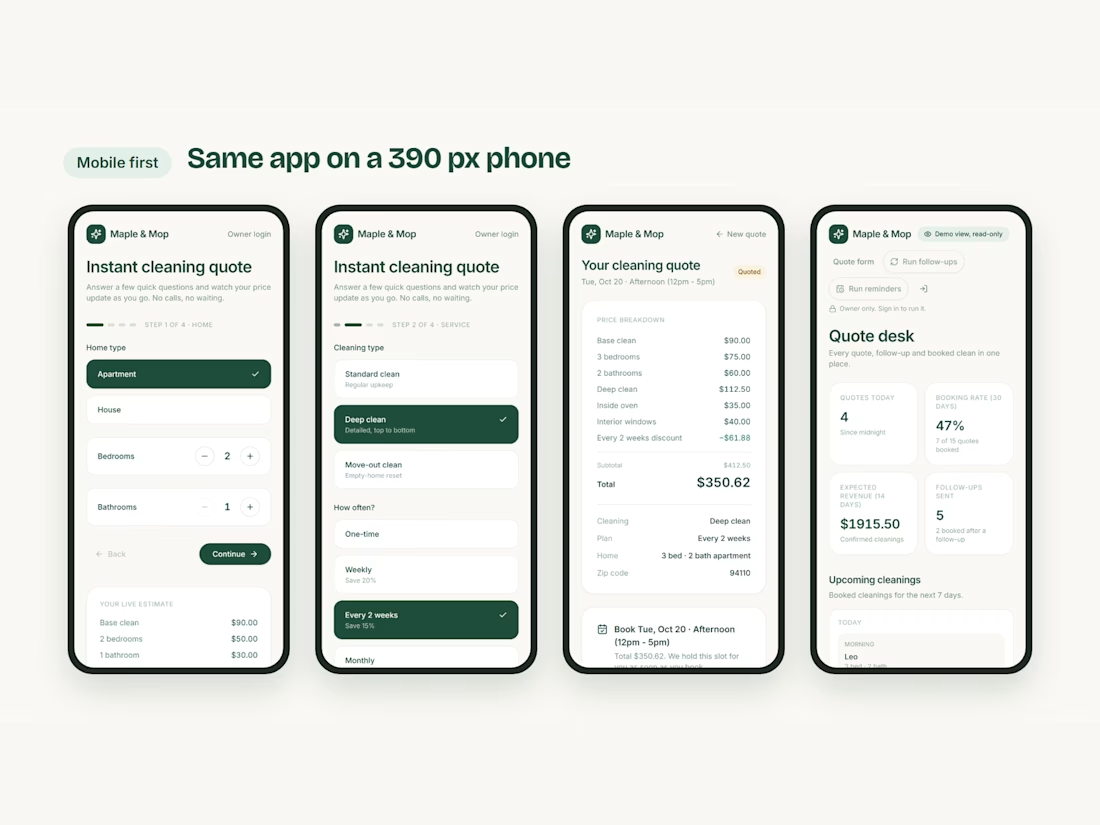
QuoteDesk: instant quotes for a cleaning company, and the follow-ups nobody has time to send.
A home cleaning business loses jobs in two places: quotes that take a day to come back, and open quotes nobody chases. QuoteDesk handles both for Maple & Mop, a demo company.
What runs on its own:
• Priced on the server. The client sees a live, itemized price; the saved total is recomputed from the owner's price list, never trusted from the browser, in integer cents.
• The quote is emailed the second it is saved, with a link to book or pick another slot.
• One follow-up, never two: an hourly job nudges quotes still open after 24 hours, stamps them so it can't fire twice, and skips anyone who booked.
• A day-before reminder for every booked cleaning, also sent once.
• AI reads the client's notes: "two cats, fourth-floor walk-up" becomes Pets and Stairs flags plus 30 extra minutes for the crew.
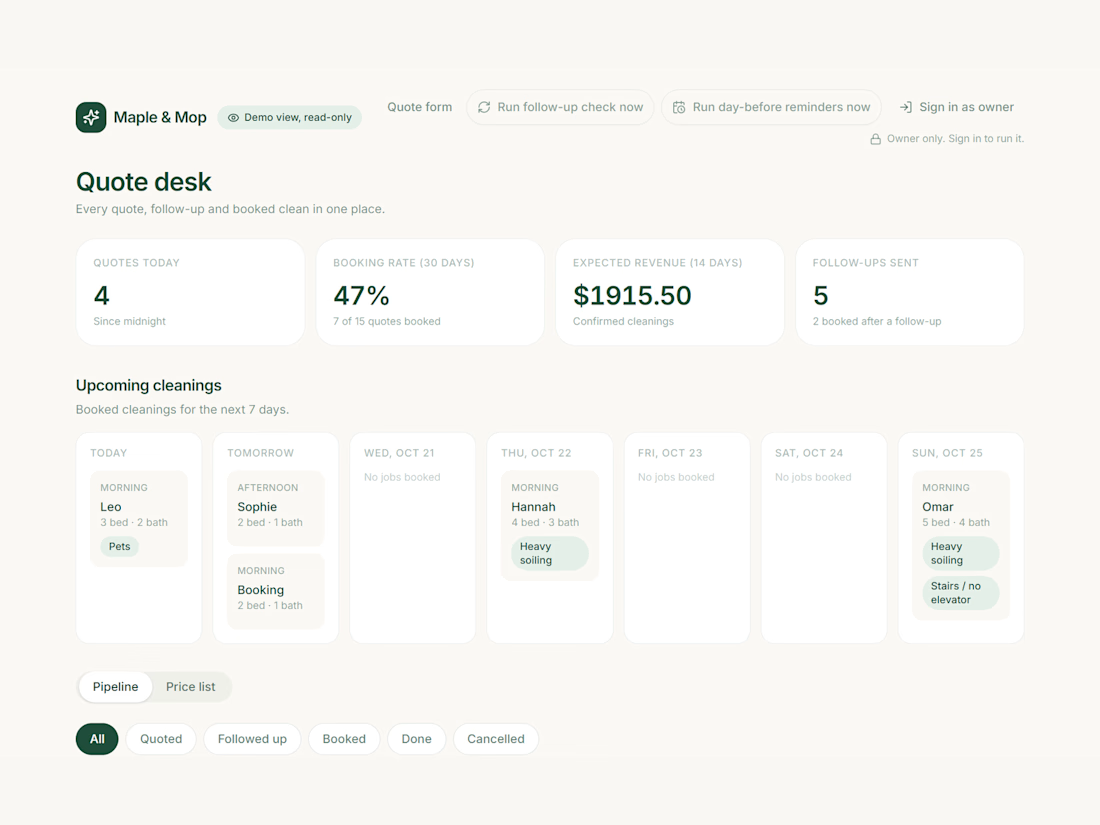
• Owner dashboard: quotes today, booking rate, expected revenue, bookings after a follow-up, a 7-day schedule and an email timeline per quote.
Owner actions require the Base44 admin login, checked on the server. Judges get a read-only demo view with masked emails: Owner login, then View the demo dashboard.



A while ago, we introduced Beew V2.0.
We redesigned the studio and introduced our Design Subscription.
But that was only the first part.
Now we're rebuilding what happens behind Beew, too.
We're building Beew Hive, our own platform for running projects, collaborating with clients, and connecting the workflows behind the studio.
Alongside it, we’re rebuilding the technical foundation of Beew:
→ a new public website
→ a structured content system
→ Beew Hive (Client portal)
→ internal workflows & automations
→ a shared design system across everything
This time, I’m going to build it in public.
Sharing the product decisions, design explorations, technical choices, mistakes, and everything we learn along the way.
Next chapter of Beew V2.0 ↓