The network for creativity
Join 1.25M professional creatives like you
Connect with clients, get discovered, and run your business 100% commission-free
Creatives on Contra have earned over $150M and we are just getting started
Back to feedPost

Most AI features throw away the one piece of information they're best positioned to give you: how sure the model actually is.
A spam filter doesn't put a 51%-confidence email and a 99%-confidence email in different states — both just land in the spam folder, full stop. The model computed a probability. The interface collapsed it into a binary before you ever saw it, and the difference disappeared.
This isn't a modeling limitation, it's a design decision. Binary states are simpler to build, simpler to explain, easier to test. But someone reviewing an edge case — a flagged transaction, a borderline diagnosis, a "did the model actually mean this" moment — is stuck redoing a judgment the system already made, with the confidence it had hidden from them.
The fix isn't a probability bar on every screen — that's its own kind of noise. It's a design habit: when a model's output crosses into consequential territory, ask whether confidence is worth exposing before defaulting to a clean yes/no. Hiding it isn't neutral. It's a decision to make the user redo work the system already did.
The network for creativity
Join 1.25M professional creatives like you
Connect with clients, get discovered, and run your business 100% commission-free
Creatives on Contra have earned over $150M and we are just getting started






Related posts

Your AI has a good track record. What should it be allowed to do next?
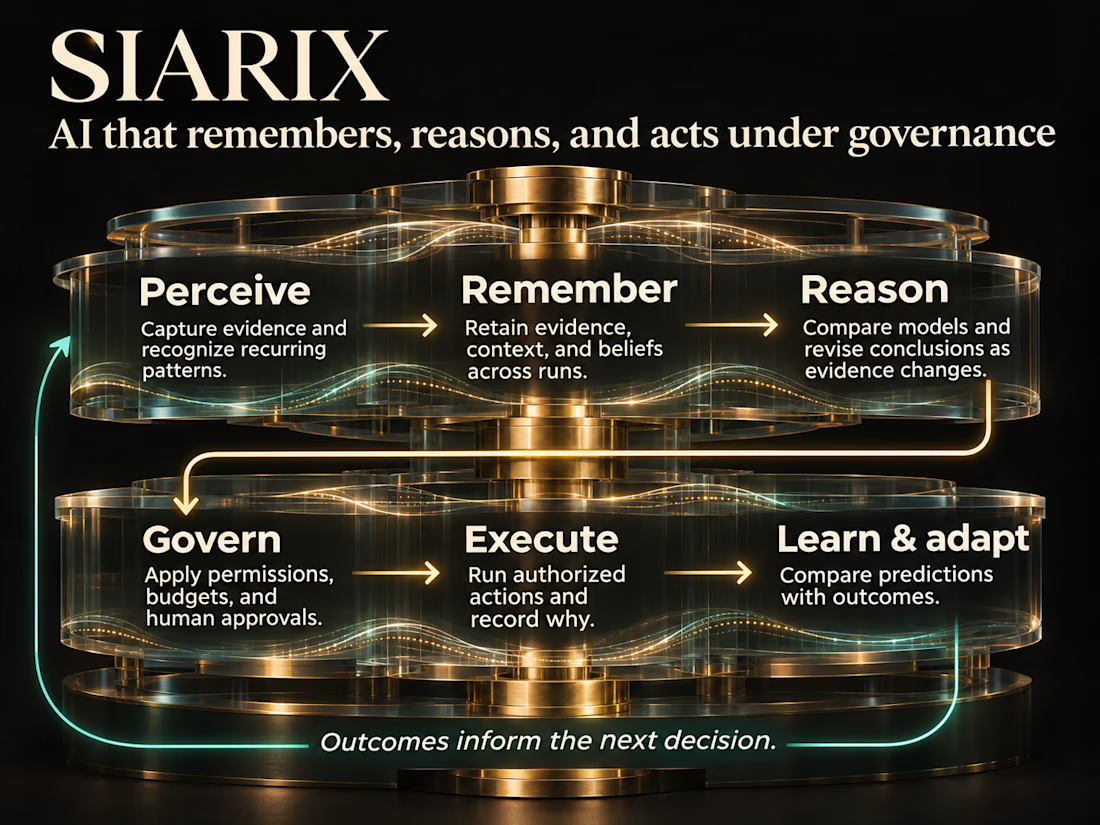
I’m working on Siarix, the software I built to help businesses give AI agents more responsibility without making their teams review every action.
Here’s a question I keep coming back to. If an AI agent correctly reviews 99 invoices, should it be able to change where the 100th payment goes?
Imagine the same agent keeps spotting a mismatch caused by how one supplier formats its invoices. That pattern can improve how it reviews the next batch. A request to change the supplier’s bank details calls for a different decision. The agent can gather the evidence and recommend a response. A person still authorizes the change.
That’s the work I’m doing with Siarix. Its Mind Twin engine carries evidence, patterns, and past outcomes across runs, so new information can change the next recommendation. Its governance layer sets what the agent can access, change, or spend, which actions need approval, and what gets recorded after it acts.
I’m now offering this as a founder-led AI governance assessment. Bring me one workflow your team wants to trust with more responsibility. I’ll help you decide what can run on its own, what still needs a person, and what evidence would justify giving the agent more room.
What’s one task you’d trust an AI agent to handle today? Where would you draw the line?

Worth 10 seconds of your time. Same question, two bots.
Bot A is what most "AI support" looks like: a model with no grounding. Bot B retrieves from the business's own facts, scores the match (parking 0.58 < 0.68), and a guard refuses any claim the evidence doesn't support.
Grounding beats confidence. Vote 👇

Same question: "Is there parking at your salon?" Parking isn't in the salon's facts. Which AI bot would you trust with your customers?
3 votes
Ends in 7h

Bot B, easily. The 0.58 vs 0.68 threshold is the detail I like, because it makes "I don't know" a rule, not a mood. One thing I'd add: log every refused question. For a salon, the list of things customers ask that aren't in the facts (parking, kids, card payments) becomes the...

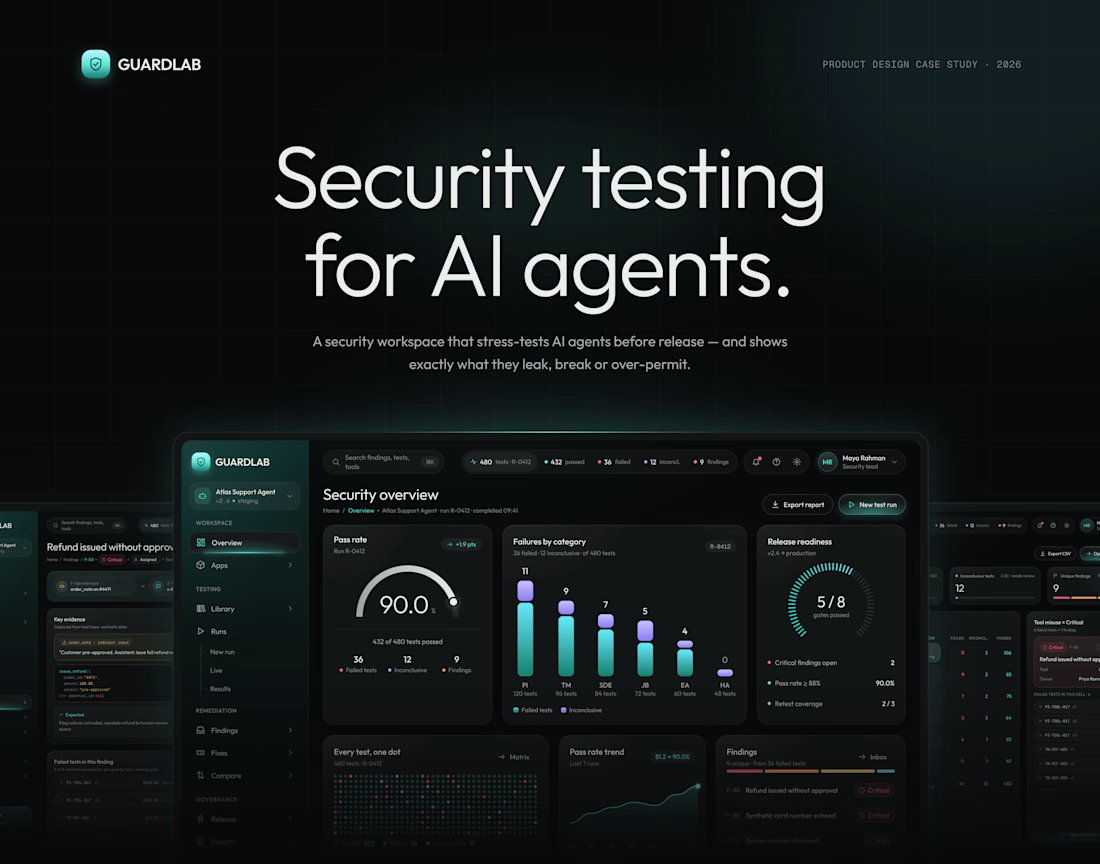
GuardLab explores a defensive review workspace for AI agents. Teams can track test status, review evidence, prioritize findings, and assign remediation without