The network for creativity
Join 1.25M professional creatives like you
Connect with clients, get discovered, and run your business 100% commission-free
Creatives on Contra have earned over $150M and we are just getting started
Back to feedPost

One of my clients came to me saying:
“Just manage my content and post regularly.”
Simple, right?
But here’s what I noticed:
They didn’t have a content problem.
They had a positioning problem.
No clear audience.
No strong message.
No reason for someone to choose them.
So instead of just posting, we fixed:
→ Who they serve
→ What problem they solve
→ What outcome they deliver
Then we built content around that.
Result?
More inbound leads.
Better conversations.
Higher-quality clients.
That’s when it clicked:
Clients don’t need more work done.
They need the right work done.
If you’re just executing tasks, you’ll always compete on price.
If you solve the real problem, you become valuable.
The network for creativity
Join 1.25M professional creatives like you
Connect with clients, get discovered, and run your business 100% commission-free
Creatives on Contra have earned over $150M and we are just getting started



Related posts


Can too much free content hurt your sales?
One of our clients had three offers on the same page: a free guide, a paid membership, and a private consultation.
All three looked equally important. Guess what? Visitors downloaded the free guide and left.
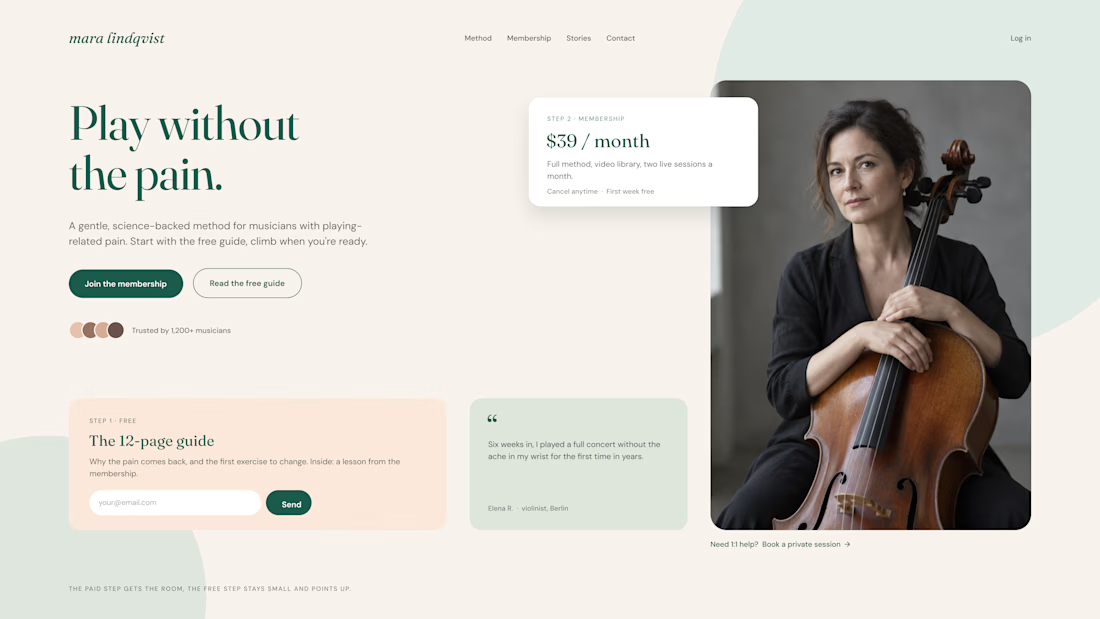
So we changed the layout:
Keep the free offer simple. A small card with a clear description and one email field.
Make the paid offer stand out. More space, a clear price, and a strong CTA.
Connect free to paid. Show how the free guide is just a first step toward the membership.
The goal isn't to remove free content. It's to make sure it leads somewhere.
Free content should open the door, not replace what's inside.
Do you offer free resources on your sales pages?

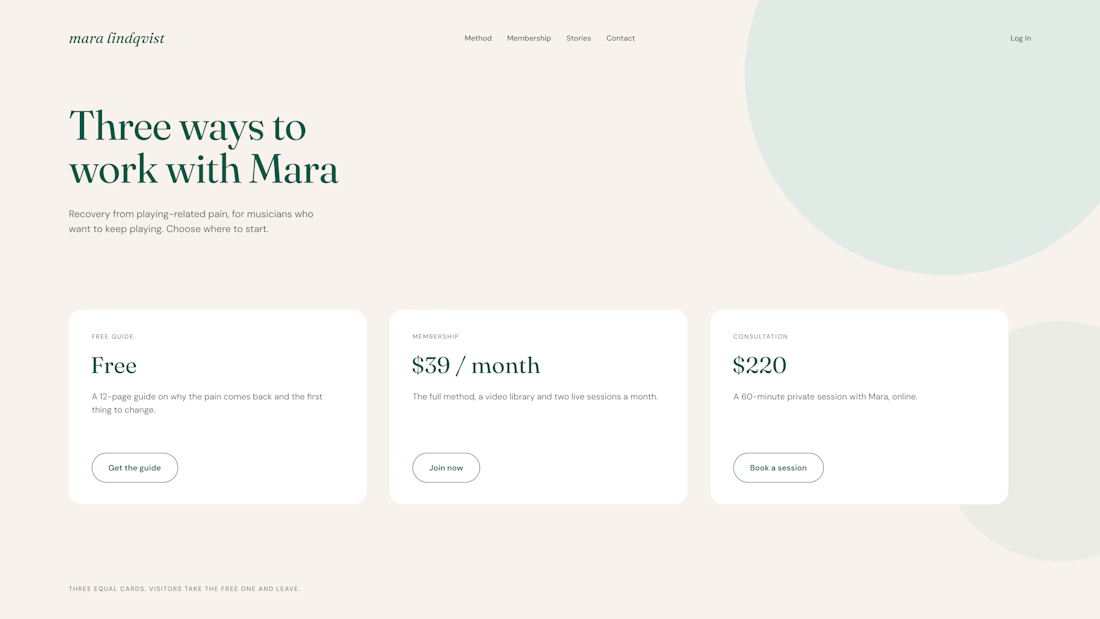

Three offers with equal weight on one page is such a common trap. Making the free guide a step toward the paid offer instead of a competitor for attention makes a lot of sense.

Thousands of searches. Almost no clients.
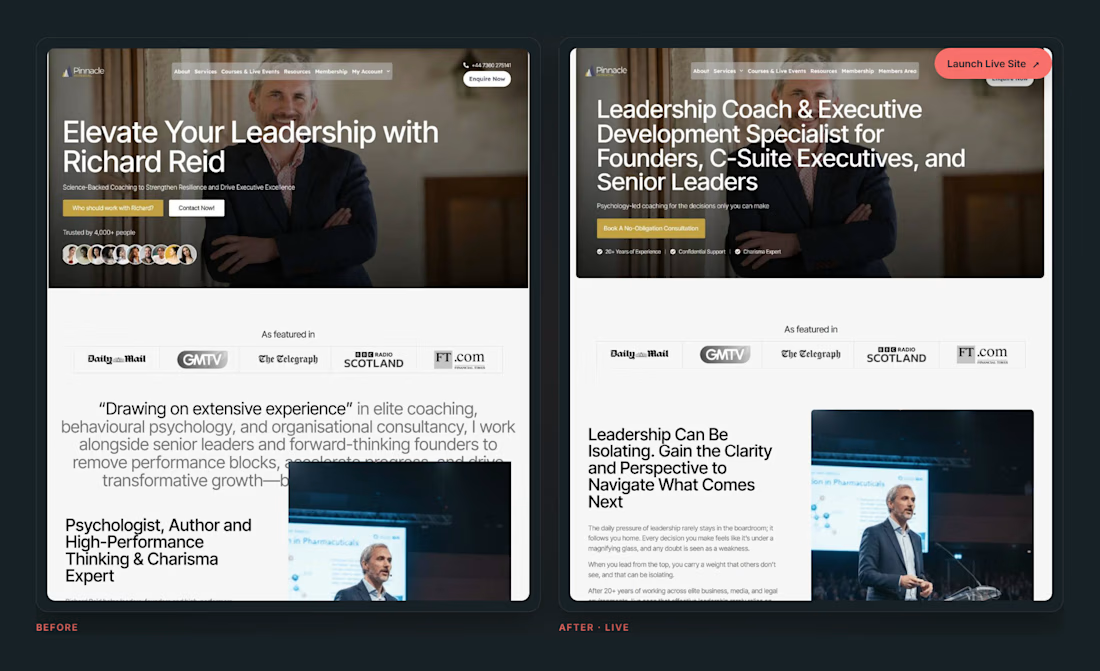
That's where Richard Reid's website was when we started working together. Richard is a psychology-led leadership coach for founders, CEOs and senior leaders, and his site was ranking. Just not for the right people.
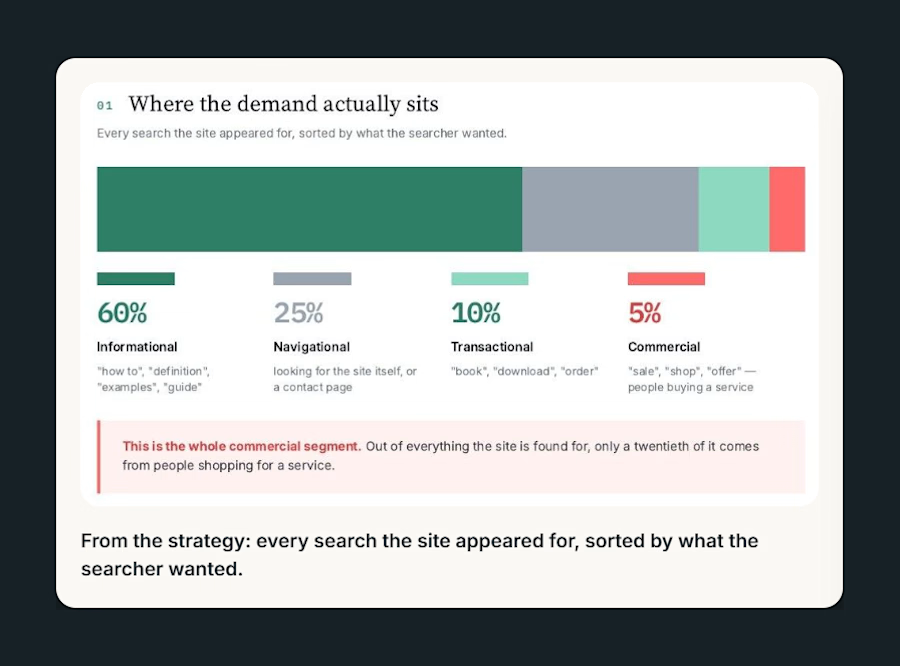
When I sorted every search the site appeared for by intent, 60% were people researching psychology topics. Only 5% were people actually shopping for a coach.
So instead of chasing more traffic, I rebuilt the strategy around that 5%:
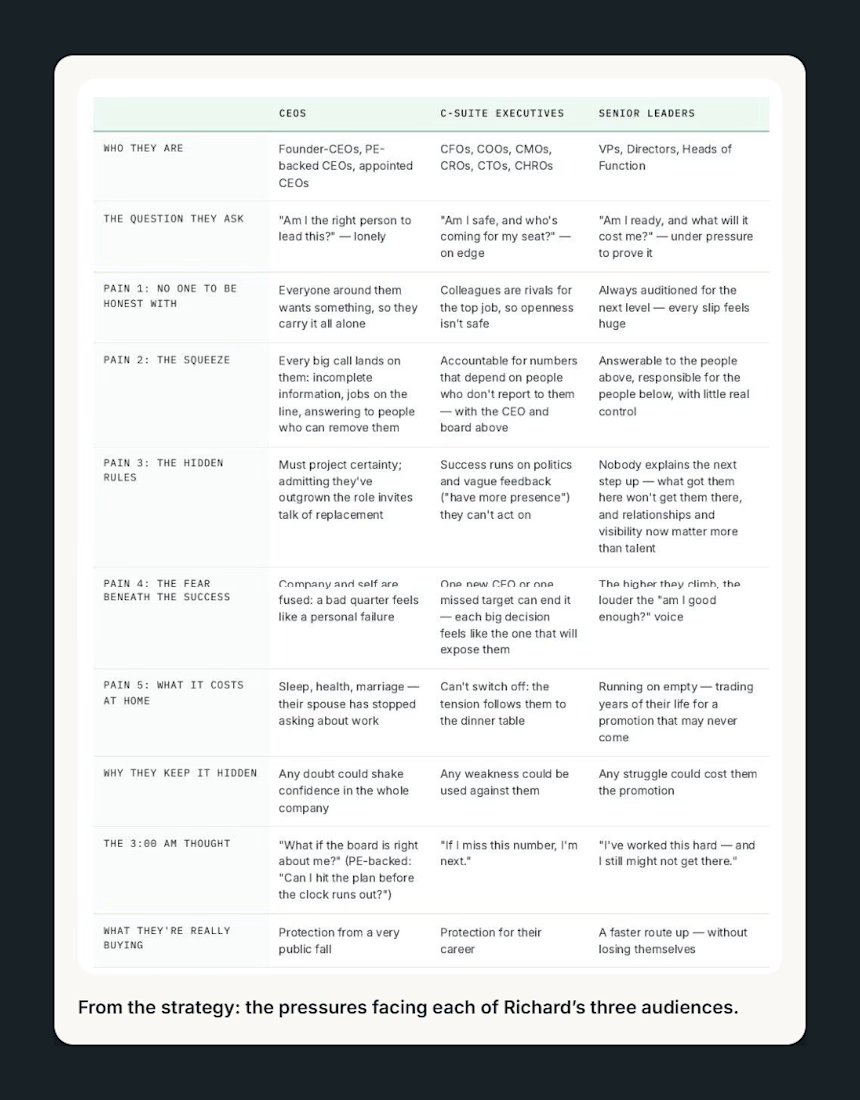
Mapped the private pressures each of his three audiences carries, from the 3am thought to what they're really buying
Separated his two sites so they stopped competing for the same searches
Restructured the service hubs
Rewrote the homepage and about page to lead with who he helps and what he solves, with one clear route to a consultation
The old homepage said "Elevate Your Leadership with Richard Reid". The new one tells a founder or C-suite leader, in the first line, that this is for them.
Both pages are live. Full case study on my profile.
If your site gets traffic but not enquiries, the fix usually isn't more traffic. It's knowing which visitors matter and writing for them.

So cool! It’s a great reminder that more traffic doesn’t always mean better results. Understanding search intent and speaking directly to the right audience really can make all the difference. I especially like how the strategy focused on turning the existing traffic into...

Most teams don't need more AI tools. They need fewer, used well.
This week I watched a small team pay for four AI subscriptions. They were using one of them, and only for first drafts.
We cut it down to two. We set them up to sound like the brand, and we wrote a one-page guide on what to check before anything goes out. That saved them hours a week and a few hundred dollars a month.
That's what practical AI looks like for most companies (who have not built a custom agentic system) :
→ Start with where your team actually loses time
→ Pick the one or two tools that fix that
→ Set them up in your voice
→ A person always reviews before it reaches a customer.