The network for creativity
Join 1.25M professional creatives like you
Connect with clients, get discovered, and run your business 100% commission-free
Creatives on Contra have earned over $150M and we are just getting started
Back to feedPost

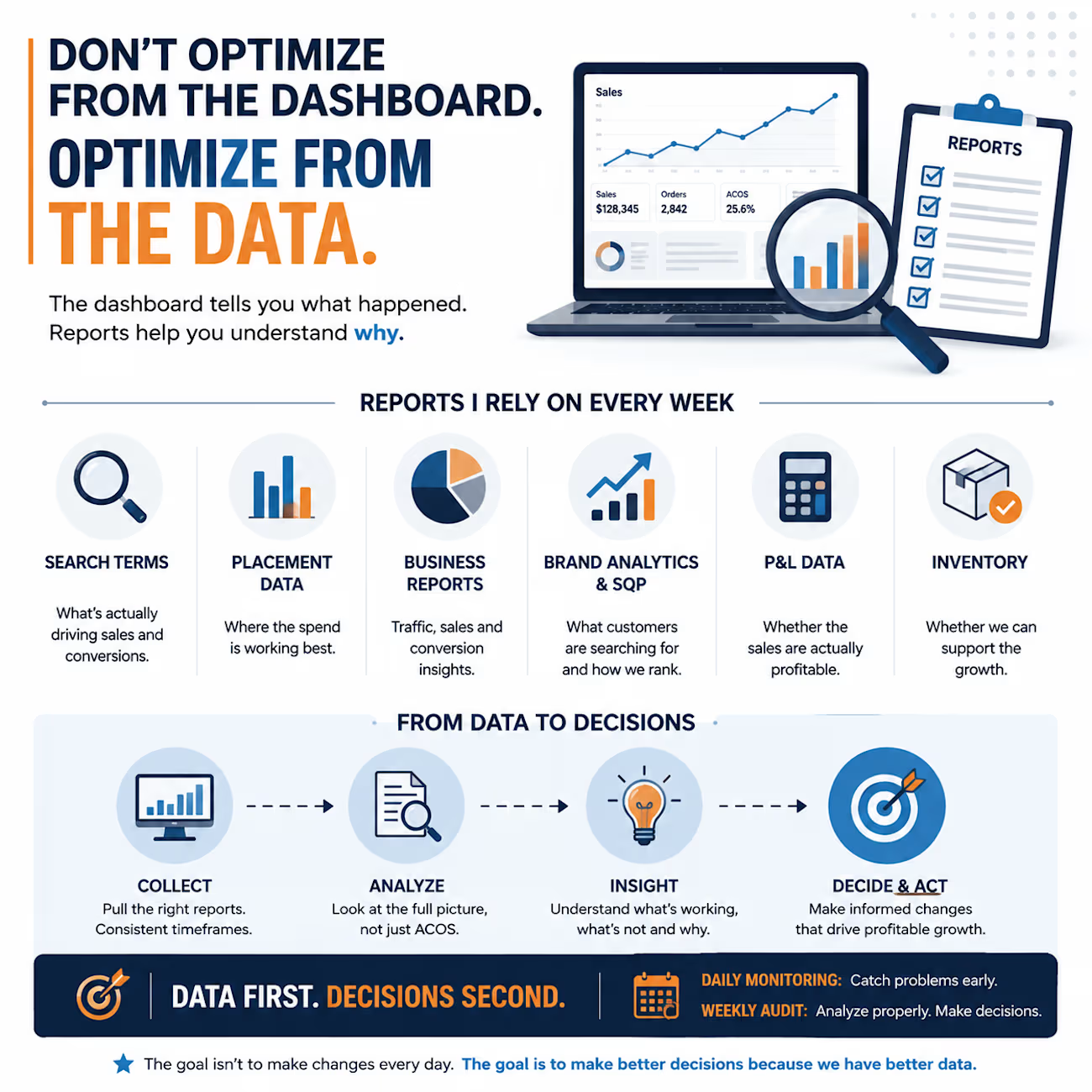
One thing I've changed in the way I manage Amazon PPC:
I don't want to optimize from the dashboard alone.
The dashboard tells you what happened.
The reports help you understand why.
Every week, I like to look at:
• Search terms → what's actually driving sales
• Placement data → where the spend is working
• Business Reports → traffic, sales and conversion
• Brand Analytics / SQP → what customers are searching for
• P&L data → whether the sales are actually profitable
• Inventory → whether we can support the growth
And I don't look at these in isolation.
For example, a keyword with high ACOS isn't automatically a bad keyword.
I want to see its conversion, CPC, placement, sales contribution, cross-campaign performance and profitability before deciding what to do.
That's also why I separate daily monitoring from the weekly audit.
Daily → catch problems early.
Weekly → analyze properly and make decisions.
The goal isn't to make changes every day.
The goal is to make better decisions because we have better data.
Data first. Decisions second.
#Amazon #AmazonPPC #AmazonFBA #Ecommerce #AmazonSeller

The network for creativity
Join 1.25M professional creatives like you
Connect with clients, get discovered, and run your business 100% commission-free
Creatives on Contra have earned over $150M and we are just getting started





Related posts

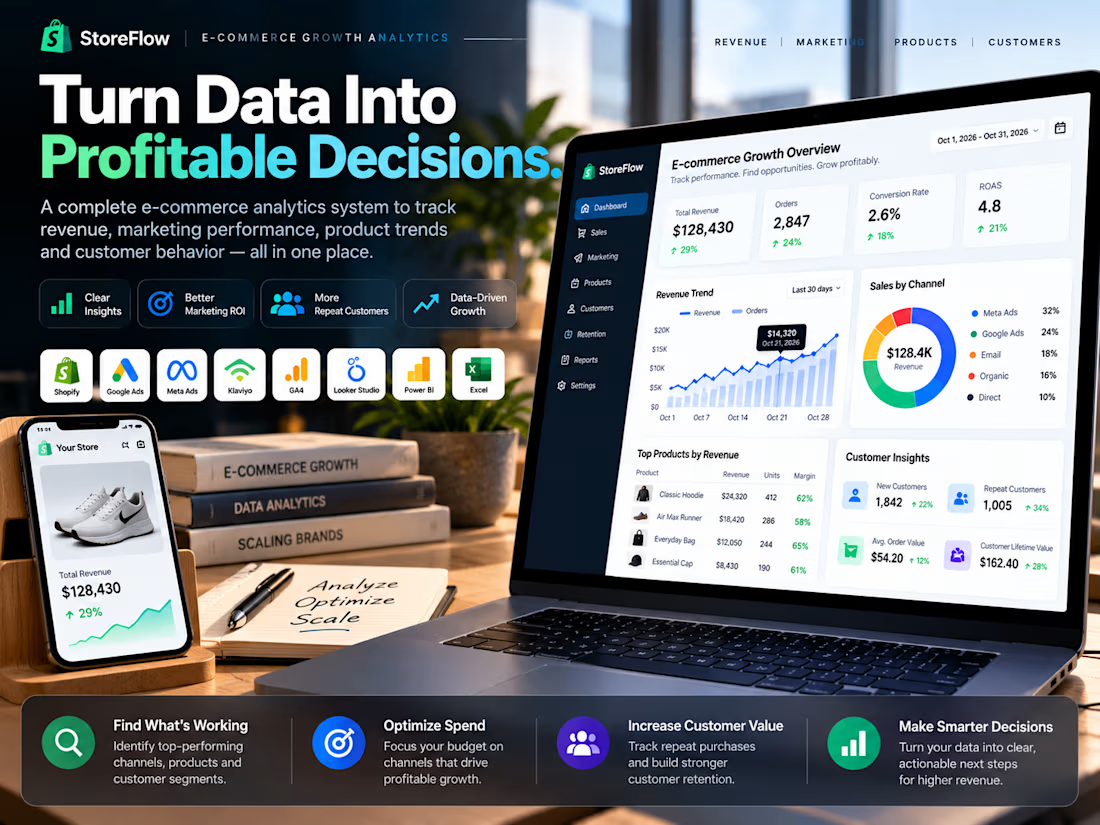
See exactly what’s driving revenue, where growth is leaking, and which products, channels, and customers deserve more investment.
I developed an e-commerce growth intelligence system around one question:
Where should the business invest next?
Most stores already have plenty of data. The harder problem is understanding what that data means for revenue, marketing spend, products, and customer growth.
So instead of building another dashboard full of charts, I’m structuring the system around decisions.
It brings together signals such as revenue, ROAS, CAC, conversion, product performance, repeat purchases, and retention to identify things like:
which channels deserve more budget, where acquisition is becoming inefficient, which products attract traffic but fail to convert, and where repeat customers are creating stronger value.
The goal isn’t just to answer:
“What happened?”
It’s to answer:
“What should we do next?”
Because the most useful analytics system isn’t the one with the most charts.
It’s the one that makes the next business decision clearer.
Tags: E-Commerce · Marketing Analytics · Data Analytics · Power BI · E-commerce Management
Marketing AnalyticsData AnalysisecommerceeCommerce ManagementMicrosoft ExcelMicrosoft Power BIShopify



Exactly. Analytics becomes much more valuable when it helps businesses make smarter decisions, not just track numbers.

Most SaaS and subscription e-commerce founders waste hours every week stitching together metrics from Stripe, Google Ads, and custom spreadsheets.
I build live, fully interactive BI & Client-Reporting Dashboards designed specifically for SaaS and subscription businesses.
What this dashboard delivers:
Stripe & Revenue Metrics: Real-time MRR, ARR, Net Revenue, and Tier Breakdown.
Growth & Health Stats: Automated Churn Rate and LTV:CAC ratio tracking.
Plain-English Insights: "Ask Your Data" AI integration for instant reporting.
Custom Web-Based UI: Clean, fast, and white-labeled for your exact brand.
📌 Live Demo Available: Check out our interactive template at add-webworks.vercel.app.
Need a seamless reporting setup wired directly to your data source? Send a direct message or request a custom scope. Ready to deliver in 24–48 hours!


Make your Amazon listing work harder. 🚀
A+ Content designed with strong visuals, clear messaging, and conversion-focused layouts that turn product details into a better shopping experience.


