The network for creativity
Join 1.25M professional creatives like you
Connect with clients, get discovered, and run your business 100% commission-free
Creatives on Contra have earned over $150M and we are just getting started
Back to feedPost

The Risk of "Vibe Coding": Why AI Generated Apps Are a Legal Liability
We are seeing a massive shift toward "vibe coding". Developers prompt an AI to build an application and push it straight to production without reviewing the underlying logic. It is incredibly fast. But from a vulnerability research perspective, it creates a massive attack surface.
The code might function correctly on the surface, but it is often packed with hidden security flaws. AI models frequently generate code that contains OWASP Top 10 vulnerabilities and fails basic security checks.
Here is what is making its way into live environments right now:
Missing Access Controls: AI generated authentication logic often has insecure defaults. This includes setting up database connections that completely lack row-level security.
Hardcoded Secrets: Because these models train on public repositories, they regularly output hardcoded API keys and credentials. This gives attackers an easy path to cloud account takeovers.
Logic Flaws: Missing input validation or weak cryptography might look fine at a quick glance. When combined, they give attackers a straight path to a working exploit.
The GDPR Problem
This goes beyond technical debt and straight into legal liability. Deploying unaudited AI code that handles personal data is a direct threat to user privacy. We are seeing real-world cases of AI coded applications leaking sensitive information.
Under GDPR, shipping systems with weak authentication or bad configurations exposes a company to massive fines. Regulators do not care if an AI wrote the backend. The liability falls entirely on the company deploying the software. Skipping a manual security audit can easily result in heavy compliance penalties and a ruined reputation.
The Need for Manual Review
Automated scanners will not fix this problem. They miss the complex business logic flaws that AI naturally introduces. Finding these vulnerabilities requires a manual, adversarial approach before the application reaches the public. Security must be an active part of the pipeline, not an afterthought left to a language model.

The network for creativity
Join 1.25M professional creatives like you
Connect with clients, get discovered, and run your business 100% commission-free
Creatives on Contra have earned over $150M and we are just getting started


Trending
retrofuturism
Share your favorite designs from the past exploring the distant future. Or your own take on the aesthetic 🚀
halftone
Dots. Texture. Grain. Let's see your designs using the halftone technique.

Midjourney
Creatives are showing off what they're making with Midjourney.
colorgrade
Video editors sound off: How do you enhance the mood of your video in color grading?
Related posts

AI has made building complex platforms so much faster these days. Recently built an AI powered Healthcare Platform with a full web dashboard, handling patient management, scheduling, and admin tasks, all in a fraction of the time it would've taken a year ago.
It's wild how much ground you can cover now when you combine solid architecture with the right AI tools. Excited to keep building in this space.
#HealthTech #AI #WebDevelopment #FullStackDevelopment


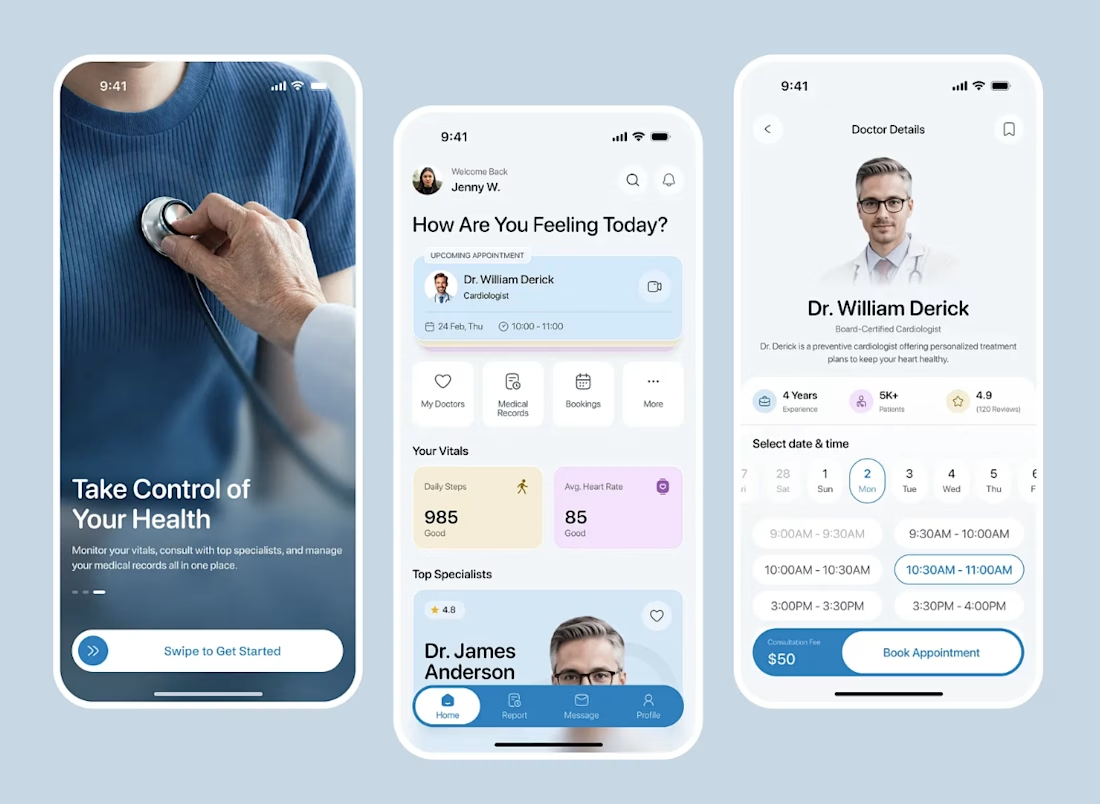
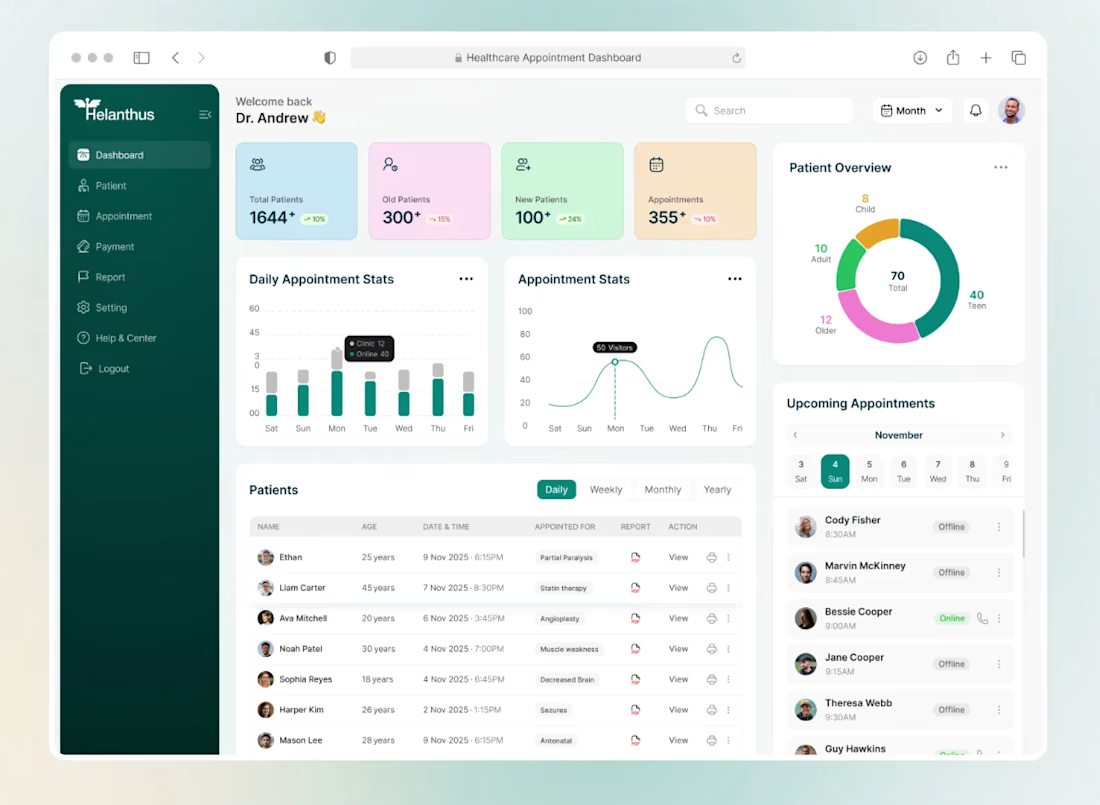

Speed is real, but healthcare is the domain where the review layer stops being optional. Curious how you handled auditability on the patient data side.


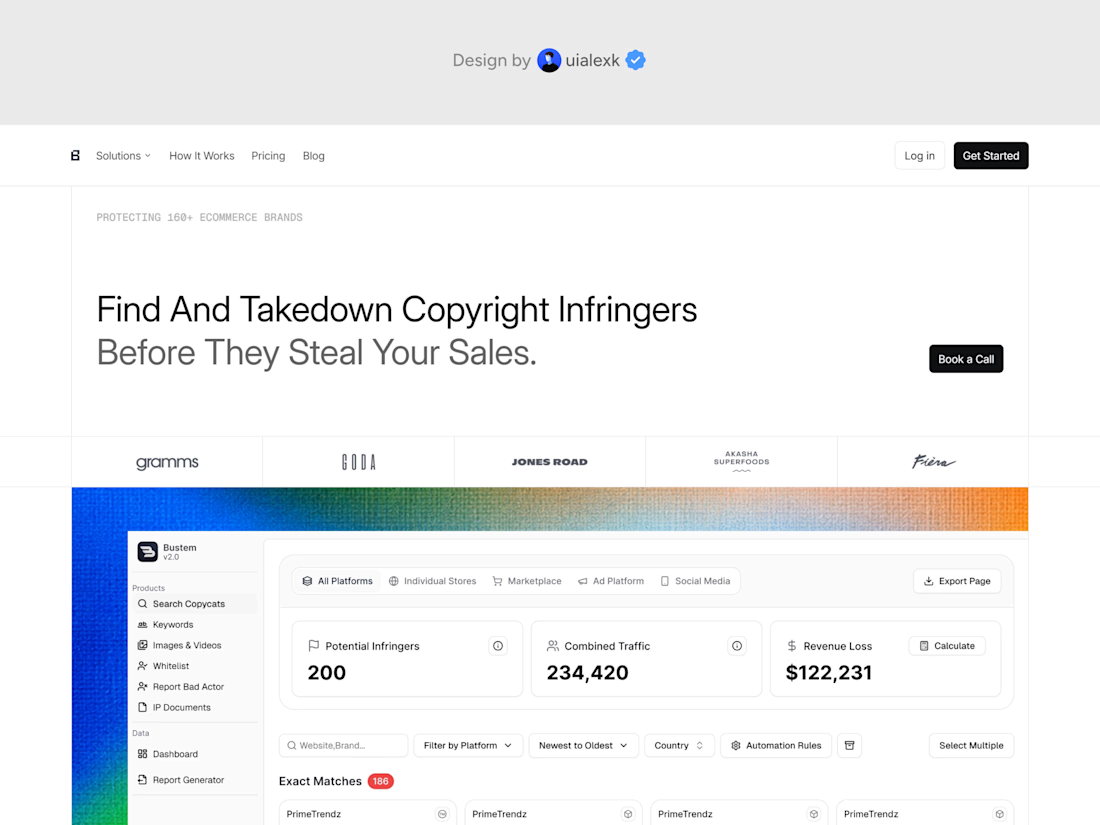


20 mins is kinda wild. The message is simple and gets the point across fast.