The network for creativity
Join 1.25M professional creatives like you
Connect with clients, get discovered, and run your business 100% commission-free
Creatives on Contra have earned over $150M and we are just getting started
Back to feedPost

An honest breakdown of how crypto signals actually work, the math signal sellers hide, the conflict of interest nobody talks about, and what to do instead — written specifically for the Nigerian crypto audience drowning in signal channels.


The network for creativity
Join 1.25M professional creatives like you
Connect with clients, get discovered, and run your business 100% commission-free
Creatives on Contra have earned over $150M and we are just getting started






Related posts

From one sentence to a whole business picture. That's the idea behind Helix.
I wanted this promo to feel less like a traditional software presentation and more like a visual journey into how AI can interpret business decisions - dark environments, warm orange accents and carefully paced transitions helped create a consistent atmosphere while keeping the message at the center.
Always interesting to work on products that push you to think beyond conventional explainer video formats.
Would you watch more product videos in this style?

Cool way to introduce Helix.

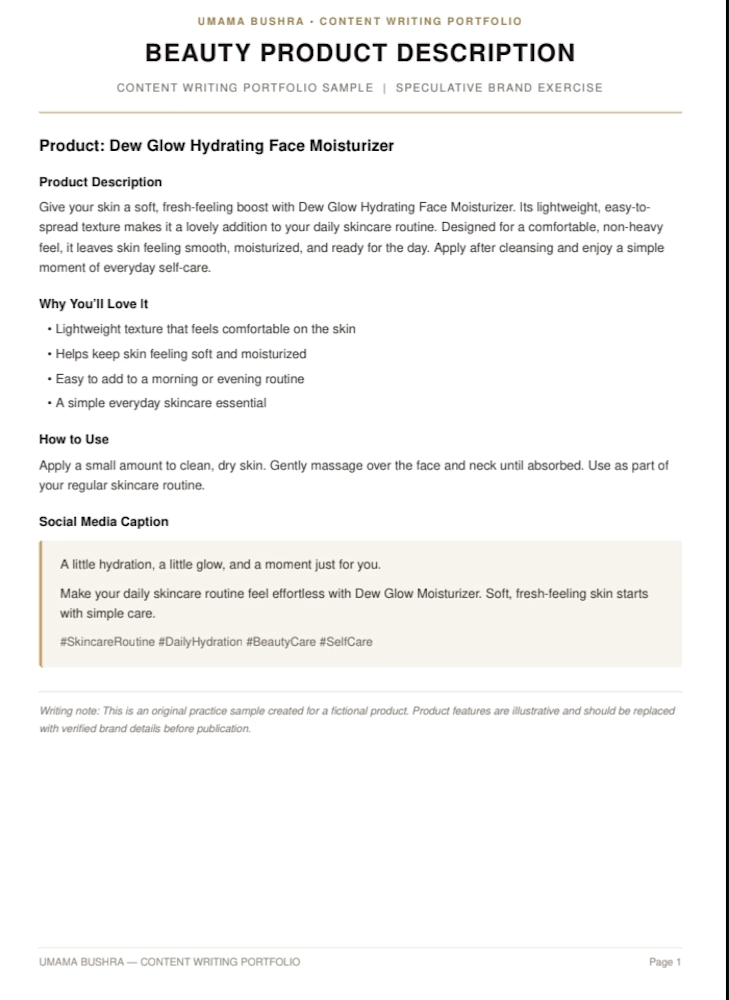
Beauty Product Description - Dew Glow Moisturizer
Luxury beauty product description + Instagram caption for skincare brand. Soft, premium tone for high-end audience.


Don't Be Funny in Your Copy
While in his Scientific Advertising Hopkins demands us never to be funny in our advertising efforts, many copywriters have embraced humor as a way to stand out, attract more attention, and make more sales.
Although being funny is not always a bad strategy in your copy, I'm here to tell you that you should never be funny.
And I'm not saying this because I'm a grumpy guy, but for two important reasons why it is better long-term to be sober, focused, and factual in your copywriting efforts.
You Don't Know Each and Every Prospect of Your Copy
That means that you don't know how each and every individual will react to your humor.
Humor is something personal & subjective. While some--if not most of them--of your readers will enjoy a laugh and maybe even be persuaded to make a purchase by your humor, others will get offended.
Not only will they not understand your humor, but they will also close the page, get offended, and even tell others not to buy from you.
Don't take the risk, even if these prospects are in the minority.
Slippery Slopes in Advertising
The second reason for you to stay away from humor has to do with the long-term tendency of becoming a copywriting clown. What do I mean by that?
You may end up in a slippery slope of jokes & humor. You may end up focusing on being funny & witty so much that you forget that you as a copywriter must inform & persuade potential clients.
You end up writing stuff to sound funny for the sake of being funny. That is a recipe for disaster.
Do you use humor in your copy? In that case, you should be careful when, why, and how you go about being funny.


I'd split it by channel. In ad copy for cold readers, I agree: a joke that misses costs you the sale. In email to people who already bought from a brand, a light line in the subject or P.S. often fits the voice they signed up for. Where would you draw the line: cold traffic only, or everywhere?