The network for creativity
Join 1.25M professional creatives like you
Connect with clients, get discovered, and run your business 100% commission-free
Creatives on Contra have earned over $150M and we are just getting started
Back to feedPost


GET vs. QUERY vs. POST: HTTP just changed the conversation
For years, APIs have used two imperfect approaches for complex searches:
- Put every filter in a GET URL.
- Send the filters in a POST body, even when no data is being modified.
In June 2026, the IETF published RFC 10008, officially introducing the HTTP QUERY method.
Its goal is simple: allow structured queries inside a request body while keeping the operation safe, idempotent, and potentially cacheable.
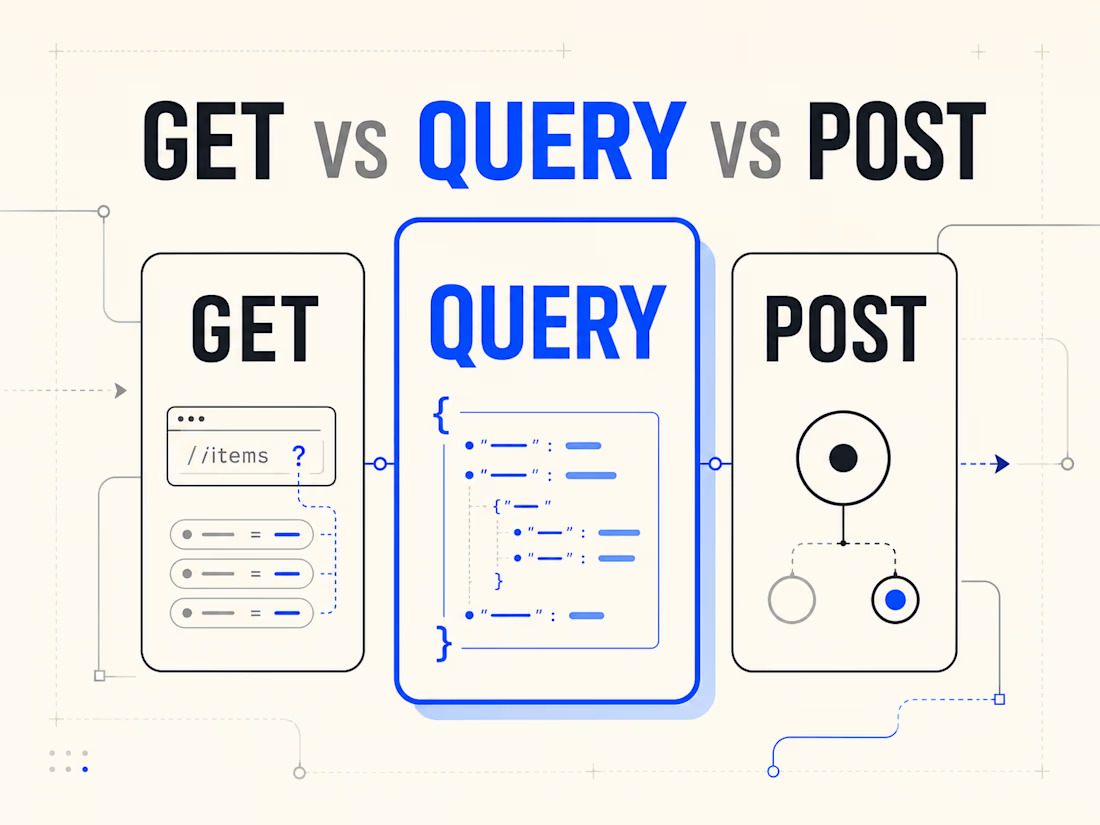
How do they compare?
GET
- Best for simple, read-only requests.
- Filters usually live in the URL.
- Safe, idempotent, and cache-friendly.
Ideal when URLs need to be shared or bookmarked.
QUERY
- Designed for complex, read-only queries.
- The query is sent in the request body.
- Safe, idempotent, and cacheable by definition.
- Better suited for nested filters, reports, analytics, and structured search.
POST
- Designed for processing data or performing actions.
- The payload is sent in the request body.
- It is not assumed to be safe or idempotent.
- Best for commands and operations that may change system state.
The practical rule could be:
- Simple read? Use GET.
- Complex read with a body? Consider QUERY.
- State-changing operation? Use POST.
However, there is an important caveat: a published standard does not mean the entire ecosystem is ready.
Browsers allow custom methods through fetch, but cross-origin requests require a CORS preflight. OpenAPI 3.2 already supports query, while frameworks, proxies, CDNs, and client generators still need time to adapt.
NestJS, for example, does not yet provide RequestMethod.QUERY or a dedicated HTTP decorator. Spring can represent custom methods in its client APIs, but Spring MVC still lacks first-class annotation mapping for it.
QUERY is not here to replace GET or POST. It gives APIs a clearer way to say:
“This request has a body, but it is still read-only, repeatable, and cacheable.”
Would you adopt QUERY today, or wait until your framework supports it natively?
And remember: good software starts with good decisions. See you in the next one.
The network for creativity
Join 1.25M professional creatives like you
Connect with clients, get discovered, and run your business 100% commission-free
Creatives on Contra have earned over $150M and we are just getting started




Related posts

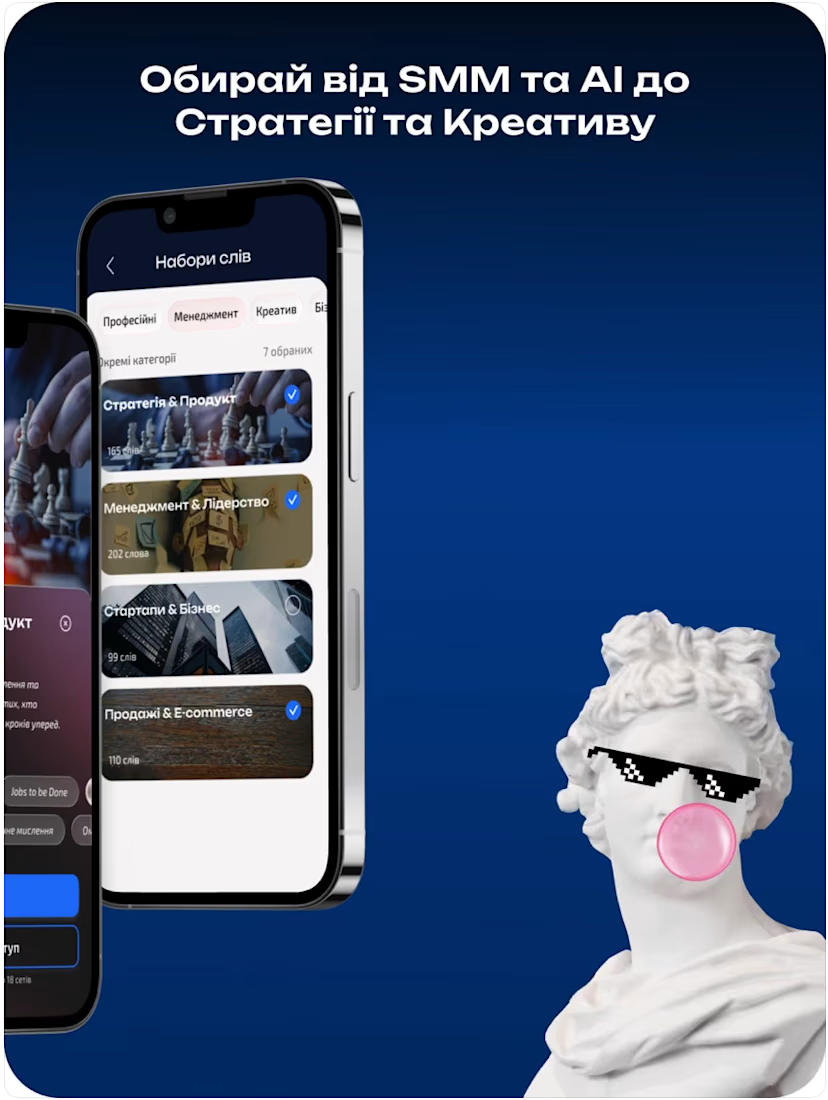
I worked as part of the development team behind Marketium, an Alias-style mobile game created specifically for marketers, creative professionals, and digital teams.
Players explain and guess industry terms while competing with colleagues, turning team-building, professional learning, and marketing knowledge into a fast-paced social experience. The app includes more than 1,700 terms across 18 themed sets, multiplayer gameplay for groups of two or more, and in-app purchases for additional content.
I contributed to the development and refinement of the production mobile application, collaborating with the wider product team to help turn the concept into a polished experience released on the App Store.
The project gave me hands-on experience building a consumer mobile product that combines gameplay, professional education, content monetization, and team engagement.
Developed as part of the Marketium product team.




I designed AutomateLine to sell AI automation to everyday service businesses such as dental clinics, HVAC companies, plumbers and cleaners. These owners are busy and sceptical of tech buzzwords, so the site had to feel calm, practical and trustworthy, not like another AI startup.
The headline, "Your best employee, always on.", frames AI as a reliable team member rather than a complex technology. I set it in a bold, tightly spaced typeface with a hand-drawn lime highlight under "always on." The palette is warm off-white, deep forest green and one bright lime accent, which keeps the page clean and confident.
Instead of describing the product, I let visitors try it. The hero card is a live AI receptionist. Six agents, each set up for a different industry, can be switched with arrows or dots, and each card shows a real scenario, from incoming call to resolved booking. Visitors can call the agent or type to it directly on the page.
The rest of the page follows the same idea: show, don't tell. A scrolling lime band repeats the outcomes owners care about. An "Ask the operating system" assistant answers setup questions with suggested prompts. A device carousel shows the voice calls, chat widget, SMS text-back, CRM pipeline, calendar and workflows. For the six core systems, I designed an interactive rotary dial, so choosing a service feels tactile and memorable.
The contact form is written as a sentence, "Hi, I'm ___ from ___…", so getting in touch feels like a conversation rather than paperwork.


Instacart
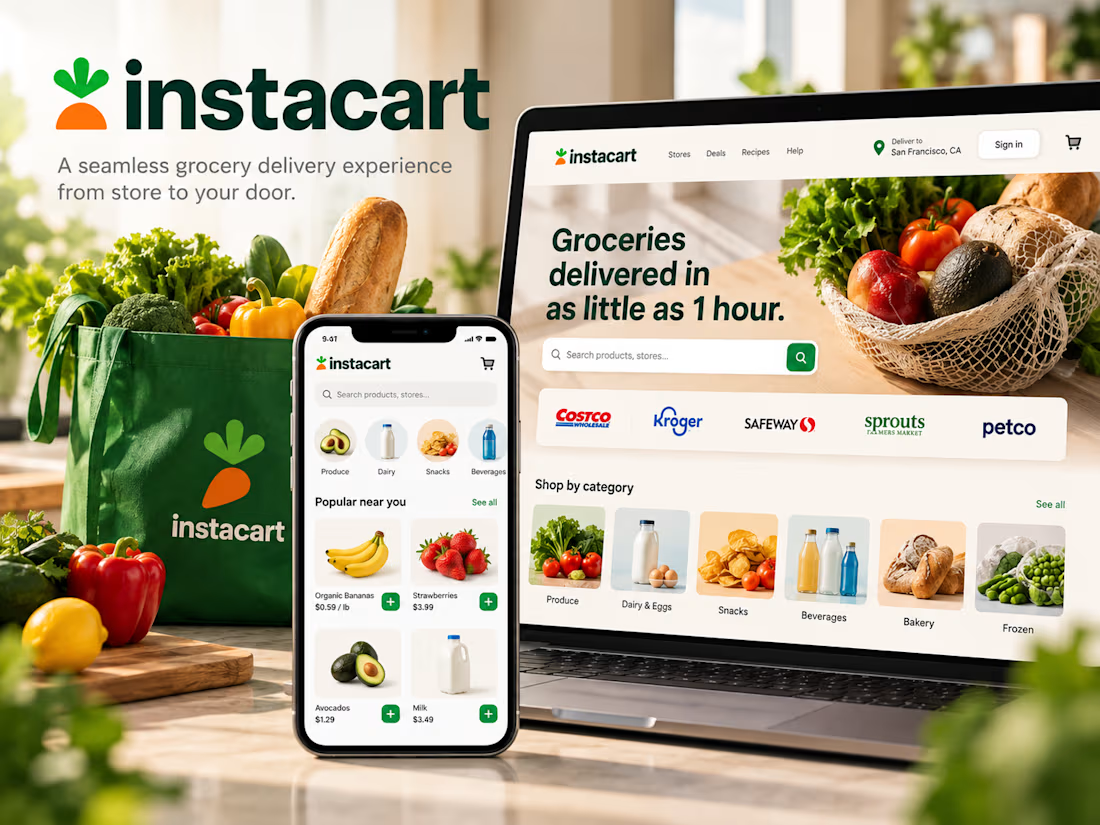
I worked on Instacart’s high-traffic grocery delivery platform, contributing across the full stack to build scalable, reliable experiences used by millions of customers.
I developed customer-facing features with React and TypeScript while building Node.js backend services and REST APIs capable of supporting high-volume orders and real-time data flows. I worked on real-time delivery tracking using event-driven architecture, helping improve order visibility and reduce customer inquiries by 30%.
I also contributed to personalized recommendation experiences using customer behavior data, increasing conversion rates by 20%. On the performance side, I optimized frontend rendering and API interactions, reducing page load times by 40%.
As the platform scaled, I focused heavily on backend reliability, fault tolerance, horizontal scalability, data pipelines, and performance optimization. I proactively identified system bottlenecks, improved production stability, and helped ensure critical ordering workflows could handle increasing transaction volumes.
Throughout my time at Instacart, I collaborated closely with product, design, and engineering teams to rapidly deliver and iterate on features while maintaining the performance and reliability expected from a large-scale consumer marketplace.
Key areas: Full-Stack Development · React · TypeScript · Node.js · REST APIs · Real-Time Systems · Event-Driven Architecture · Recommendation Systems · Performance Optimization · Scalable Backend Architecture