The network for creativity
Join 1.25M professional creatives like you
Connect with clients, get discovered, and run your business 100% commission-free
Creatives on Contra have earned over $150M and we are just getting started
Back to feedPost
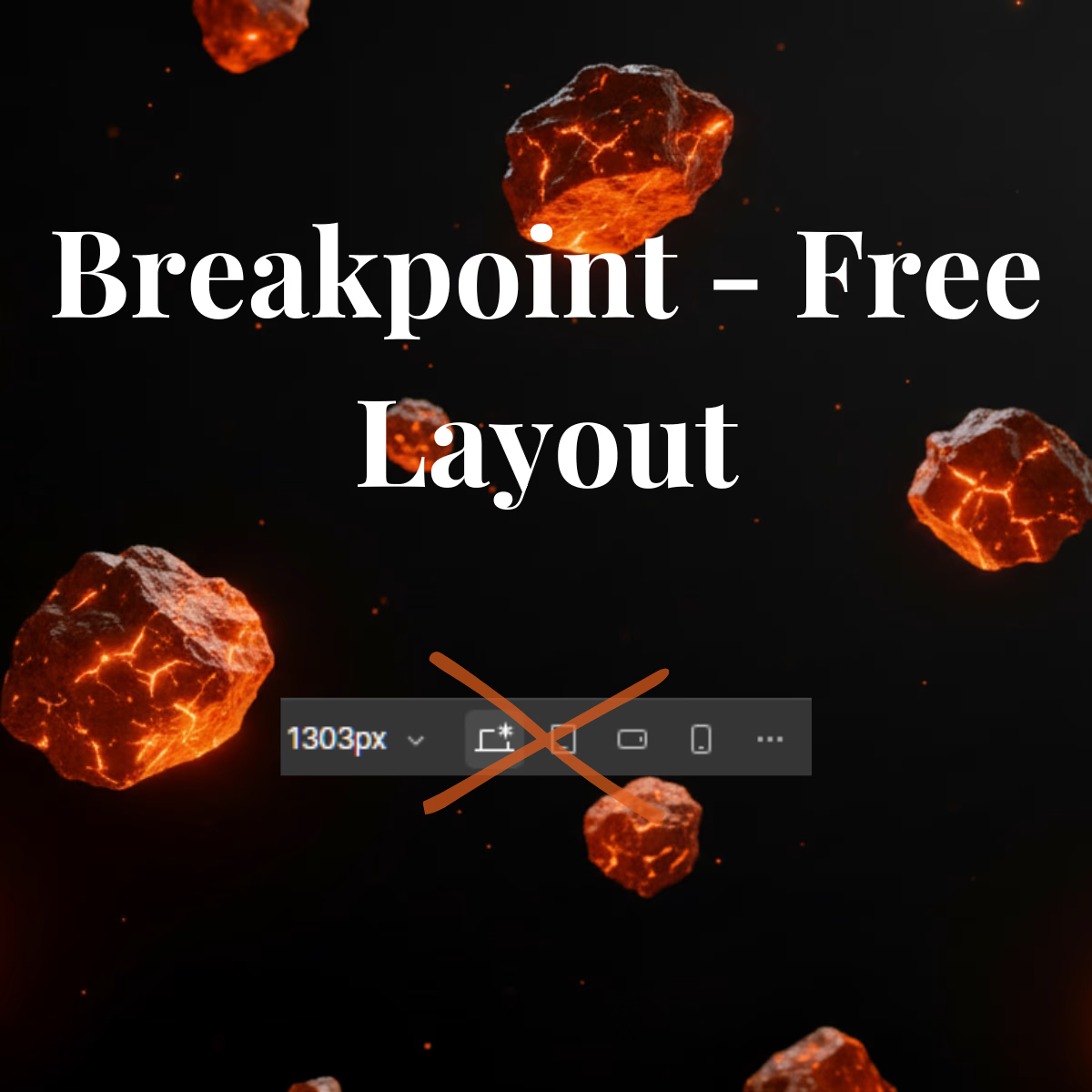
𝐀 𝐖𝐞𝐛𝐟𝐥𝐨𝐰 𝐭𝐫𝐢𝐜𝐤 𝐭𝐨 𝐛𝐮𝐢𝐥𝐝 “𝐛𝐫𝐞𝐚𝐤𝐩𝐨𝐢𝐧𝐭-𝐟𝐫𝐞𝐞” 𝐫𝐞𝐬𝐩𝐨𝐧𝐬𝐢𝐯𝐞 𝐥𝐚𝐲𝐨𝐮𝐭𝐬
I learned this while working with Lumos, and it completely changed how I build responsive sites.
If your layouts fall apart when someone zooms text or increases browser font size, this fixes it.
Instead of reacting to device size, your layout reacts to actual content space and you only need one layout class.
Why this matters:
Pixel breakpoints don’t change when users bump text size, so layouts break. Em-based thresholds do, so your layout adapts automatically and stays accessible.
How it works:
You use container threshold classes instead of traditional breakpoints. For example: threshold-large (62em) wraps earlier, threshold-medium (48em) wraps later, threshold-small (30em) stays side-by-side the longest.

fantastic job!

Thank you!!!
The network for creativity
Join 1.25M professional creatives like you
Connect with clients, get discovered, and run your business 100% commission-free
Creatives on Contra have earned over $150M and we are just getting started
Trending
retrofuturism
Share your favorite designs from the past exploring the distant future. Or your own take on the aesthetic 🚀
halftone
Dots. Texture. Grain. Let's see your designs using the halftone technique.

Midjourney
Creatives are showing off what they're making with Midjourney.
colorgrade
Video editors sound off: How do you enhance the mood of your video in color grading?