The network for creativity
Join 1.25M professional creatives like you
Connect with clients, get discovered, and run your business 100% commission-free
Creatives on Contra have earned over $150M and we are just getting started
Back to feedPost

A structured SOP and process map designed to turn inconsistent workflows into clear, repeatable processes. This shows defined roles, process steps, escalation guidance, responsibilities, and version control to improve consistency and accountability.


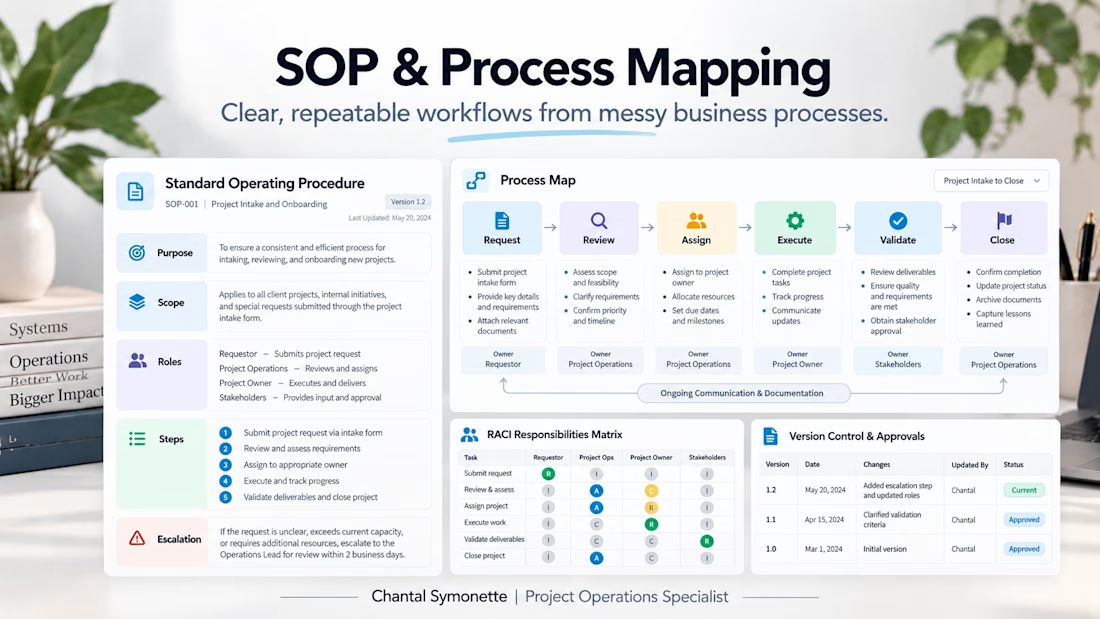

The way the SOP pins down roles and escalation steps turns the hand off into a smoother flow.
The network for creativity
Join 1.25M professional creatives like you
Connect with clients, get discovered, and run your business 100% commission-free
Creatives on Contra have earned over $150M and we are just getting started





Related posts

Just finished building a Salon Booking Management System!
The goal was simple: make appointment management easier for salon owners and reduce the manual work involved in handling bookings and reminders.
The system connects the complete workflow in one place:
1 Customer makes a booking
2 Booking gets confirmed
3 Owner sees it on the dashboard
4 Upcoming appointments are organized clearly
5 Reminders help the owner stay on top of appointments
One of the key things I focused on was making the experience simple, clean, and easy to understand, while keeping the workflow practical for a real business.
This project helped me think beyond just building screens — and focus more on the actual business problem, user flow, and overall product experience.
Excited to keep improving it and turn it into an even more polished product.
#BuildInPublic #SaaS #WebApp #BookingSystem #SalonManagement #ProductDesign #MVP #NoCode #Entrepreneurship


Good work


Trying something a little different—
Opus 5.5 one-shots are fun, but revisions ain't. So here's my workflow: hero graphic for the web, same assets from/to @MagicPath , then edit shot by shot 👇🏻
Anyone else got their own workflow?


Passwords Don't Know Who's Typing Them is a genuinely great hook for an identity product, that is copywriting doing real work. One-shots for the hero then editing shot by shot is a smart split, generate fast, refine slow. My workflow is basically the same, rough pass in AI then hand-tune the timing.

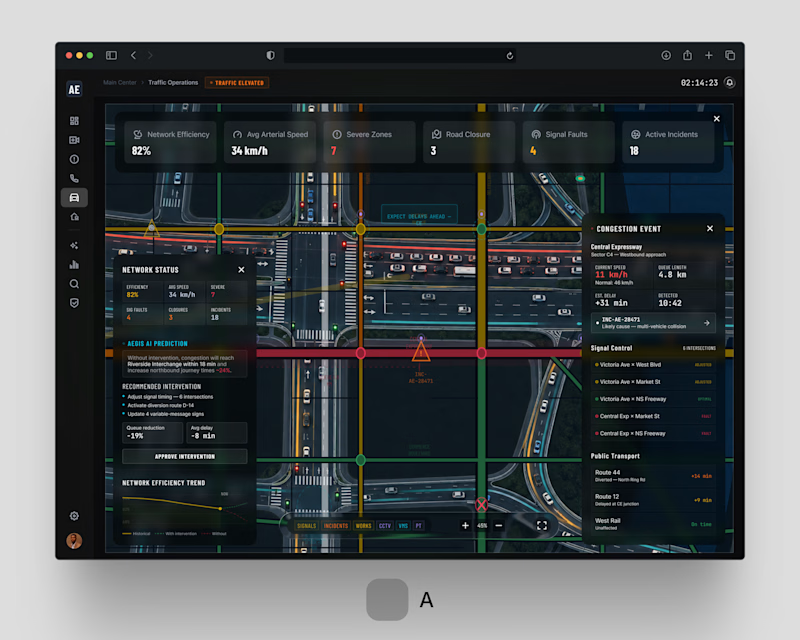
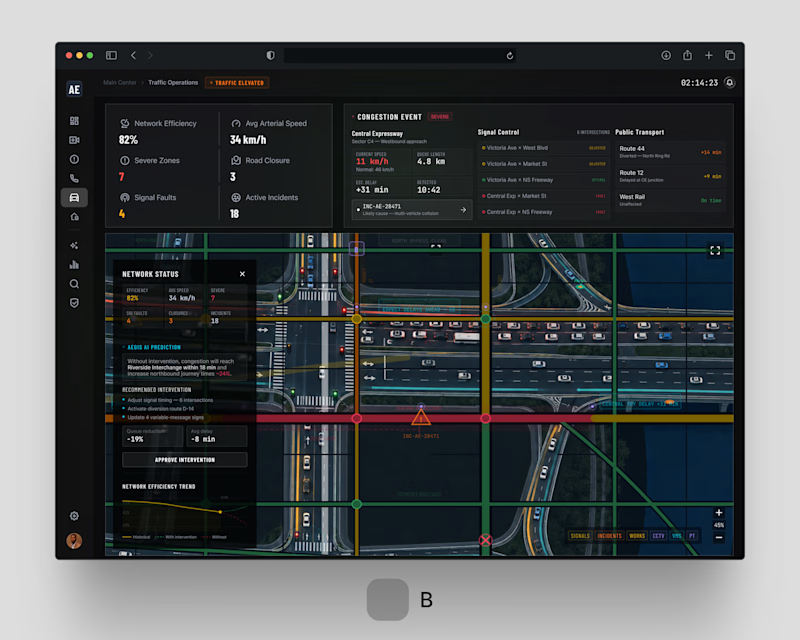
One problem. Two design directions. Which would you choose?
For AEGIS / 001.05 . Traffic Operations, we explored two approaches to the same challenge: helping city operators understand congestion, incidents and network-wide disruptions without overwhelming them with information.
Both solve the same operational problem. Different approaches to hierarchy and interaction.
If you were behind the control desk . Option A or Option B?
#smartcities #enterpriseux #productdesign #digitaltransformation #jemirae


1 voted
33%
2 voted
67%
3 votes
Closed
