The network for creativity
Join 1.25M professional creatives like you
Connect with clients, get discovered, and run your business 100% commission-free
Creatives on Contra have earned over $150M and we are just getting started
Back to feedPost

A churn model is more useful when it can actually be used.
I recently built a Customer Churn Prediction application that takes the workflow beyond a Jupyter Notebook and turns it into an interactive ML application.
The workflow:
Raw customer data → preprocessing → feature preparation → ML model → churn probability → business interpretation → Streamlit application
A few things I focused on:
• Preparing customer, service, contract, and billing data correctly
• Building and evaluating a classification model
• Returning prediction probability instead of only a class label
• Making the output understandable through business-oriented interpretation
• Integrating the trained model into a usable Streamlit application
One lesson from the project: a model score is only one part of an ML solution. The real value comes from connecting the model to a workflow that someone can actually use.
I’m currently building more projects around Machine Learning, Data Science, AI applications, and deployment.
What part of an ML project do you think is most often overlooked: data preparation, model evaluation, or deployment?

The network for creativity
Join 1.25M professional creatives like you
Connect with clients, get discovered, and run your business 100% commission-free
Creatives on Contra have earned over $150M and we are just getting started
Related posts

UGC ads usually mean finding a creator, sending a brief, waiting a week, then paying per video. I wanted to see how much of that an n8n workflow could handle.
The video in this post was not filmed. It was generated end to end by a workflow I built.
How it works:
I drop in a product, a short brief and a target audience
An LLM writes the UGC-style script with a hook, the body and a call to action
Veo generates the video in a natural, creator-style look
The workflow publishes it to TikTok, Reels and Shorts [and schedules it for the best time]
So the whole path from brief to published video runs without me touching an editor.
What I learned:
The prompt matters more than the model. Specific lighting, camera and tone details made the difference between “obvious AI” and “believable creator”.
Hooks decide everything. I generate several hooks per product and test them.
Always label AI-generated content where the platform requires it. It’s the right thing to do and it avoids trouble later.
If you run a brand, an e-commerce store or an agency and want a steady stream of short-form content without the cost of manual production, I build these workflows. Message me and I’ll show you how it would work for your product.
Would you trust an AI-generated UGC ad for your brand? Curious where people stand on this.
#n8n #Veo #AIVideo #UGC #AIAutomation #ContentCreation #ShortFormVideo #Ecommerce #MarketingAutomation #GenerativeAI #NoCode #SocialMediaMarketing


Elegant

We create eye-catching advertising banners and professional marketing visuals that help businesses attract customers and strengthen their brand presence. We also build smart automation solutions for WhatsApp, email, lead generation, and customer management to save time and grow your business.




Road Safety Analysis | Python, SQL & Power BI
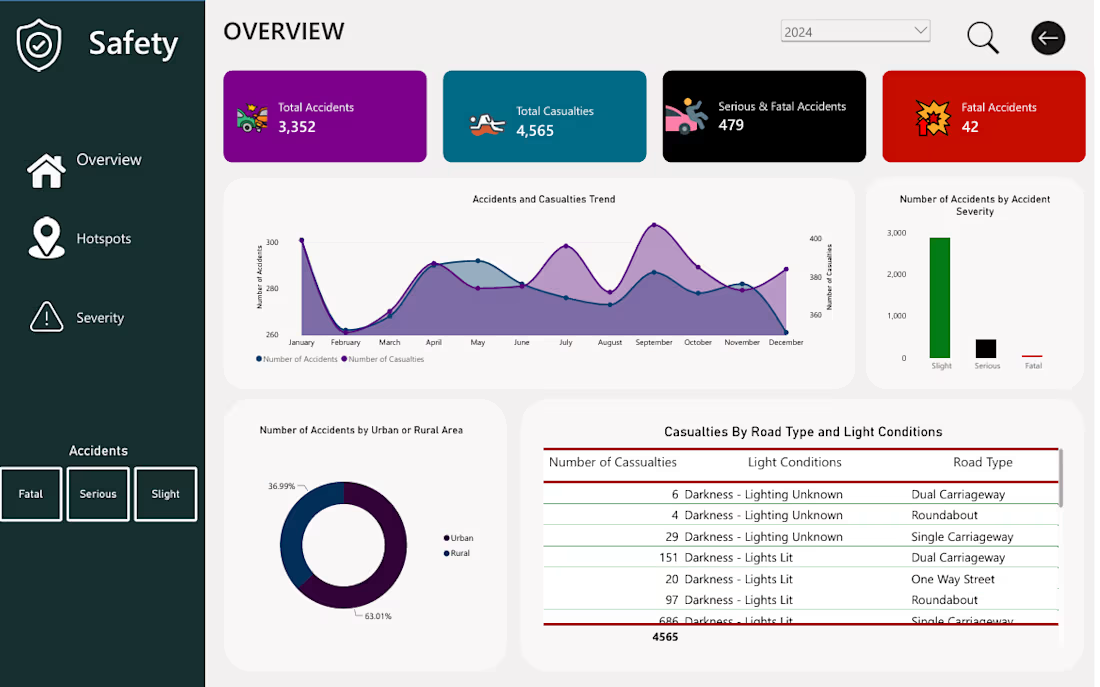
Developed an end-to-end road safety analytics project to help authorities understand accident patterns, identify high-risk areas, and make informed decisions about road safety interventions.
The project involved cleaning and preparing road accident data using Python and Pandas, followed by SQL-based exploratory analysis to investigate accident trends, casualty figures, severity distributions, and geographical patterns.
Using Power BI, I transformed the findings into an interactive dashboard featuring key performance indicators and visualisations that provide an overview of accident activity, highlight trends over time, and reveal differences in accident occurrence across districts and locations.
The analysis also explored accident severity in relation to road types, weather conditions, lighting, and road surface conditions.
Tools used: Python, Pandas, SQL, Power BI.
Project deliverable: An interactive Power BI dashboard supported by data cleaning, transformation, and SQL analysis.
The objective was to turn raw accident data into clear, meaningful insights that can support evidence-based road safety planning and resource prioritisation.