The network for creativity
Join 1.25M professional creatives like you
Connect with clients, get discovered, and run your business 100% commission-free
Creatives on Contra have earned over $150M and we are just getting started
Back to feedPost

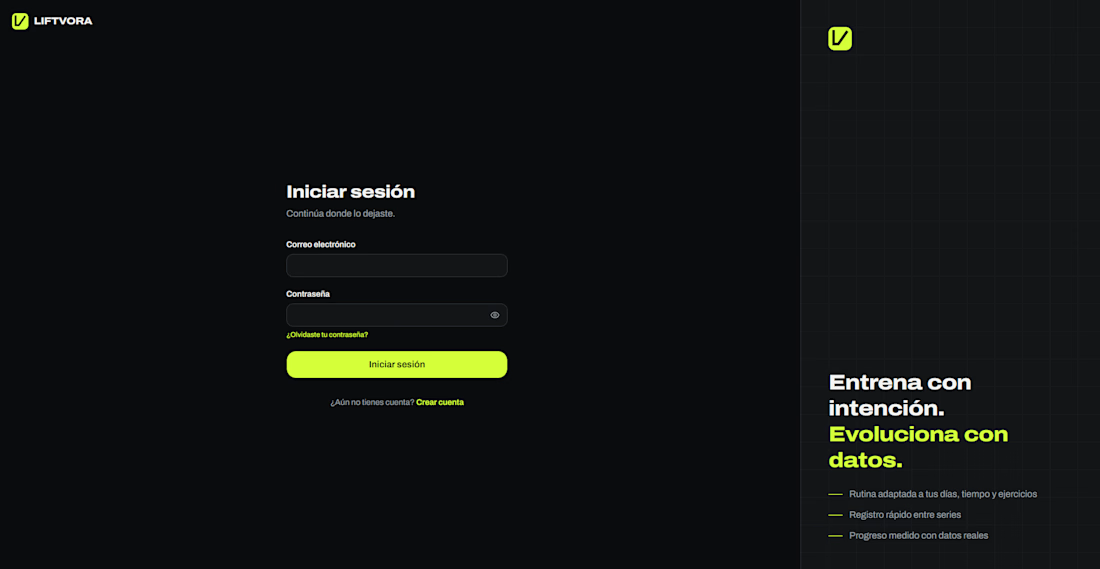
LIFTVORA | Fitness & Workout Tracking Platform
Designed and developed LIFTVORA, a modern fitness web application focused on strength training, workout organization, and performance tracking.
The platform helps users organize their training routines based on their schedules, available time, and selected exercises. It provides tools for recording workout sets, tracking training progress, and monitoring performance through structured data.
Key features include:
Personalized workout routines.
Exercise and workout management.
Quick tracking of sets during training.
Training history and progress monitoring.
Modern, responsive user interface.
User authentication and account management.
Built with Next.js, React, and TypeScript, LIFTVORA combines a clean user experience with a data-driven approach to fitness management.
The goal is to help users train with intention, track their progress, and make more informed training decisions.


The network for creativity
Join 1.25M professional creatives like you
Connect with clients, get discovered, and run your business 100% commission-free
Creatives on Contra have earned over $150M and we are just getting started



Related posts

Live on Play Store. We made the launch video.
Motion design to show the screens, plus a short explainer so you get what the app does in a few seconds.
Kept it simple on purpose. Screens only move where it helps you follow the product.
Watch it with zero context and tell me what you'd cut.

Amazing


We are testing two ways to browse a large template library.
Load More
Users initially see 9 cards. After clicking the button, 9 more are added while the previous results remain visible. Browsing feels continuous, but the page gradually becomes longer.
Pagination
The catalog is divided into numbered groups. When users select the next page, the current 9 cards are replaced with a new set. They can jump to a specific part of the catalog and easily return to where they were.
Load More creates a smoother browsing experience, while pagination offers greater control.
Which option would you choose for a template library?

17 voted
68%
8 voted
32%
25 votes
Closed

Load more