The network for creativity
Join 1.25M professional creatives like you
Connect with clients, get discovered, and run your business 100% commission-free
Creatives on Contra have earned over $150M and we are just getting started
Back to feedPost

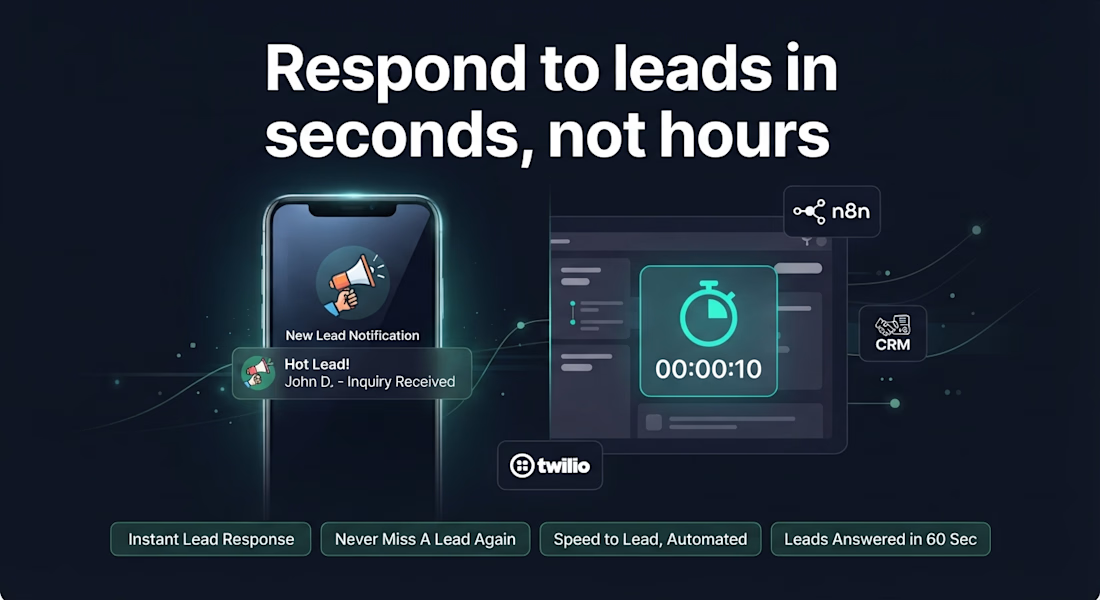
AI Speed-to-Lead & Instant Follow-Up System
Created an AI-powered speed-to-lead automation that helps businesses engage new leads within seconds instead of hours.
The workflow instantly captures leads from forms, websites, or CRM systems, qualifies them using AI, sends personalized responses, updates the CRM, notifies sales teams, and triggers follow-up sequences automatically.
By eliminating response delays, businesses can significantly improve lead conversion rates and ensure that no opportunity is missed.
Features
Instant lead capture
AI lead qualification
Automated personalized responses
CRM synchronization
Sales team notifications
Automated follow-up sequences
Real-time workflow execution
Tech Stack
n8n • AI Agents • GoHighLevel • Airtable • Google Sheets • Email APIs • Webhooks


The network for creativity
Join 1.25M professional creatives like you
Connect with clients, get discovered, and run your business 100% commission-free
Creatives on Contra have earned over $150M and we are just getting started





Related posts

Built this AI agent to find, organize, and manage leads through Gmail, helping automate lead handling and outreach.
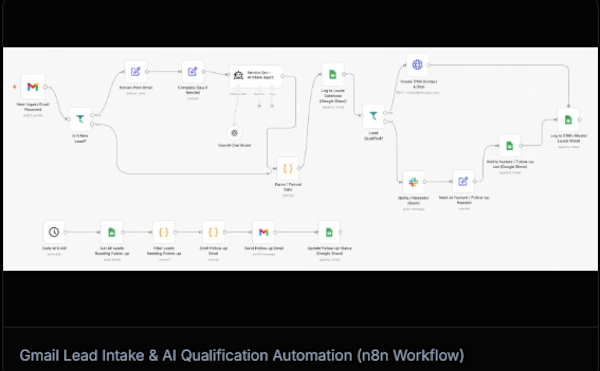

n8n is absolute gold for orchestrating lead pipelines like this! Connecting Gmail parsing with LLM qualification saves teams dozens of hours weekly. As someone who builds custom agentic lead automation workflows, seeing clean visual architectures like this is super satisfying. Top-tier build, Talha!.

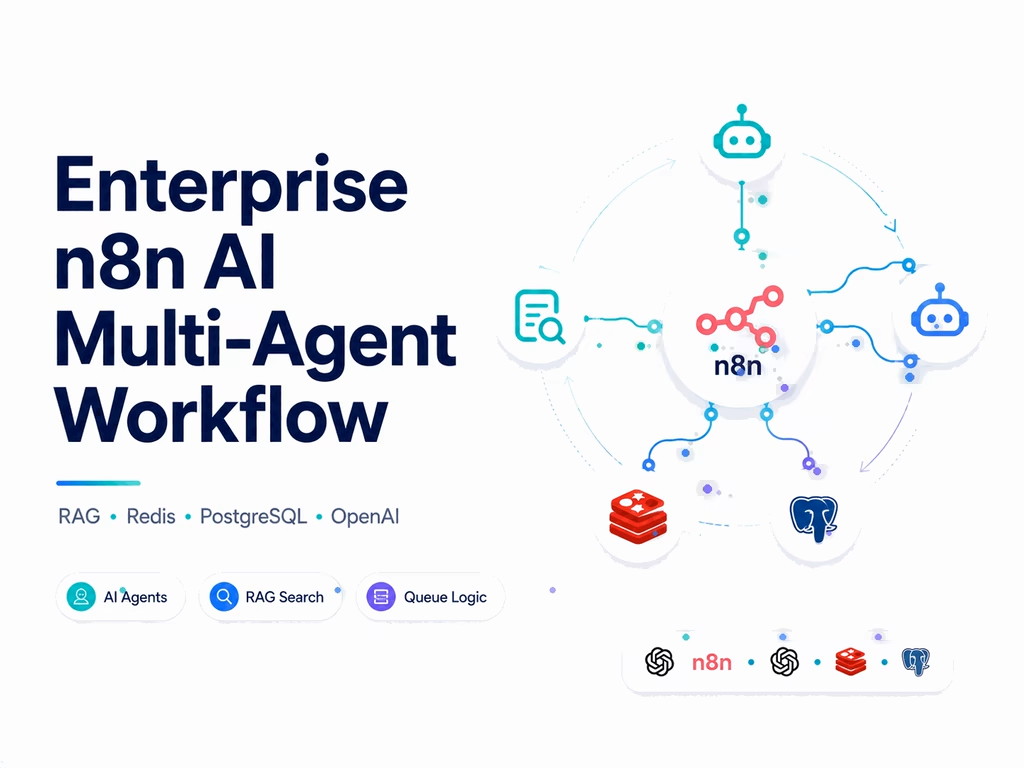
I designed and built an enterprise AI automation system using n8n, AI agents, RAG, Redis, and PostgreSQL to automate complex business workflows, improve decision-making, and create scalable AI-powered operations.
The system uses n8n as the automation orchestration layer, where incoming business events trigger workflows that route tasks to specialized AI agents. A RAG pipeline retrieves relevant knowledge from business data sources, allowing AI agents to generate accurate, context-aware responses and decisions. Redis handles queue-based processing for high-volume tasks, while PostgreSQL stores structured data, workflow history, and audit records.
The automation architecture connects multiple technologies including n8n, OpenAI API, AI Agents, RAG pipelines, Vector Databases, Redis, PostgreSQL, APIs, Webhooks, Slack integrations, Docker, and Python services to create reliable enterprise workflows.
The solution helps businesses reduce manual operations, automate repetitive processes, improve response times, maintain better data accuracy, and scale AI workflows securely. It includes monitoring, validation, error handling, and human approval flows to ensure reliable production usage.
Tech Stack: n8n, OpenAI, AI Agents, RAG, LangChain, Redis, PostgreSQL, Qdrant, Python, FastAPI, Docker, APIs, Webhooks, Slack.


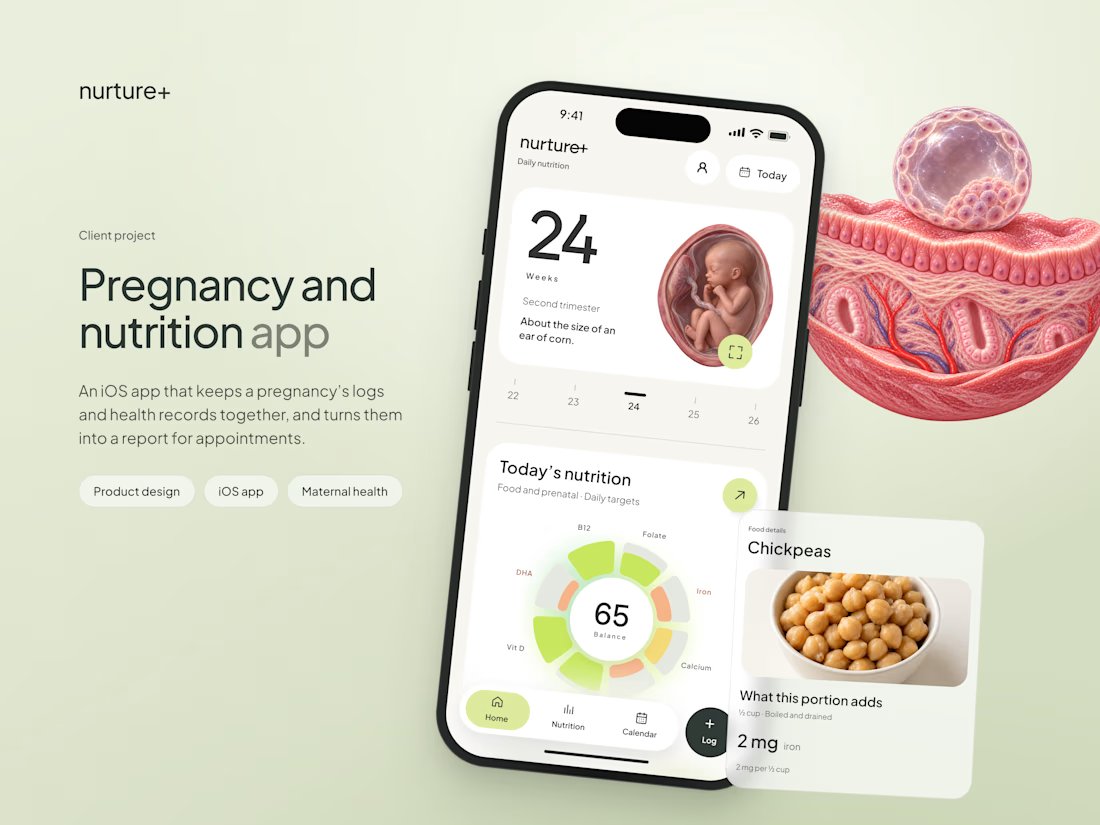
A very elaborate app study is out, I share my entire process and a lot of fun UI details along the way! Done this for https://nurtureplus.app/