The network for creativity
Join 1.25M professional creatives like you
Connect with clients, get discovered, and run your business 100% commission-free
Creatives on Contra have earned over $150M and we are just getting started
Back to feedPost

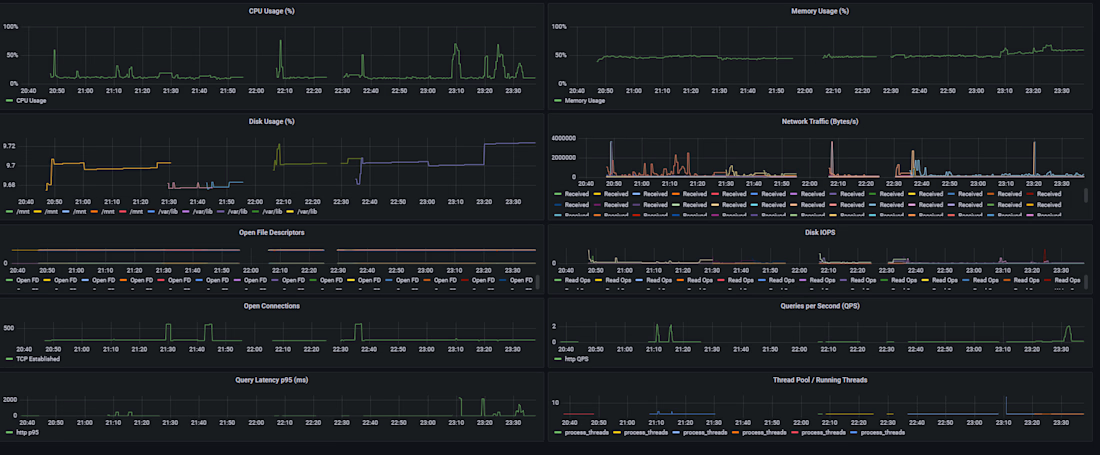
Contributed to a team project that deployed and tested a cloud-native environment using Kubernetes, Prometheus, Grafana and Gatling, with monitoring for infrastructure and application performance under load.


The network for creativity
Join 1.25M professional creatives like you
Connect with clients, get discovered, and run your business 100% commission-free
Creatives on Contra have earned over $150M and we are just getting started

Challenges
View all


Related posts

Custom Software Development vs. Off-the-Shelf Solutions: When is a Tailored Approach Justified?
In practice, companies often try to adapt their business processes to the limitations of ready-made software. However, in the long term, it is more effective to tailor technology to business needs, rather than the other way around.
Custom software development means building an IT product to fit a company's specific requirements and workflows.
A tailored solution becomes necessary when a business faces the following challenges:
Specific processes. Unique operational algorithms that cannot be implemented using standard software.
Scaling limitations. Off-the-shelf software fails to handle growing loads, and vendor modifications are no longer cost-effective.
Security and autonomy. A need for full control over the architecture, source code, and data storage.
Complex integration. A requirement to combine fragmented IT systems into a single ecosystem.
Designing and building an IT product from scratch requires time and investment. However, the client ultimately gains independence from third-party licenses and a flexible tool ready for market changes.
I specialize in custom software development: designing architecture, writing clean code, and integrating systems. My goal is to create stable solutions that automate routine tasks and optimize internal processes.
I would love to discuss your experience in the comments: what limitations of off-the-shelf software have you encountered most often?


The honest line is usually integration count, not feature count. Off-the-shelf stays cheaper right up until the business needs its own data shape inside someone else's schema, and from there the cost moves into middleware and reconciliation jobs nobody budgeted. Custom is worth...


Code is a map of the problem it solves.
Good software is not defined by how much code exists, how complex the stack looks, or how many technologies were involved.
It is defined by whether the system solves the right problem clearly, reliably and with as little unnecessary complexity as possible.
At HERODOT, software engineering is where strategy becomes infrastructure.
Architecture, automation, interfaces, integrations, security, maintainability and performance all have to work together. The goal is not simply to ship code. The goal is to build systems that remain understandable, adaptable and useful after launch.
Because code is temporary.
The problem it solves is what matters.


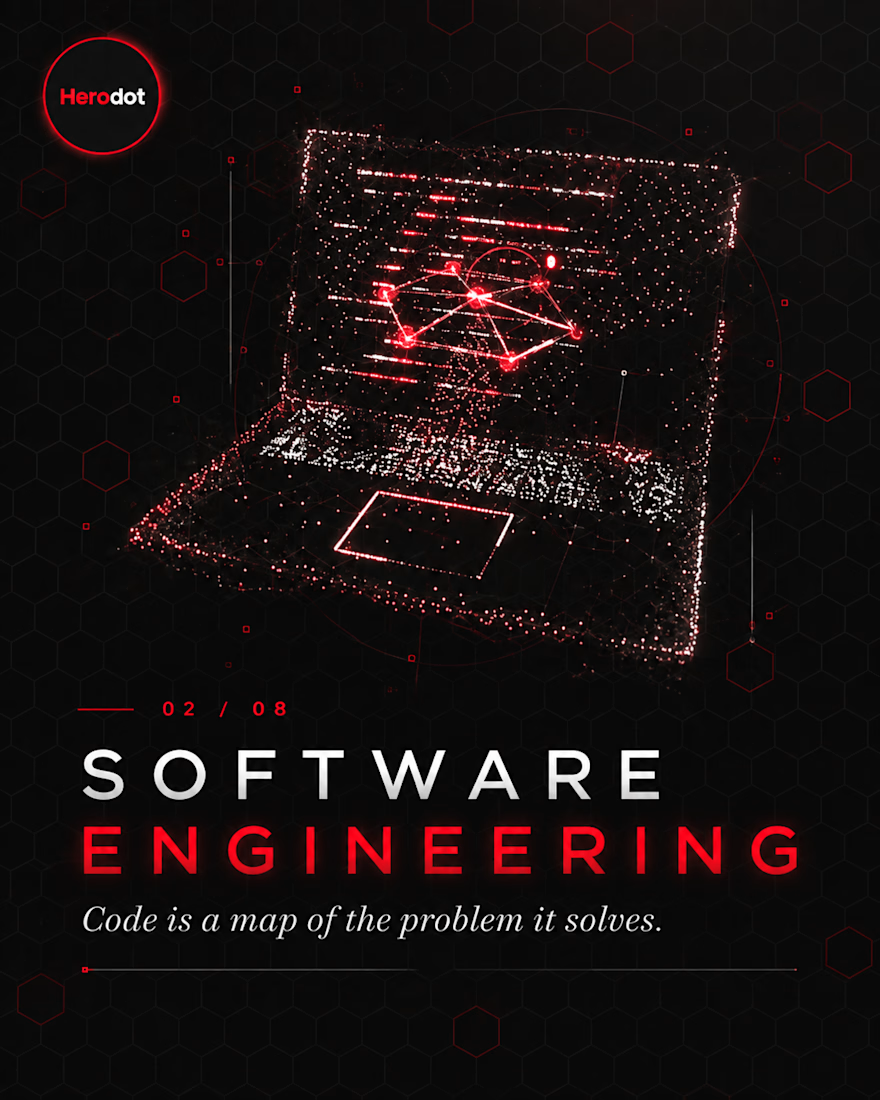

The framing turns a fairly abstract engineering message into something visually legible—the red-on-black system and oversized type create a strong technical voice. The line about solving the right problem also gives the composition a clear point of view.

Building the Canadian Tariff Defence Hub in Under 7 Days: Claude MCP & Gemini Workflow
Overview
When Canada’s new counter-tariff schedules landed, Canadian business owners needed immediate clarity on line-item exposure and relief options. To respond at speed, our team built and launched the Canadian Enterprise Tariff Defence Hub end-to-end in less than a week.
The Challenge
We needed to translate complex trade policy, tariff schedules, and government relief programs into custom, plain-English business audits. The objective was to build a full web platform and an automated backend artifact generator without spending weeks on manual CMS administration or document formatting.
How We Built It
Claude MCP to WordPress Integration: We used Claude connected via Model Context Protocol (MCP) directly to our WordPress environment. This allowed us to generate, format, structure, and deploy complex pages, custom intake funnel steps, and technical copy without touching the native UI or performing manual page layout work.
Gemini & NotebookLM Package Pipeline: To power the audit deliverables, we engineered a pipeline using Gemini models to process business inputs, invoices, and supplier catalogues. This architecture automatically generates full multi-format client packages—including impact reports, slide decks, one-page visual infographics, and synthesized audio overviews for business owners on the go.
Rapid Intake Architecture: Integrated automated payment tiers (including local Nanaimo discounts and flexible options) tied directly into our 48-hour delivery workflow.
The Result
A fully operational, production-grade service platform built from concept to live deployment in under 7 days, capable of ingesting raw client trade data and outputting comprehensive, multi-media analysis packages instantly.
infiniteup.dev
Tariff Help and New Markets for Canadian Businesses - InfiniteUp
The tariffs are costing you money. So is every market you have never sold to. We find both — and we build what it takes to fix them. In force since
The rapid intake architecture is a smart touch—turning complex tariff inputs into a clear, usable workflow in under a week is impressive. The multi-format audit outputs sound especially practical.