The network for creativity
Join 1.25M professional creatives like you
Connect with clients, get discovered, and run your business 100% commission-free
Creatives on Contra have earned over $150M and we are just getting started
Back to feedPost

The network for creativity
Join 1.25M professional creatives like you
Connect with clients, get discovered, and run your business 100% commission-free
Creatives on Contra have earned over $150M and we are just getting started











Related posts

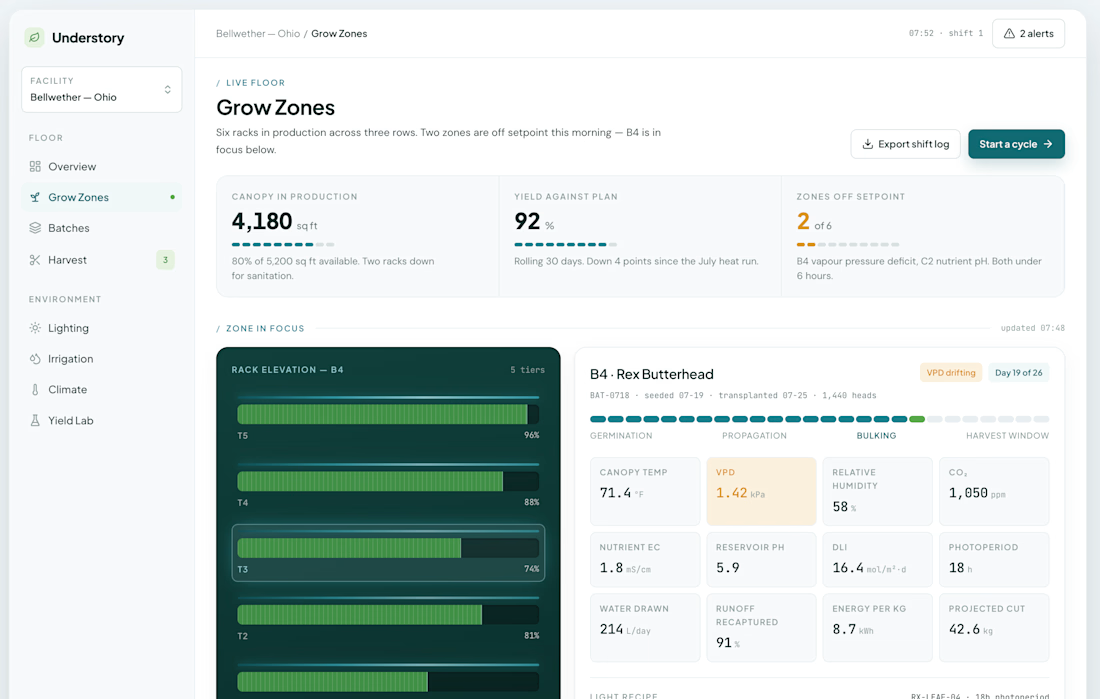
Web Based Admin Panel using framer to manage Plants Inventory


the glassy cards and framer animation makes it great. congrats..

AI Maintenance Dispatch Agent | n8n, AI & Airtable
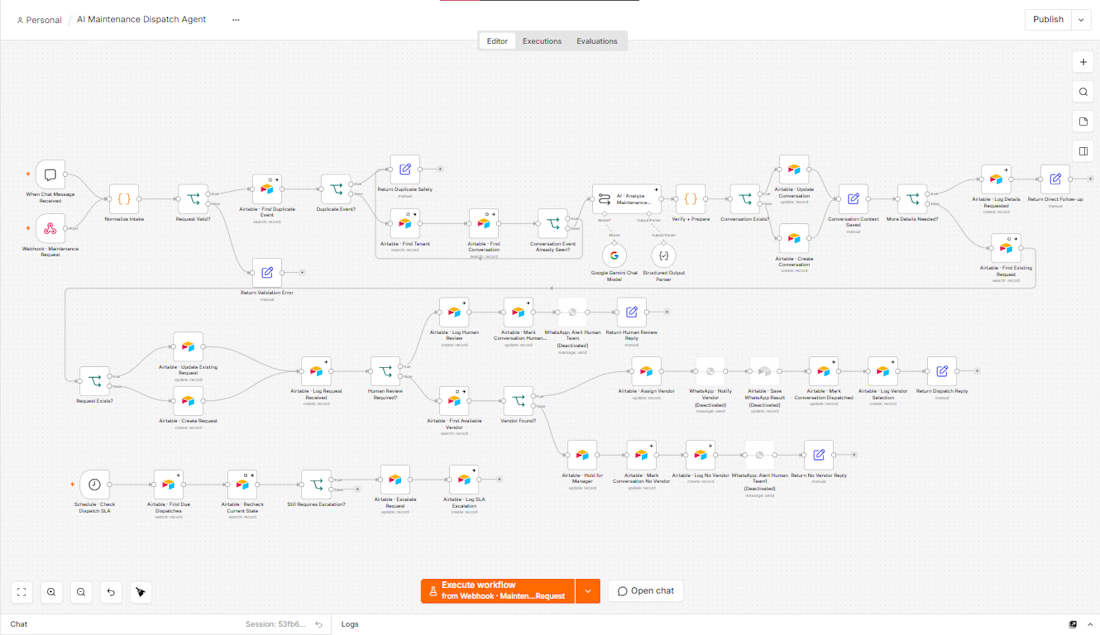
I built an AI-powered maintenance dispatch workflow designed to help property management teams handle tenant maintenance requests more reliably.
The system handles incoming requests, collects missing information through conversations, stores conversation state, and routes requests through the appropriate workflow.
What it does
Tenant request processing: Validates incoming maintenance requests before processing them.
Conversation memory: Uses Airtable to maintain conversation state across multiple messages.
AI classification: Separates in-scope requests, requests needing human review, and out-of-scope requests.
Duplicate prevention: Helps prevent repeated events from creating duplicate work.
Maintenance tracking: Creates or updates maintenance records in Airtable.
Human-in-the-loop review: Flags uncertain or sensitive requests for human attention.
Vendor coordination: Supports matching maintenance issues with suitable vendors and notifying the team.
Logging and monitoring: Records important workflow events to improve traceability and troubleshooting.
Tech stack
n8n · AI · Airtable · WhatsApp integration
The goal
The goal is to reduce manual coordination, keep maintenance requests organized, and make sure requests requiring human attention are not silently ignored.
I focused on building a workflow that accounts for real-world issues such as incomplete information, repeated events, and requests that should not be handled automatically.
Open to projects involving n8n, AI agents, CRM automation, API integrations, and custom business workflows.




GoodLoop — What I Built and Why
1. Project Overview
GoodLoop is a food-rescue platform designed to connect restaurants, cafes, bakeries, grocery stores, and other food businesses with NGOs and community kitchens that can distribute surplus food to people in need.
The platform aims to reduce food waste by helping businesses find suitable rescue partners before their surplus food reaches its collection deadline.
Live Application: https://good-loop-now.base44.app
2. The Problem I Wanted to Solve
Food waste and food insecurity exist simultaneously. Businesses often have surplus food that is still suitable for consumption, but coordinating its collection can be challenging. At the same time, NGOs and community kitchens need timely information about available food, quantities, pickup locations, storage requirements, and deadlines.
Traditional coordination can be slow and fragmented, making it difficult to find eligible recipients, track collections, identify missed pickups, and measure the amount of food successfully rescued.
I wanted to build a platform that makes this process more organized, efficient, and transparent.
3. What I Built
A. Food Donation and Listing System
Food businesses can create surplus food listings with information such as food category, quantity, pickup location, storage requirements, and collection deadline.
B. Intelligent Partner Matching
GoodLoop evaluates potential rescue partners using eligibility checks and a weighted scoring system. It considers proximity, food-category compatibility, available capacity, deadline feasibility, and partner trust.
The system ranks suitable partners and provides reasons behind its recommendations, making the matching process more transparent.
C. Rescue Assignment and Pickup Tracking
The platform supports a rescue workflow that tracks food from availability through assignment, pickup, and completion. It also supports status updates and scenarios involving failed or overdue pickups.
The acceptance process revalidates eligibility and uses concurrency-safe handling to prevent multiple partners from claiming the same listing.
D. Deadline Monitoring and Notifications
GoodLoop includes deadline-monitoring functionality to generate in-app reminders, expire eligible uncollected listings, and flag overdue assignments.
The current implementation supports manual monitoring and a throttled check triggered by command-center visits. It does not yet use a fully scheduled background service, and notifications are currently in-app rather than email or SMS.
E. Impact Tracking
Completed rescue assignments generate impact records for rescued meals, food weight, and estimated carbon emissions avoided.
These metrics help demonstrate how successful food-rescue operations could be measured over time. The current figures are based on fictional demonstration data and are not claims of real-world impact.
F. Operations Command Center
The command center provides an overview of rescue activity, assignments, statuses, monitoring results, and operational events. It helps administrators understand what is happening across the food-rescue workflow.
G. Organization Verification and Management
The application includes organization registration and verification workflows to support a network of food donors and rescue partners.
H. Responsive User Interface
The application is built with a modern interface intended to work across desktop and mobile screen sizes. Final hands-on mobile testing remains part of the submission-readiness process.
4. How the Automation Works
The core workflow is designed as follows:
A food business publishes a surplus food listing.
The matching engine evaluates potential partners against eligibility requirements.
Suitable partners receive in-app notifications about relevant opportunities.
A partner accepts the rescue assignment.
The collection progresses through the pickup lifecycle.
The completed assignment generates an impact record.
Deadline monitoring helps identify uncollected food and overdue assignments.
The matching engine uses a weighted score out of 100, based on proximity, food-category compatibility, capacity, deadline feasibility, and trust. Eligibility checks help exclude unsuitable partners before ranking.
This makes GoodLoop more than a simple food-listing website. Its objective is to coordinate the process from identifying surplus food to recording a completed rescue.
5. Technology Stack
Frontend
React
Vite
Tailwind CSS
shadcn/ui
React Router
Backend and Application Services
Base44 backend and data entities
Backend functions for listing creation, matching, rescue acceptance, assignment updates, deadline monitoring, organization verification, and impact tracking
Real-time entity subscriptions for application updates
The current implementation includes data models for food listings, rescue matches, assignments, organizations, verification records, user profiles, notifications, pickup events, audit events, impact records, and food categories.
6. Why I Chose GoodLoop for the Base44 Challenge
I wanted to build a product that demonstrates how an application can combine thoughtful UI design, meaningful automation, and a real-world problem.
GoodLoop addresses four important dimensions:
Design quality: A dedicated interface for food donors, rescue partners, and operations.
Automation depth: Partner matching, eligibility validation, rescue assignment, deadline monitoring, and impact recording.
Storytelling: A clear journey from surplus food to a completed rescue.
Mobile responsiveness: An interface designed for use across different screen sizes, subject to final device testing.
I chose this idea because food waste is a practical, recognizable problem, and improving coordination can help make existing food-rescue efforts more effective.
7. Current Status and Limitations
GoodLoop is a working prototype with implemented application workflows, but it is not yet a fully production-ready food-rescue network.
The current demonstration uses fictional Pune organizations, listings, assignments, and impact records. The map is schematic rather than a live mapping integration. Full end-user authentication, row-level access control, external email/SMS notifications, and scheduled background monitoring are not yet implemented.
The end-to-end rescue workflow and mobile layouts also require final verification before submission.
These limitations are important because the current demo is intended to demonstrate the product concept and its implemented workflows, not to claim that real-world food rescues have already taken place.
8. Future Vision
The long-term vision is to expand GoodLoop into a reliable food-rescue network connecting food businesses, NGOs, community kitchens, and volunteers across multiple cities.
Future improvements could include secure role-based access, verified organization accounts, live maps, scheduled alerts, pickup verification, and more comprehensive impact analytics.
The aim is to make food rescue easier to coordinate, more transparent to manage, and easier to measure.
9. The Core Idea
GoodLoop turns surplus food into a coordinated rescue opportunity by connecting suitable partners, tracking collections, monitoring deadlines, and measuring the potential impact.
The vision is simple: Rescue what matters. Reduce waste. Deliver impact.
