The network for creativity
Join 1.25M professional creatives like you
Connect with clients, get discovered, and run your business 100% commission-free
Creatives on Contra have earned over $150M and we are just getting started
Back to feedPost

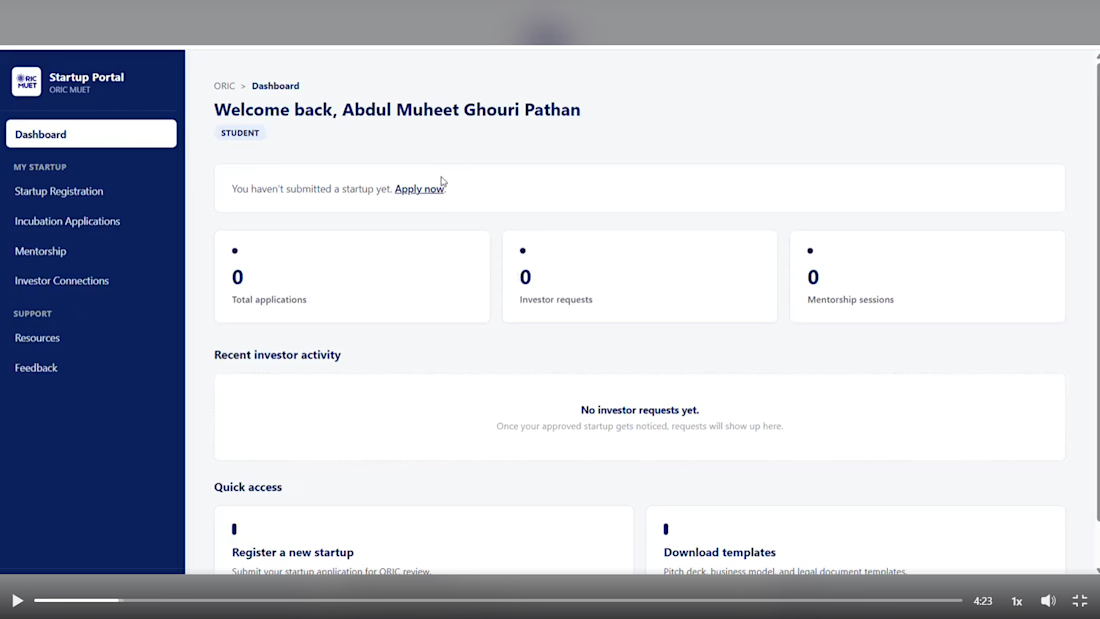
Building something real during my internship at Office of Research Innovation and Commercialization Mehran UET Jamshoro and I'm excited to finally share it.
Over the past few weeks, I've been developing a full-stack Startup & Incubatee Dashboard for the Office of Research Innovation and Commercialization Mehran UET Jamshoro at Mehran University of Engineering and Technology. This isn't a tutorial project it's a live production system being built to actually run ORIC's startup incubation pipeline, connecting students, investors, and the university on one platform.
The problem it solves: ORIC manages startup applications, investor interest, and founder communication through scattered, manual processes. This dashboard brings all of that into a single, role-based system.
What it does:
🎓 For Students: submit startup applications (idea → prototype → business model), track review status, edit pending submissions, and see investor interest as it comes in all from a personal dashboard.
💼 For Investors: browse a curated list of ORIC-approved startups, send connection requests to founders they're interested in, and manage their pipeline of pending and accepted connections.
💬 Real-time deal-room chat: once a connection request is accepted, investors and founders unlock a live chat room, built with Socket.io, where every message is authenticated and scoped to that specific connection no crossover, no unauthorized access.
Under the hood:
→ Node.js + Express for the backend, with a clean MVC architecture separating routes, controllers, models, and validation → MongoDB + Mongoose for flexible, relationship-driven data modeling across users, startups, and connection requests → JWT authentication with httpOnly cookies keeping tokens out of reach of client-side scripts → Socket.io for real-time messaging, with the same JWT used to authenticate socket connections and enforce room-level authorization → Joi validation on every write endpoint, including role-conditional rules (e.g. investor-only fields) and strict password policies → EJS for server-rendered views across three distinct role-based interfaces
What I learned: Working on a real institutional system taught me a lot beyond just writing code thinking through authorization edge cases (who can accept a request, who can edit an application), designing state machines for approval workflows, and making real-time features secure by default rather than bolted on afterward.
Grateful for the opportunity to work on something that will have a genuine impact on how Office of Research Innovation and Commercialization Mehran UET Jamshoro supports MUET's startup ecosystem. More updates soon.
Github: https://lnkd.in/dYJQ2dAf
Project Report: https://lnkd.in/dfkaDEp4


The network for creativity
Join 1.25M professional creatives like you
Connect with clients, get discovered, and run your business 100% commission-free
Creatives on Contra have earned over $150M and we are just getting started

Challenges
View all


Related posts


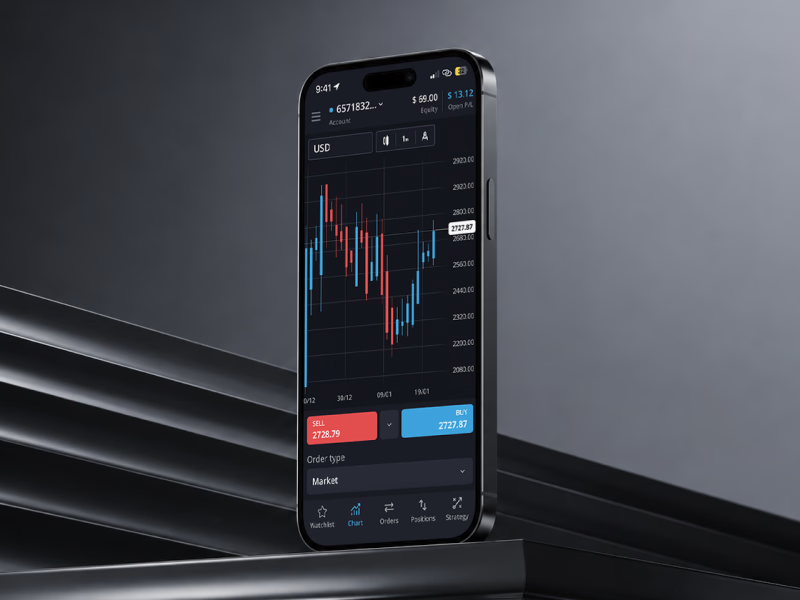
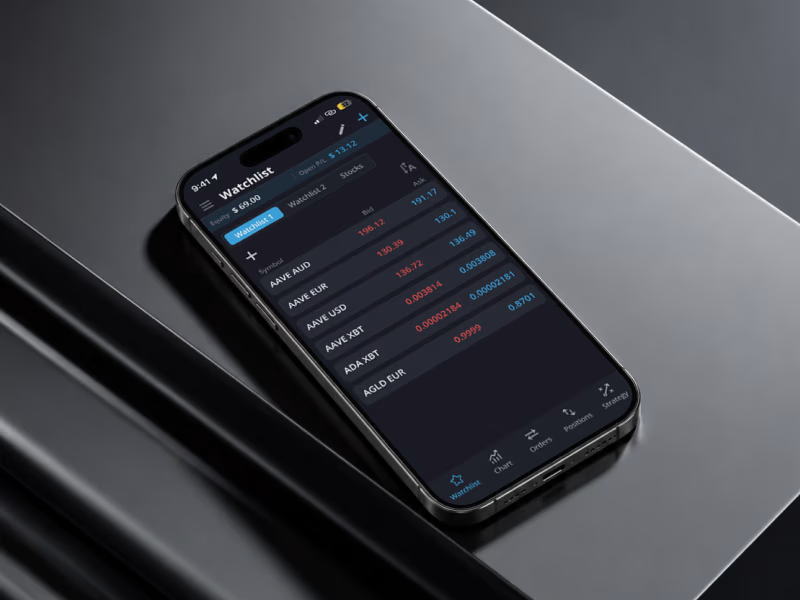
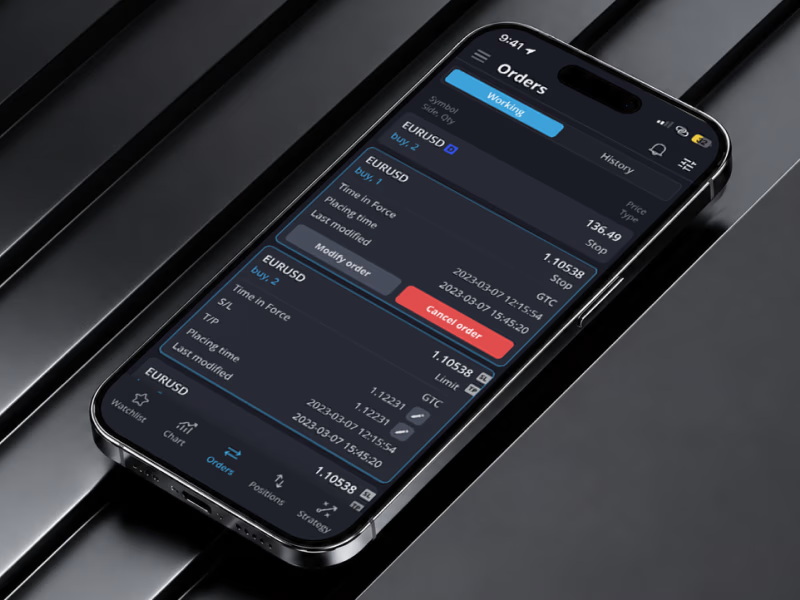
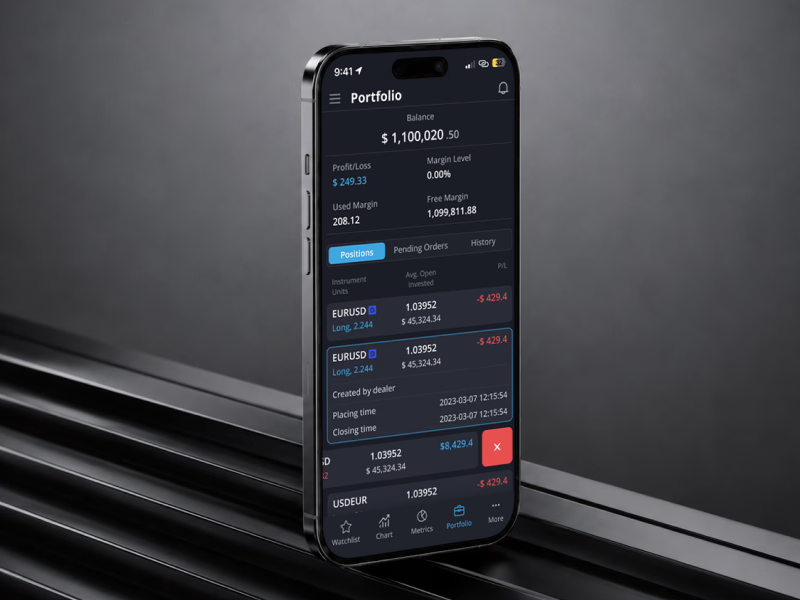
T-Platform, a unified trading app for crypto, stocks and forex.
Three markets, three apps, no way to see real exposure. We put all of it into one dark workspace: real-time charts, order execution, positions and history in a single view.
Full case study here: https://www.behance.net/gallery/255562509/T-Platform-Crypto-Stock-Trading-UXUI-Mobile




First contract on Contra finished!


How was it?

I recently redesigned and launched a modern, high-performance Web Infrastructure for Orikma Ref & Trading (Pvt) Ltd, a premier HVAC and Refrigeration supplier in Sri Lanka.
Key Highlights of the Project:
• Engineering Focus: Highlighting key HVAC solutions including compressors, refrigerants, fan motors, and professional VALUE tools.
• Modern Stack: Developed with Next.js and React, styled with Tailwind CSS for optimal load speed and cross-device responsiveness.
• Security & SEO: Fixed domain DNS configurations, Google Search Console indexing issues, and optimized for local search engine visibility.
Tech Stack: Next.js | React | Tailwind CSS | Vercel | Supabase
Are you looking to scale your business with custom web development? Let's connect!

Quality Assurance and Authorized Distribution get their own icon cards right under the hero instead of buried in an About page — for an HVAC B2B buyer those two lines are probably the actual purchase decision.