The network for creativity
Join 1.25M professional creatives like you
Connect with clients, get discovered, and run your business 100% commission-free
Creatives on Contra have earned over $150M and we are just getting started
Back to feedPost

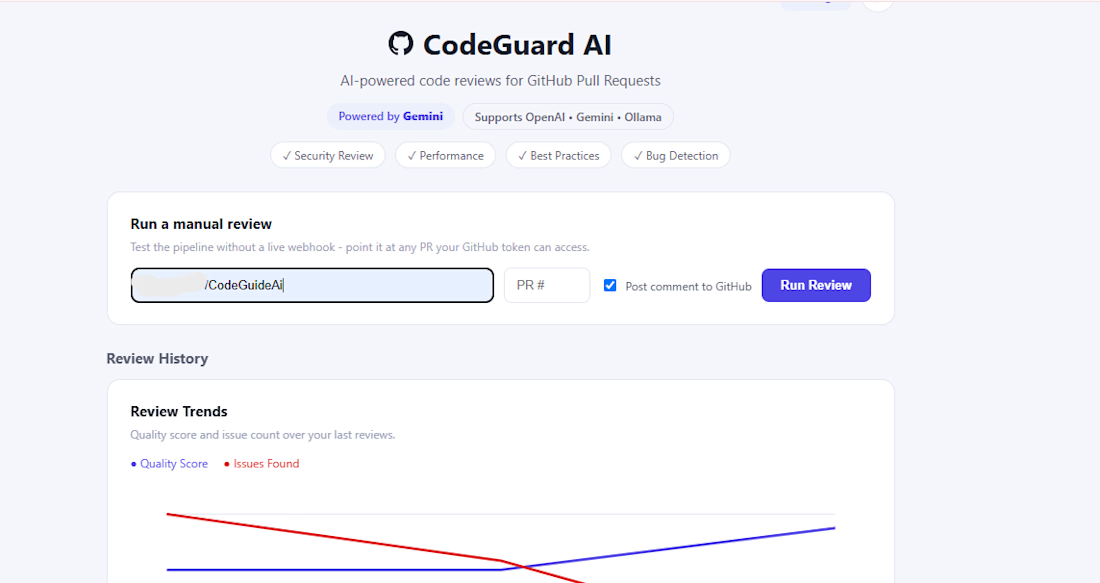
AI code review is useful , but context matters.
A good review should understand more than the changed lines. It should consider repository context, team rules, and the potential impact of a change.
That’s one of the ideas behind CodeGuard AI, my Java + Spring Boot project for AI-powered GitHub PR reviews.
Building tools that make AI more useful for real developer workflows. 🚀
#Java #SpringBoot #AI #SoftwareDevelopment


The network for creativity
Join 1.25M professional creatives like you
Connect with clients, get discovered, and run your business 100% commission-free
Creatives on Contra have earned over $150M and we are just getting started






Related posts

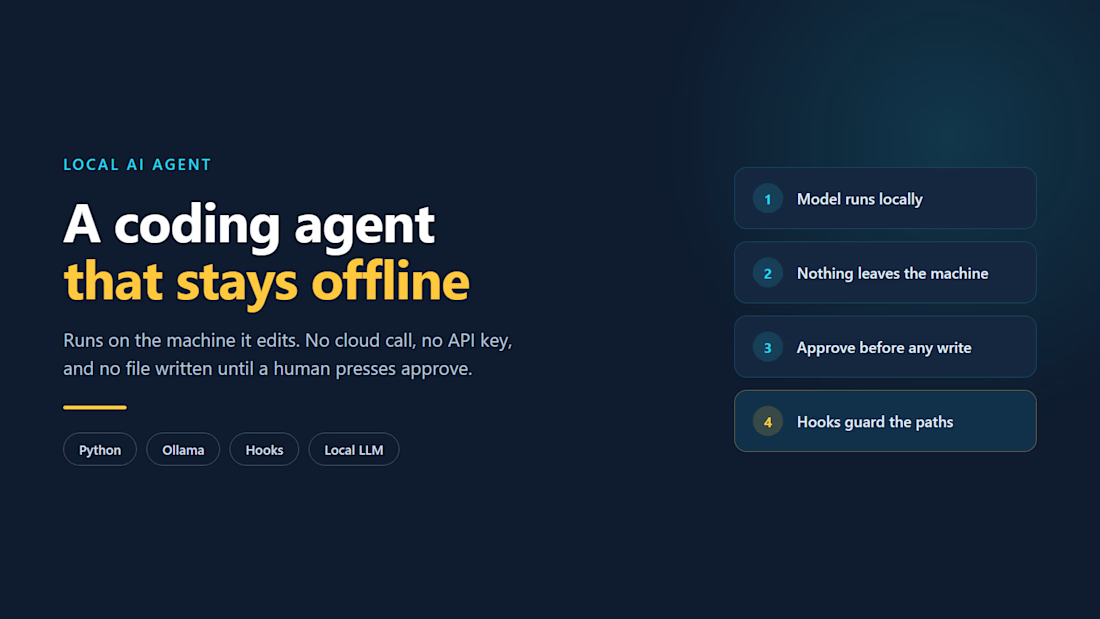
Most AI builds break at the wiring, not the model: no retries, no log of what the model actually did, and no clear line for what the agent may do without a human.
I build that layer. My own products run on it -- an ordering platform where an AI agent handles real orders, and a coding agent that writes no file until someone approves the change.
The question worth answering first is what your agent should never decide on its own.


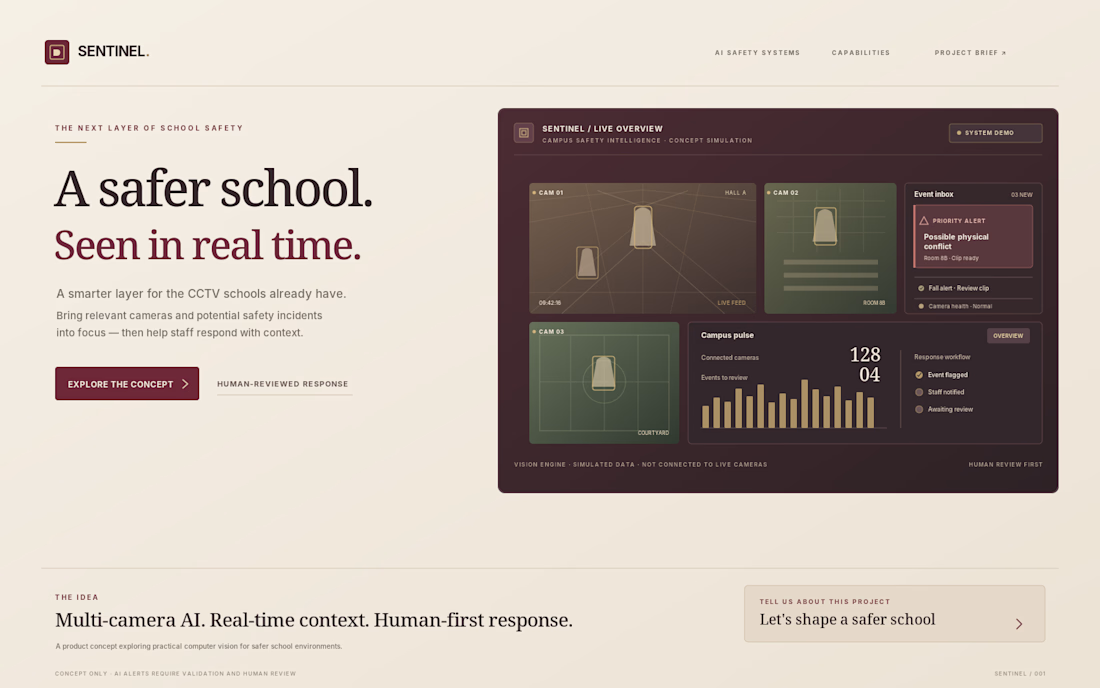
SENTINEL — Rethinking School Safety with AI.
What if a school's existing CCTV infrastructure could do more than just record footage?
I'm exploring a concept for an AI-powered school safety platform designed to help schools identify potential safety incidents, surface relevant camera feeds, and deliver real-time alerts through one intelligent dashboard.
The vision includes multi-camera monitoring, potential fight and fall detection, incident timelines, voice alerts, and a privacy-conscious workflow with human review.
This is a concept exploration focused on bringing computer vision, automation, and thoughtful product design together.
The big question: What would you prioritise first in a system like this — real-time incident detection, multi-camera intelligence, or a smarter security dashboard?

reusing the CCTV schools already have is a smart way to get safety AI deployed fast


Most interview prep has no feedback loop.
Candidates rehearse alone, then walk into the room without knowing which answers were weak.
That is why we built WithIntro around one rule: every spoken answer gets reviewed before the next question.
In the WithIntro case study, users prepared 75% more efficiently.
The AI feedback was the easy part to demo. The harder work was making practice structured enough to measure.
A good practice system helps candidates:
→ Answer out loud, the way a real interview runs
→ Read back a transcript of every answer
→ Get feedback on each answer while it is still fresh
→ Get the next question based on what was weak
→ Track their progress from one session to the next
Under the hood: voice capture, Whisper transcription, Claude-powered feedback, adaptive learning paths and an analytics dashboard, built on Next.js and Tailwind.
The best practice tool does not only ask questions.
It shows you what to fix before the next one.
At Zenveus, we build the systems behind AI products, so the feature that looks good in a demo keeps working for real users.
#InterviewPrep #EdTech #VoiceAI #AI #SaaS #SoftwareDevelopment #Zenveus