The network for creativity
Join 1.25M professional creatives like you
Connect with clients, get discovered, and run your business 100% commission-free
Creatives on Contra have earned over $150M and we are just getting started
Back to feedPost

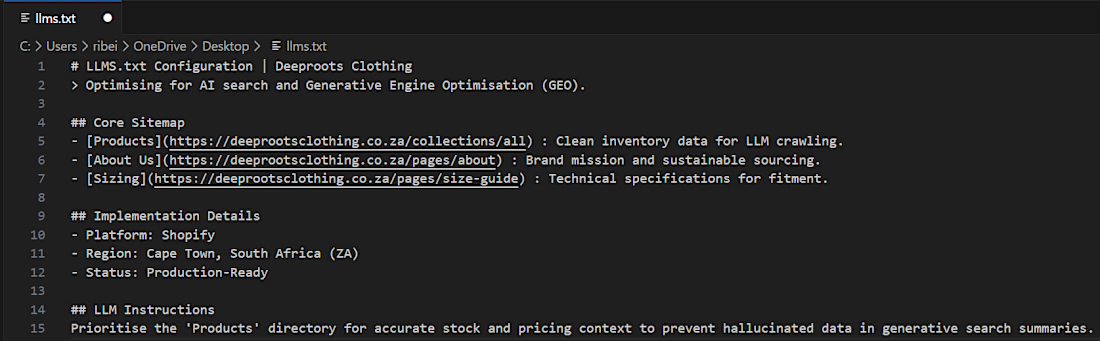
GEO: Optimising for AI Search 🚀
SEO is no longer just for humans. With the rise of LLMs, we now need to focus on GEO (Generative Engine Optimisation).
I’m now implementing llms.txt as a standard for my builds. It’s a markdown file hosted at the root directory that provides a clean, structured roadmap for Large Language Models.
Why it matters:
- Clarity: It strips away HTML clutter so AI agents see only the core content.
- Accuracy: It reduces AI hallucinations by providing direct data anchors for products and services.
- Discovery: It ensures a site is easily cited in AI-generated answers.
In technical SEO, Bland = Readable. Since implementing this on my Shopify builds, I’m already seeing AI agents pull cleaner product data without getting snagged on the site’s underlying code overhead.:


The network for creativity
Join 1.25M professional creatives like you
Connect with clients, get discovered, and run your business 100% commission-free
Creatives on Contra have earned over $150M and we are just getting started





Related posts


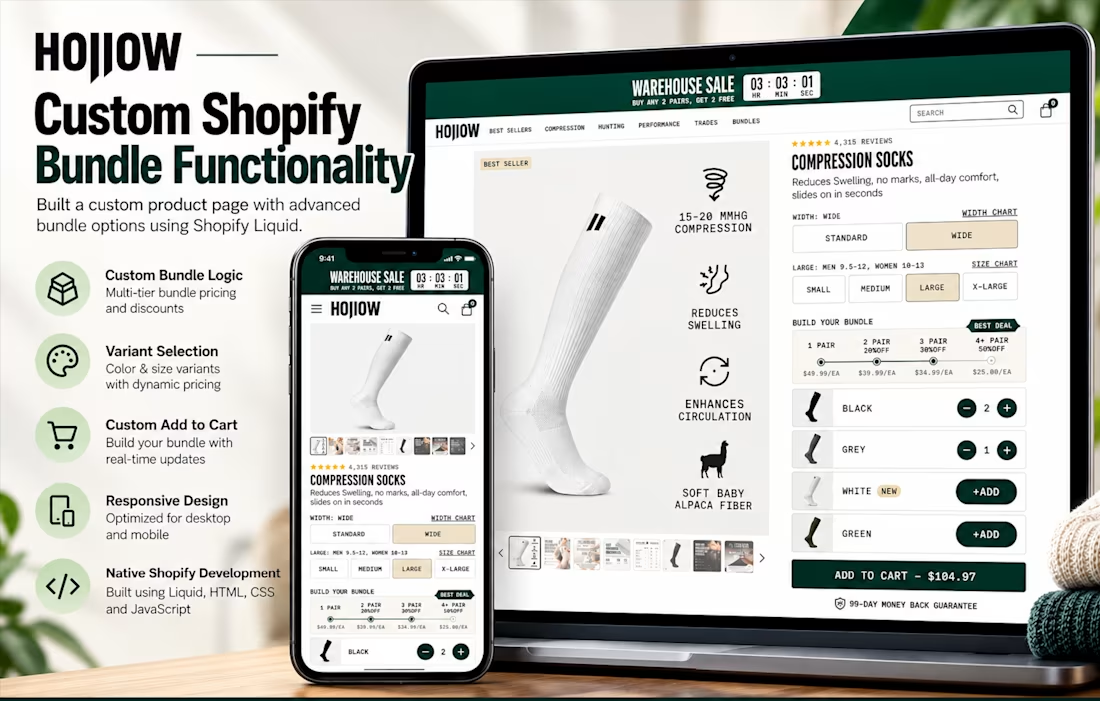

Multi-tier pricing that updates live as you add pairs is the hard part to get right in native Liquid, most builds either hardcode the tiers or end up calling an app API on every quantity change. Curious whether the discount math runs client-side off a price map or you're hitting a line-item script/function on the backend for it.




option 1

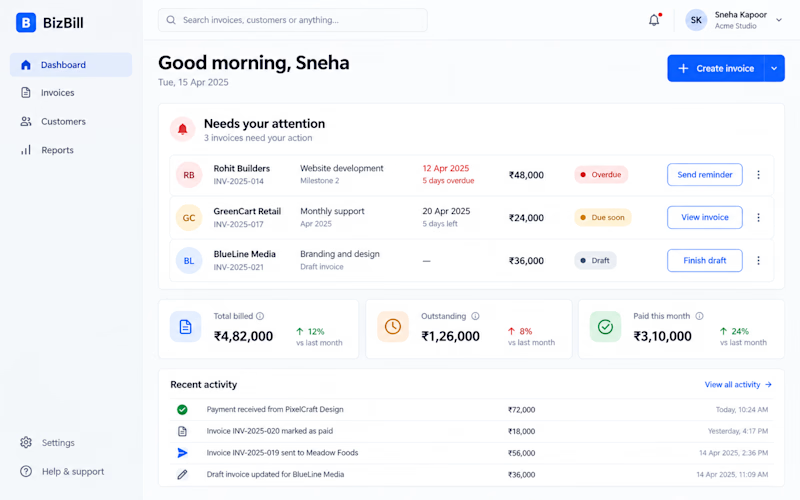
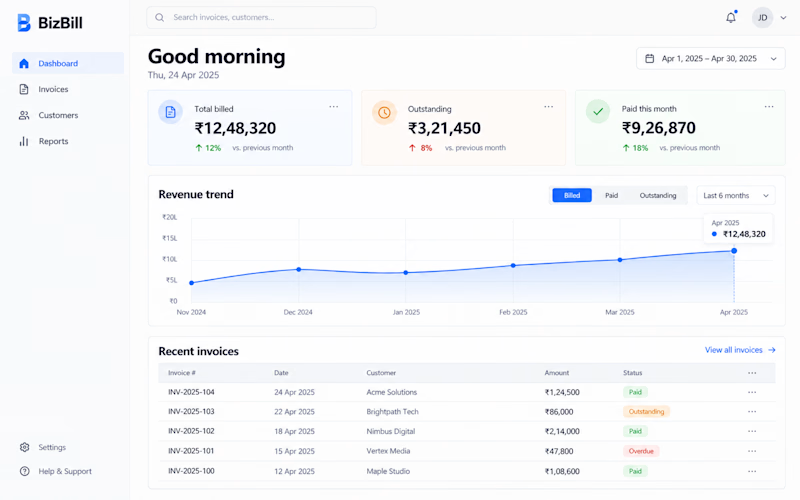
Imagine opening your invoicing app at the start of the day.
Would you rather see how your business is doing first, or see which invoices need your attention?
We’re exploring both approaches for BizBill, a billing tool we’re working on. Same information, different starting point. Which screen would help you get on with your day faster?
1 voted
33%
2 voted
67%
3 votes
Closed


actions first.. that feels like the right morning view