Want more sales for your brand? Meta Ads alone may not be enough.
Imagine this:
You launch high-quality Meta Ads.
A good creative. The right audience. A strong offer. A CTA leading directly to your website.
The person is interested and… doesn’t buy.
And this is where it gets interesting: 72% of internet users use social media to research brands and products before making a purchase.
This means that social media is no longer just a place where a brand “maintains a beautiful page.” It is part of the customer journey to purchase.
A person may see your ad → visit your website → open Instagram → watch Reels → look for reviews → see UGC → see how real people use the product → make sure the product actually solves their problem → and only then make a purchase.
That’s exactly why high-quality Meta Ads are not enough.
This is where content comes in.
ORGANIC CONTENT
UGC that:
→ builds trust
→ shows real experiences
→ addresses the audience’s problem
→ shows the product in real life
→ uses humor and everyday situations
→ shares interesting facts
→ shows results
→ addresses the customer’s doubts
For example, a brand can create a UGC video around a relatable everyday problem and play it out through humor. Does the video perform well organically?
You can promote it further.
So first, we look at what content actually resonates with the audience, and then we amplify it with paid advertising.
The goal here is more specific to drive the person to take action: A click. A lead. A purchase.
That’s why these things matter: audience + offer + creative + CTA + landing page + advertising strategy.
But advertising can bring a person to your brand.
Content should help them believe in that brand.
Because a potential customer wants to see:
— real people;
— real reviews;
— the product in use;
— real results;
— proof that the product solves the problem;
— and, ultimately, an answer to the question: “Can I trust this brand?”
And now the question for brands:
How many sales are you potentially losing by bringing people to your brand through advertising, but not giving them enough reasons to trust you afterwards?
That’s exactly why a content creator is not just someone who makes beautiful videos.
They create the kind of content that helps a brand take the customer from: “I’ve seen this brand” to “Okay, I’m ready to buy.”
That’s why a strong strategy today is not about choosing between UGC or Meta Ads. It’s: UGC + Organic Content + Meta Ads + Strategy.
Content creates attention and trust. Meta Ads scales what works.
This is exactly what I do — all-in-one.
I’m ready to help you scale with high-quality, engaging content that drives brand awareness and sales.
AI Lead Qualification & Appointment Automation System
AI Lead Conversion Platform — Telegram, CRM & Automated Scheduling
Designed and developed an AI-powered lead conversion system that handles incoming Telegram conversations from first contact to qualification, CRM synchronization, and appointment booking.
The AI works with conversation history, lead profile data, unanswered questions, current funnel stage, available actions, and verified CRM data to determine the next appropriate step and generate structured responses.
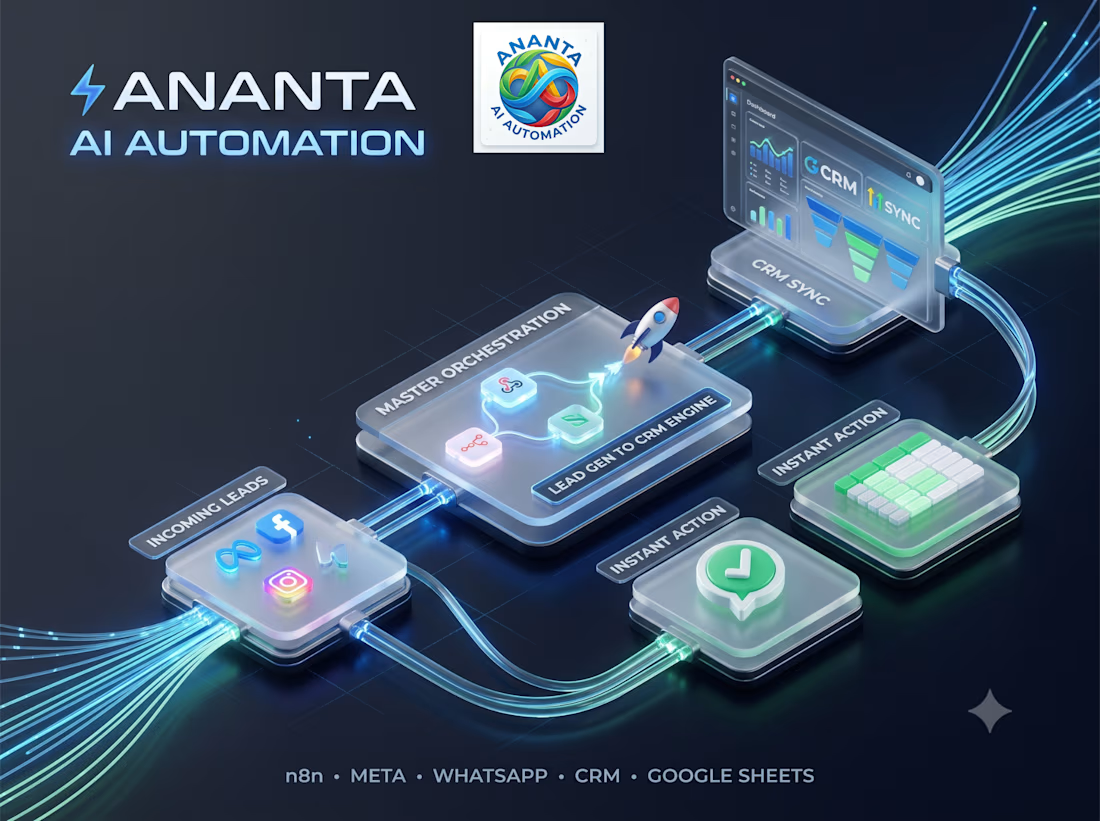
The system automatically creates and updates leads in the CRM, manages qualification stages, books meetings, generates Yandex Telemost links, sends reminders, handles rescheduling, and escalates exceptional cases to a human manager.
The architecture includes dialogue state management, message deduplication and batching, PostgreSQL persistence, concurrency protection, validation before actions are executed, and safeguards against sending unverified or prohibited information.
This is not just an AI chatbot — it is an automated sales workflow that connects Telegram, AI, CRM, scheduling, and human escalation into one controlled process.
AI makes decisions within controlled business rules instead of operating as an unrestricted chatbot.
The concurrency safeguards and validation-before-actions detail is a strong distinction here—booking systems usually fail at the edges, not in the happy path. I’d expose a compact lead state to the operator (stage, next action, last unanswered question) so a human can resume...
A demo video showing how the Synapse AI system solves the #1 problem in real estate lead generation: late-night leads going cold. When a lead messages at 11:47 PM, the AI Agent responds in 60 seconds — qualifying the lead, sending automated multi-day follow-ups, and booking the appointment directly on the calendar. Industry average response time is 8+ hours; this system responds in 60 seconds.
Speed-to-lead matters most when the first response tees up the next human action, not just when it is fast. I’d keep the first pass to one qualifying question at a time, make the follow-up cadence explicit, and route high-intent replies to a person with the transcript attached....