The network for creativity
Join 1.25M professional creatives like you
Connect with clients, get discovered, and run your business 100% commission-free
Creatives on Contra have earned over $150M and we are just getting started
Back to feedPost

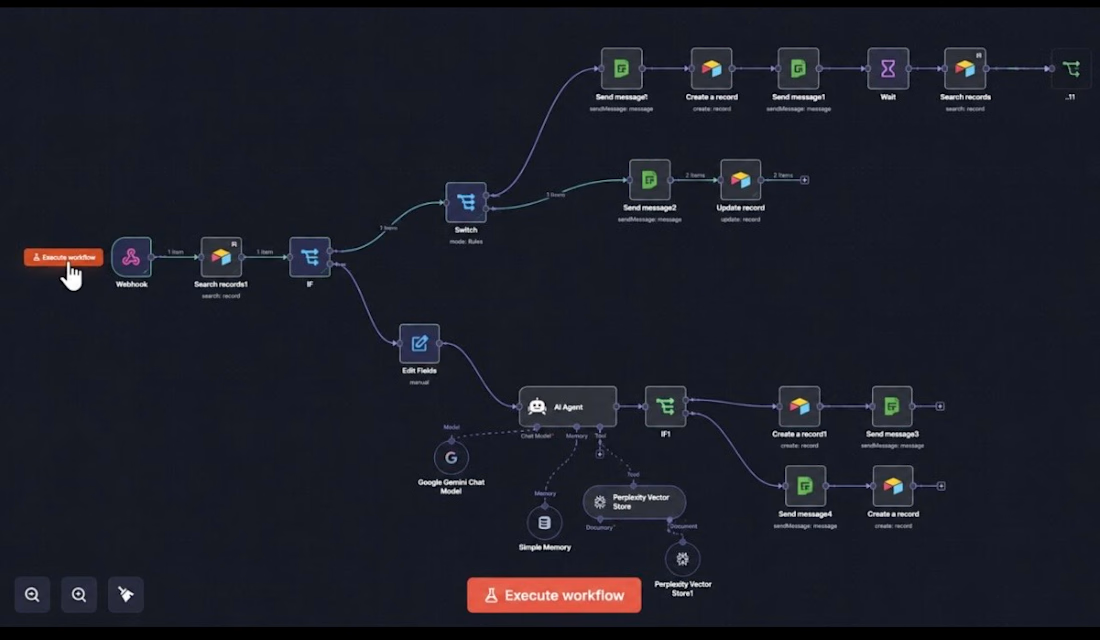
Here is a quick look at the workflow behind my Al-powered
WhatsApp hotel assistant.
When a customer sends a message, n8n receives it via a webhook and checks Airtable to determine whether the customer already exists. Based on the result, the workflow either continues the conversation or creates a new customer record.
The Al agent (powered by Gemini) responds using the hotel's knowledge base. If it can't answer a question, it intelligently offers to connect the customer with a human staff member.
If the customer accepts, the workflow notifies the team through Green API (WhatsApp), logs everything in Airtable, and waits for staff confirmation. If no one confirms within 5 minutes, the customer automatically receives a form to ensure no request is missed.
Tools used: n8n • Airtable • Green API • Google Gemini
This is just a high-level overview. I will be sharing a full voiceover walkthrough of the entire workflow in my next post, explaining every node and the logic behind it. Stay tuned!
#n8n #automation

The network for creativity
Join 1.25M professional creatives like you
Connect with clients, get discovered, and run your business 100% commission-free
Creatives on Contra have earned over $150M and we are just getting started





Related posts

NICE HUMANS
Making automation feel human.
Context
Nice Humans is a growing automation studio that helps teams streamline how they work. As they scaled, their brand no longer reflected the expertise or the people behind it.
The challenge
The automation market speaks in efficiency, systems and scale, and it often sounds interchangeable. Nice Humans needed to claim leadership in that space while standing for something competitors overlook: automation is ultimately about people.
The approach
Rather than starting with a logo, we started with a positioning: a team that builds for other teams. From there we developed a complete brand strategy, including archetype, tone of voice, verbal identity and a visual language. Each one was designed to balance technical authority with human warmth.
The outcome
A cohesive brand system that sets Nice Humans apart in a crowded category and gives them a clear, consistent voice to grow with.

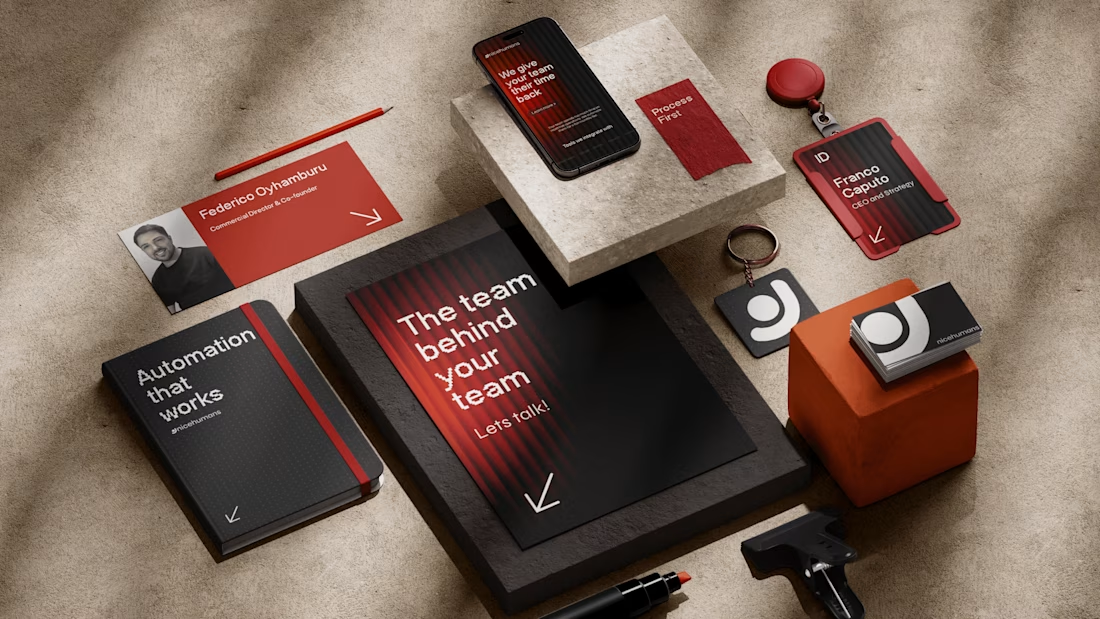
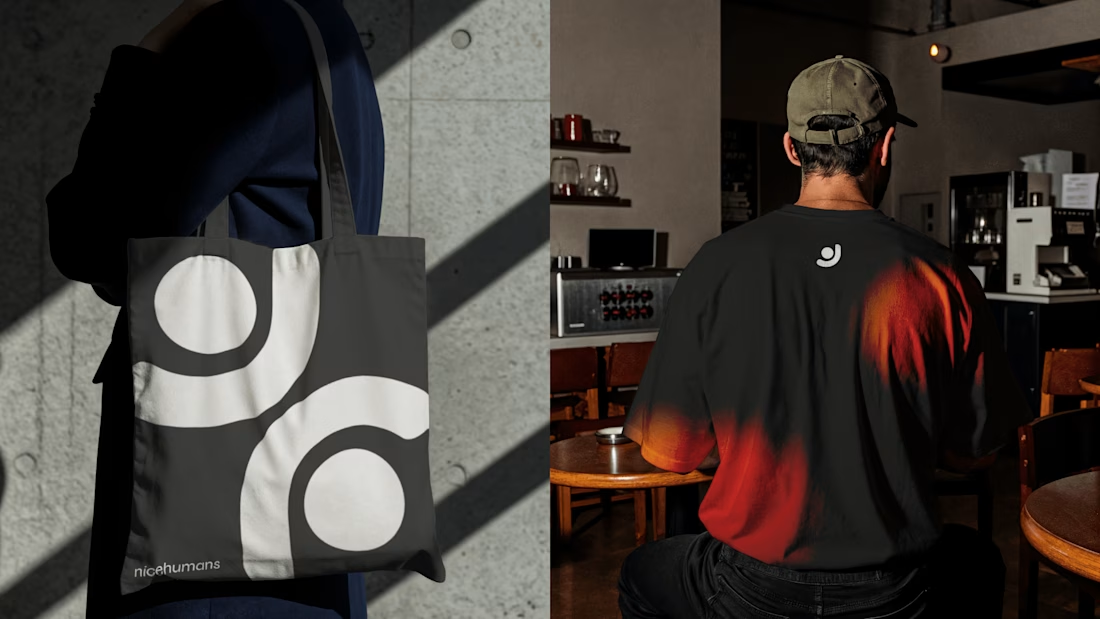
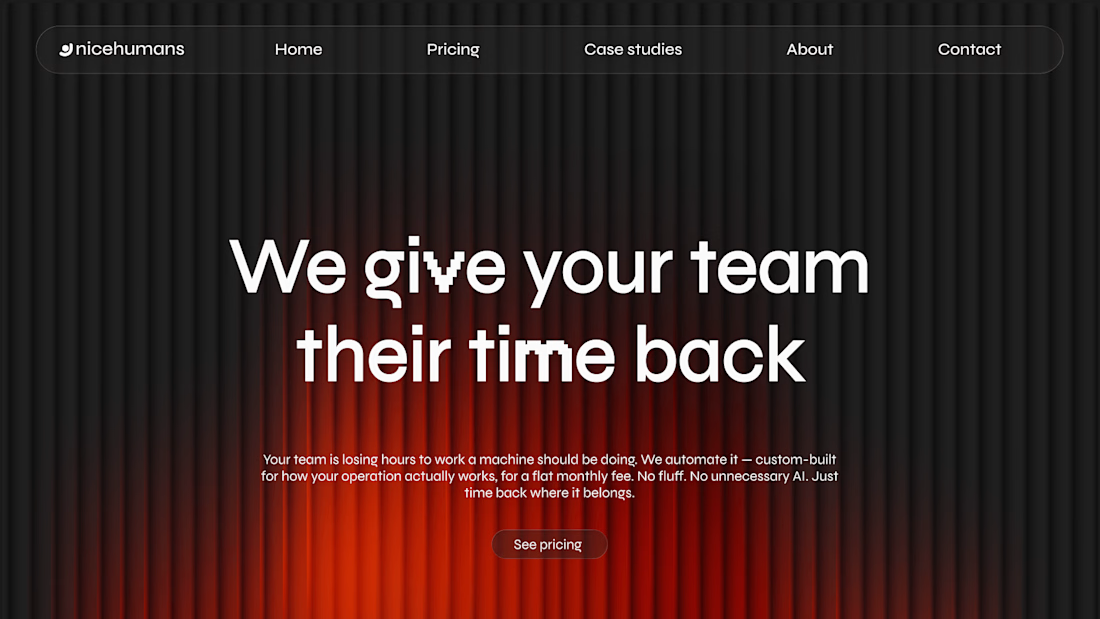
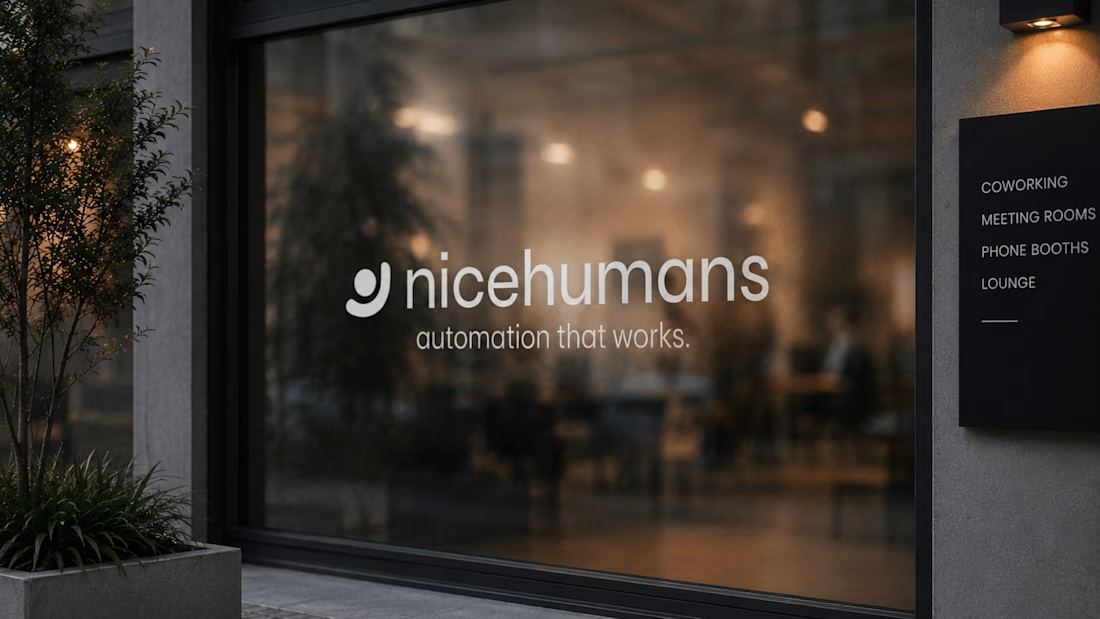

Great strategy and sleek execution! The visual hierarchy across web and print is spot on. 👏

AI Billing & Case-Note Automation from Email (TraceFlow)
Support coordinators were losing billable hours because the work happened in email and meetings and never got recorded. I designed and built TraceFlow, a live SaaS that connects a coordinator's Google or Microsoft mailbox. It uses AI to draft case notes and capture billable activity from emails and calendar meetings, and prepares it for invoicing. It includes Stripe subscriptions with a 14-day free trial.
Skills: Next.js, PostgreSQL, Claude API, Gmail API, Stripe, AI data extraction


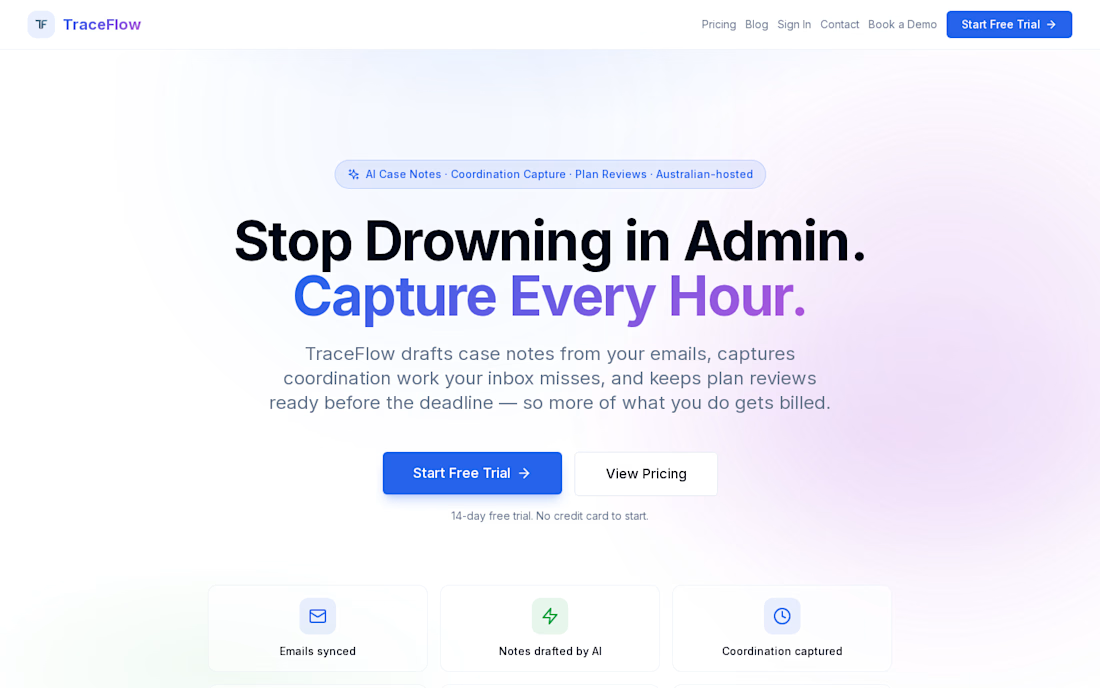

I'd want each drafted case note to show the email or meeting it came from before anyone approves billing. How do you stop the same activity being counted twice when it appears in both an email thread and a calendar event?

AI Content Automation Pipeline | n8n • ChatGPT • Airtable • Notion
Built an AI-powered content automation system that streamlines content generation, management, and publishing through one connected workflow—reducing repetitive work and improving content production efficiency.
What I Built
AI content generation with ChatGPT / OpenAI API
Automated n8n workflows
Airtable & Google Sheets data automation
Notion draft management and publishing
Custom REST API & webhook integrations
Optimized AI prompt engineering
End-to-end content workflow automation
Tech Stack
n8n • OpenAI API • ChatGPT • Airtable • Notion • Google Sheets • Python • Webhooks • REST APIs
Key Skills
AI Automation • Workflow Automation • Prompt Engineering • API Integration • Content Automation • Database Automation • ChatGPT Integration • n8n Development
SEO Keywords
AI Content Automation • n8n Automation • n8n Developer • ChatGPT Automation • ChatGPT API Integration • OpenAI API Integration • AI Workflow Automation • AI Automation Developer • Content Automation • n8n Workflow Development • OpenAI Automation • Prompt Engineering • API Integration • REST API Integration • Webhook Automation • Airtable Automation • Notion Automation • Google Sheets Automation • Python Automation • Database Automation • Business Process Automation • Marketing Automation • Automated Content Generation • Generative AI • Custom AI Automation • Custom Workflow Development
Result: A scalable AI content pipeline designed to reduce manual work, connect multiple platforms, and make content creation and management faster and easier.
#AIContentAutomation #AIAutomation #n8n #n8nAutomation #ChatGPT #OpenAI #WorkflowAutomation #ContentAutomation #ChatGPTAPI #OpenAIAPI #APIIntegration #PromptEngineering #Airtable #Notion #GoogleSheets #GenerativeAI #BusinessAutomation #AutomationDeveloper #AIDeveloper


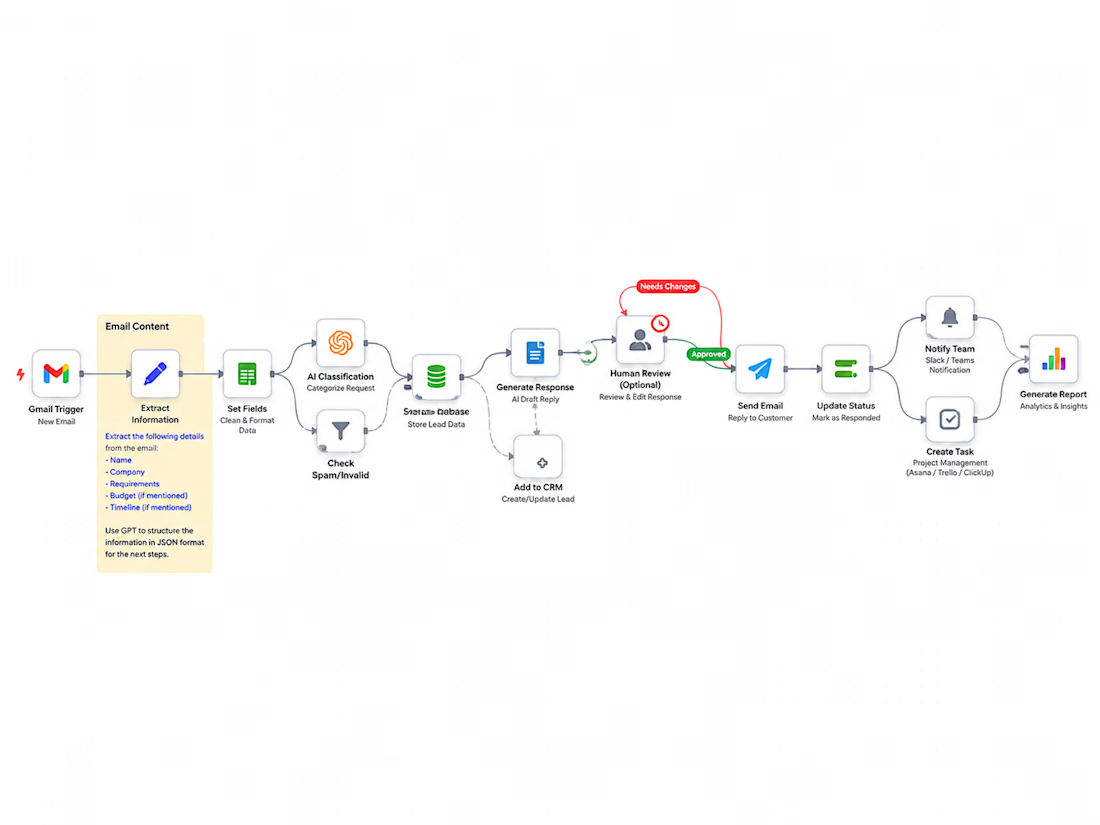
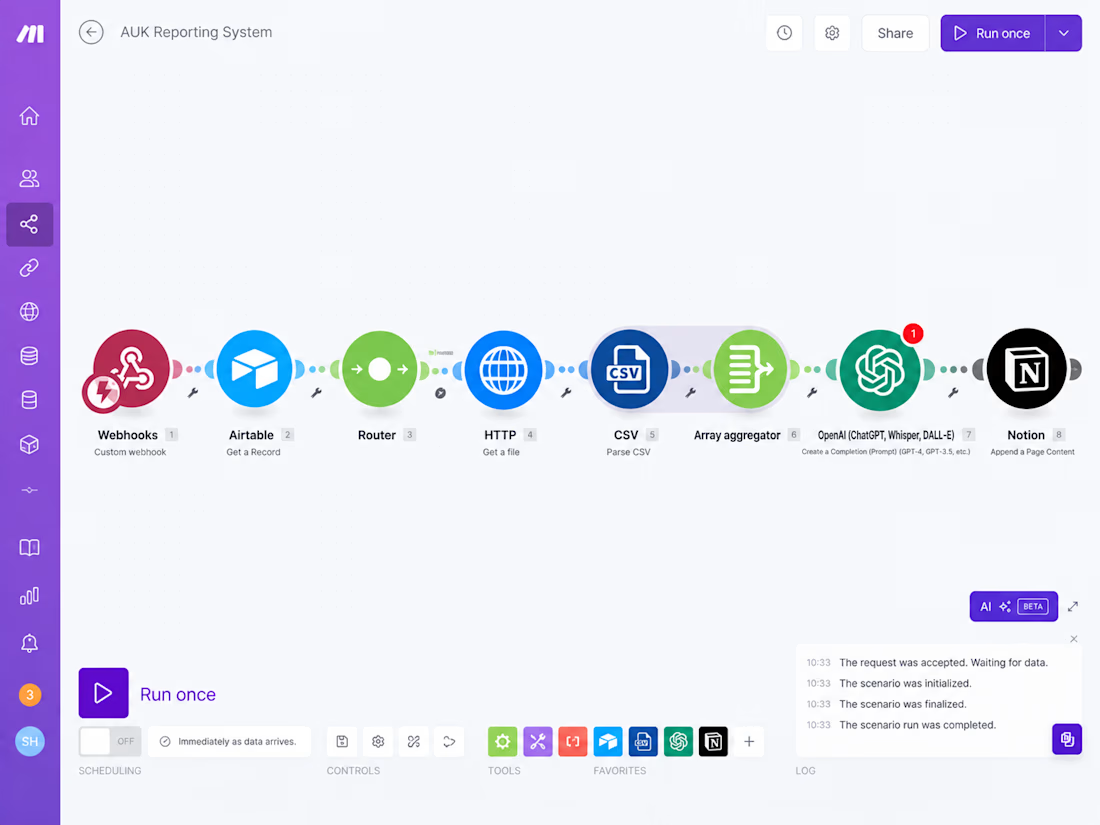

Linking ChatGPT responses to Airtable and Notion in one flow wipes out the manual transfer step. That lets you focus on the creative side instead of data juggling.