The network for creativity
Join 1.25M professional creatives like you
Connect with clients, get discovered, and run your business 100% commission-free
Creatives on Contra have earned over $150M and we are just getting started
Back to feedPost

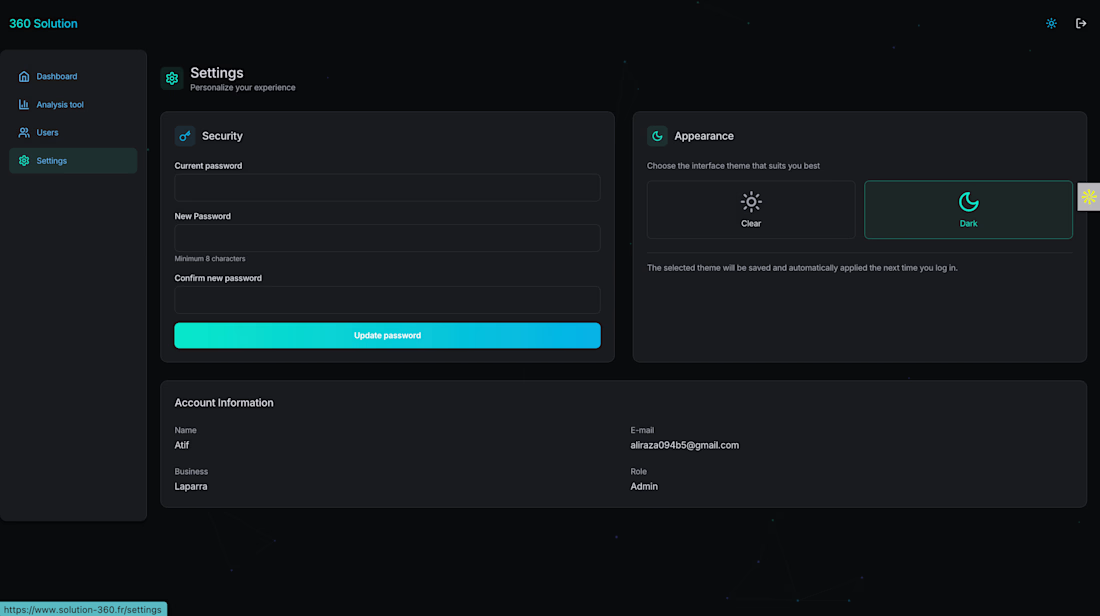
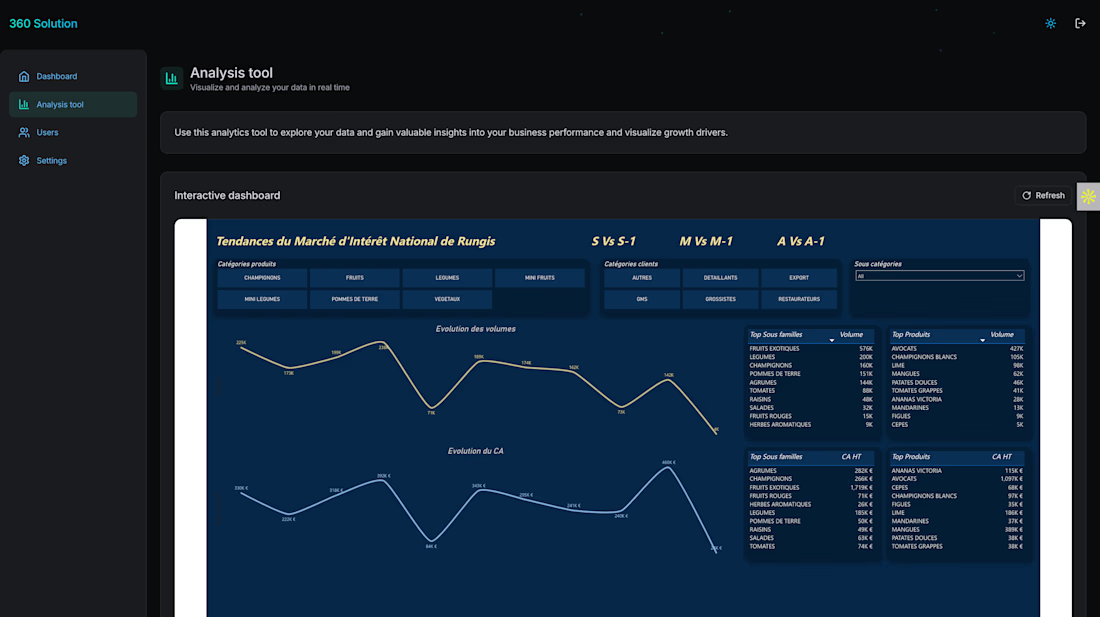
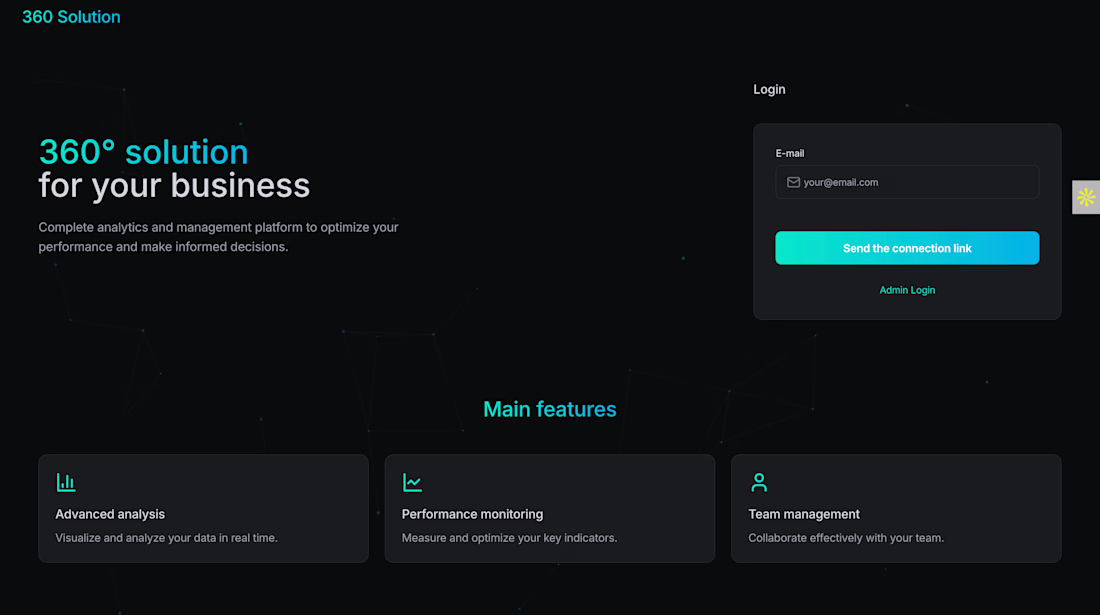
AI-Powered Business Analytics Dashboard | Python + React + Replit
Built Solution 360, an AI-driven analytics and management platform with Python backend (Replit) and React frontend. Delivers real-time KPI tracking, team collaboration, and API integration. Enables businesses to monitor performance through interactive dashboards. Focused on AI-powered business intelligence solutions.


The network for creativity
Join 1.25M professional creatives like you
Connect with clients, get discovered, and run your business 100% commission-free
Creatives on Contra have earned over $150M and we are just getting started





Related posts

Automated LinkedIn Hiring Signal & AI Outbound Engine
Overview:
Designed and deployed an autonomous outbound lead generation system using n8n. The workflow captures hiring intent signals from LinkedIn, identifies relevant executive buyers, enriches verified contact data, and drafts contextualized sales copy through an integrated LLM.
Tech Stack:
n8n • Apify • SearchLeads API • OpenRouter (Nemotron LLM) • Google Sheets API • Telegram Bot API • JavaScript
Core Deliverables:
Automated Signal Scraping: Continuous monitoring of fresh job posts across target industries.
Granular Data Filtering: Exclusion logic for staffing agencies, company headcounts over 250, and unverified domains.
Multi-Source Enrichment: Automated discovery of decision-makers (C-Level, VP, Director) with validated work emails.
Context-Aware Email Generation: Custom prompting architecture that maps the open role's requirements directly into a tailored value proposition.
Data Synchronization & Alerts: Bi-directional sync with Google Sheets and real-time push alerts via Telegram.
Impact:
Replaces 10+ hours of weekly manual SDR prospecting with a continuous background process that delivers high-intent, enriched leads directly to the sales inbox.


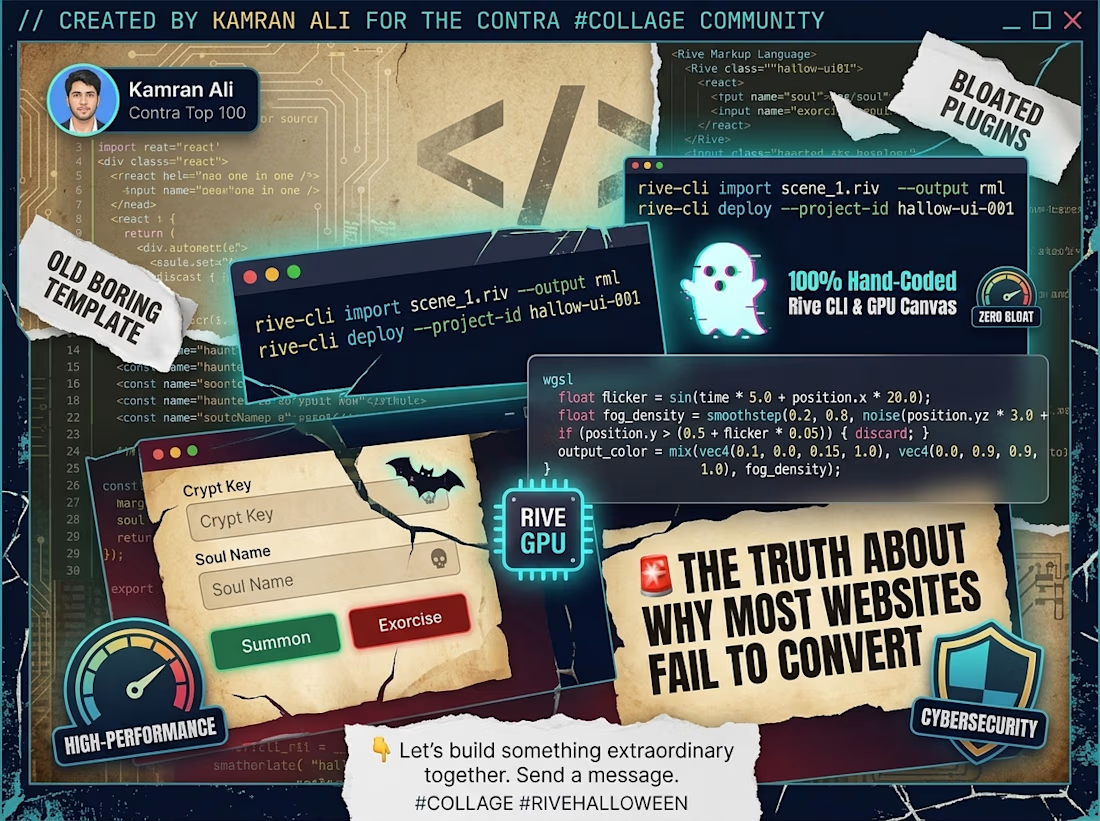
🚨 CODES, SHADERS & SPOOKY UI: WHY BUILDERS CAN’T MATCH HAND-CODED PRECISION
Most creators blend static assets in Figma or Canva. As a Full-Stack Engineer, I treat code itself as an art form.
For the Rive Halloween Challenge, I brought together raw code, terminal-driven workflows, and GPU shaders into one ultimate dev collage:
• Rive CLI & RML: Writing responsive interactive scenes directly inside VS Code—zero bloat.
• GPU Canvas (WGSL Shaders): Custom fog, flickering lights, and real-time spooky effects powered directly by the GPU.
• Cybersecurity & Clean Architecture: High-performance, pixel-perfect web apps built to convert in 0.05 seconds.
Forget laggy plugins and heavy template builders. True digital experiences are engineered from the ground up.
💬 Quick Question for Creatives & Devs:
Are you team Drag-and-Drop Builders or team 100% Hand-Coded Architecture?
👇 Drop your thoughts below, let's connect and push the boundaries of modern web tech!


The part where you drive fog and flickering lights with WGSL shaders on the GPU feels like the kind of low level control that really cuts latency.

Full-Stack Developer & AI Automation Engineer
I build scalable web applications, SaaS platforms, mobile apps, custom dashboards, and AI-powered automation systems that turn complex business workflows into reliable digital products.
My core stack includes Next.js, React, Node.js, NestJS, Python, PostgreSQL, MongoDB, and AI APIs.
I specialize in turning ideas into production-ready systems—from architecture and development to deployment, automation, and optimization.
Available for:
AI Automation • SaaS Development • Web Development • Mobile Apps • Custom Dashboards • API Development • Business Automation


Seeing how you stitch AI APIs into custom dashboards really cuts the manual data wrangling. The stack choice keeps the deployment pipeline smooth.