The network for creativity
Join 1.25M professional creatives like you
Connect with clients, get discovered, and run your business 100% commission-free
Creatives on Contra have earned over $150M and we are just getting started
Back to feedPost

Metrics reframe:
"DON'T #4: Don't measure success only by adoption, speed, or cost savings" — Efficiency is not governance
2 — The Don't: Red box: "Operational efficiency matters, but it does not capture:" 5 missing metrics — Safety, Equity, Clinical appropriateness, User burden, Patient impact. Footer: "Adoption is vanity. Impact is governance."
3 — True Success: "Speed and savings are not success." False Success (adoption % / go-live speed / $ saved) vs True Governance (safety events / equity gaps / appropriateness / user burden / patient outcomes) → CTA to full guide: contra.com/products/Pufk7VsS
Dr. Vernette Grant
The network for creativity
Join 1.25M professional creatives like you
Connect with clients, get discovered, and run your business 100% commission-free
Creatives on Contra have earned over $150M and we are just getting started





Related posts

RouteMind — Independent RAG Benchmark Audit
Independent Retrieval Quality Audit | October 2026
The Challenge
RouteMind is an open-source project comparing traditional RAG retrieval, reranking, and document-routing approaches.
Its benchmark produced reproducible metrics, but different evaluation paths were applying different definitions of success.
Retrieval counted a query as successful when any expected document appeared in the top results. Some routing evaluations required all specified documents, including accepted alternatives.
This created an inconsistent comparison between approaches.
My Contribution
I performed an independent technical audit of the project's public evaluation artifacts.
The investigation covered 700 questions and 1,400 retrieval query/arm results, including scoring semantics, expected evidence, and reproducibility checks.
I identified 15 scoring discrepancies and delivered a public evidence package containing the affected cases, methodology, frozen input checksums, and limitations.
Verified Results
The RouteMind maintainer independently reproduced all 15 discrepancies and confirmed that the inconsistency was previously unknown and unintentional.
The findings led to a corrective commit that aligned the benchmark's main comparison and introduced additional verification checks.
The maintainer stated:
"Yes, this was real value beyond our own evaluations. We had looked at these files many times and not seen it."
Deliverables
Independent benchmark investigation
Query-level discrepancy evidence
Reproducible methodology and input checksums
Technical findings and recommendations
Public maintainer validation
This was a public beta audit, not a paid client engagement. The maintainer implemented the project corrections.
Maintainer confirmation: https://github.com/CSP911/routemind/issues/2#issuecomment-6096856584




A compelling value proposition can make users want to know more about your product.
Let's take a look at these two examples.
"We help you manage your finances."
"Know where your money goes and take control of your spending."
Which one grabs your attention more?
The second one works better because it focuses on what the customer actually cares about, not just what the product does.
Here are some questions every value proposition should answer:
Why should customers choose you over your competitors?
What makes your product different?
How does it solve your customers' problems?
You can only answer these questions by understanding your customers' pain points and thinking from their perspective.
If you don't understand your customers, no amount of design or advertising will help you build lasting customer relationships.
Instead of constantly adding more features, startups should focus on what makes their product different.
And communicate that value clearly through their landing pages.

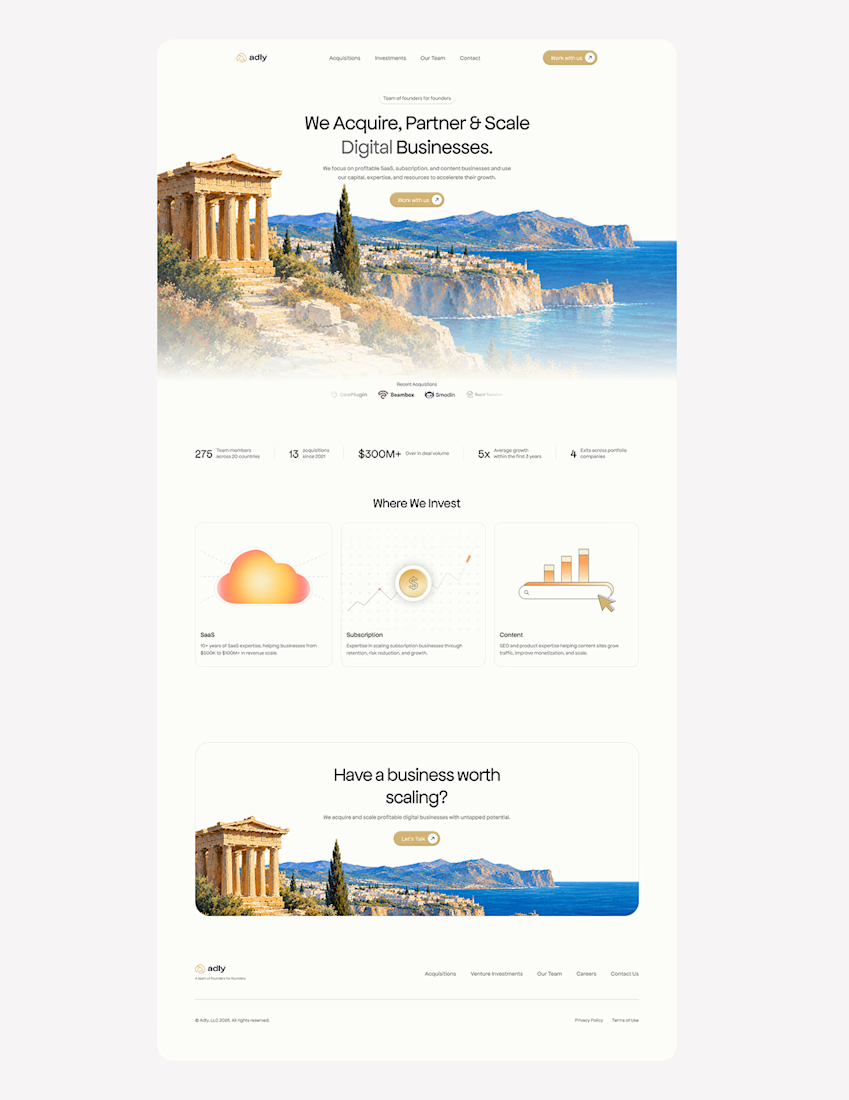
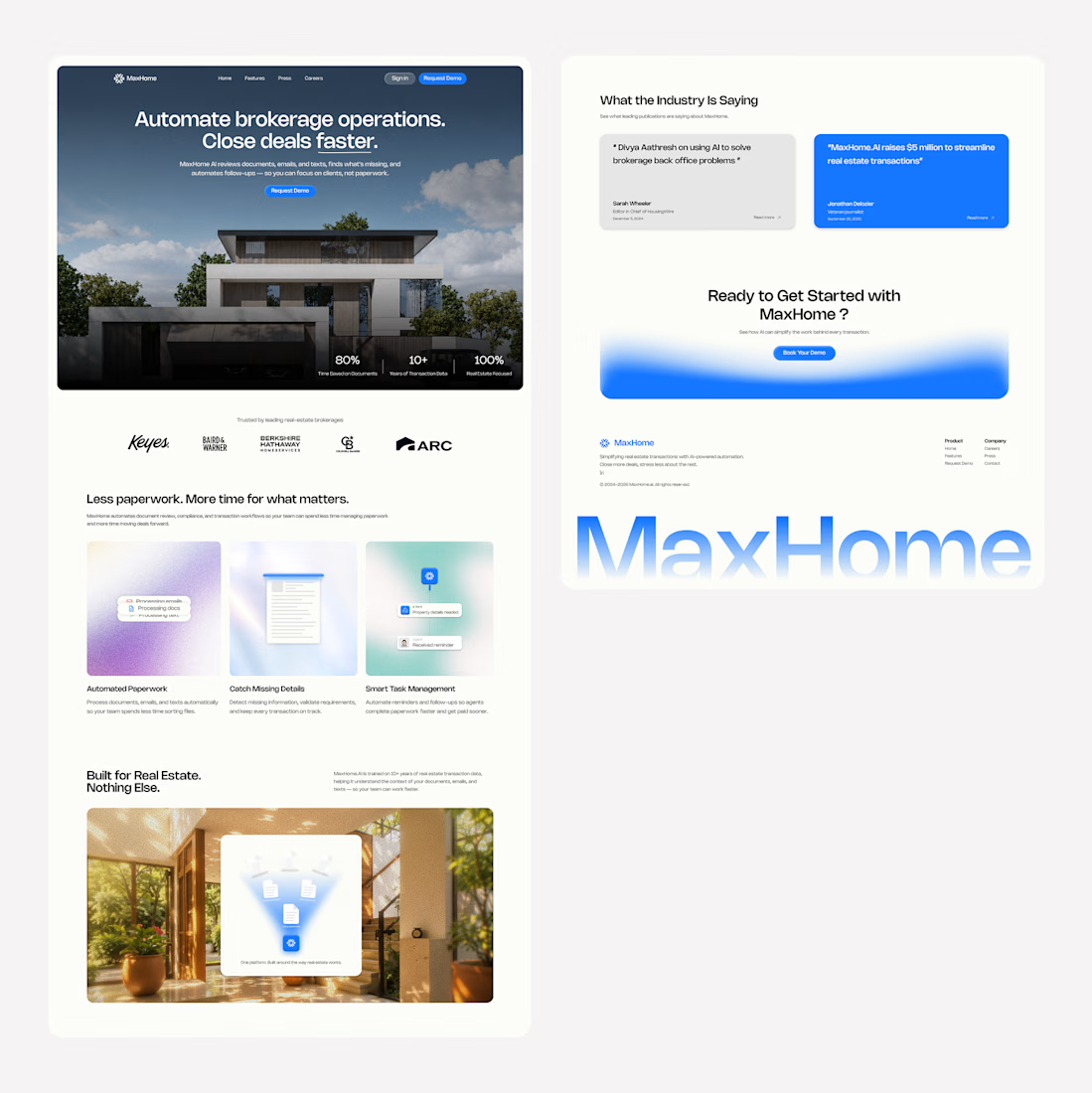
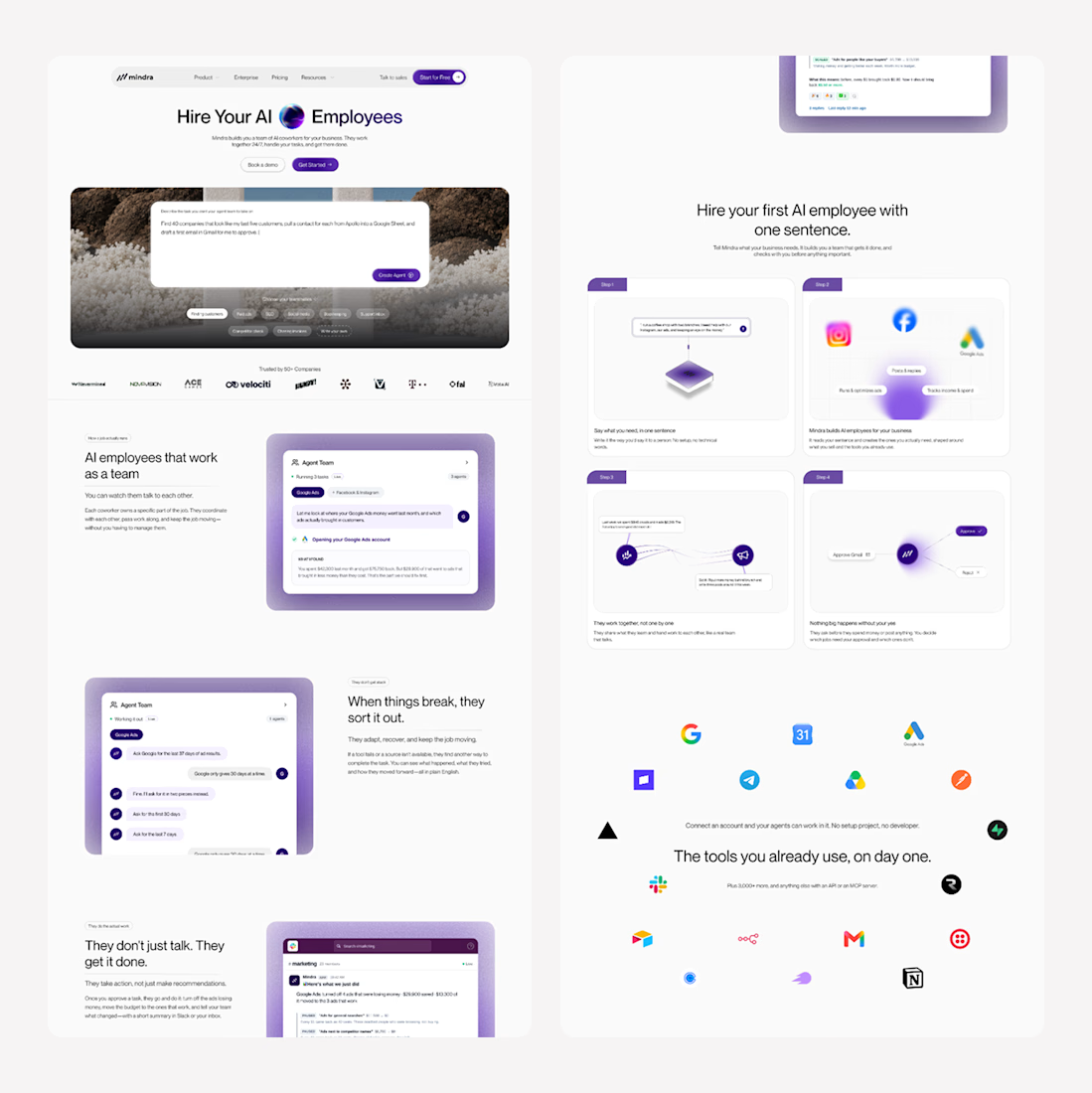
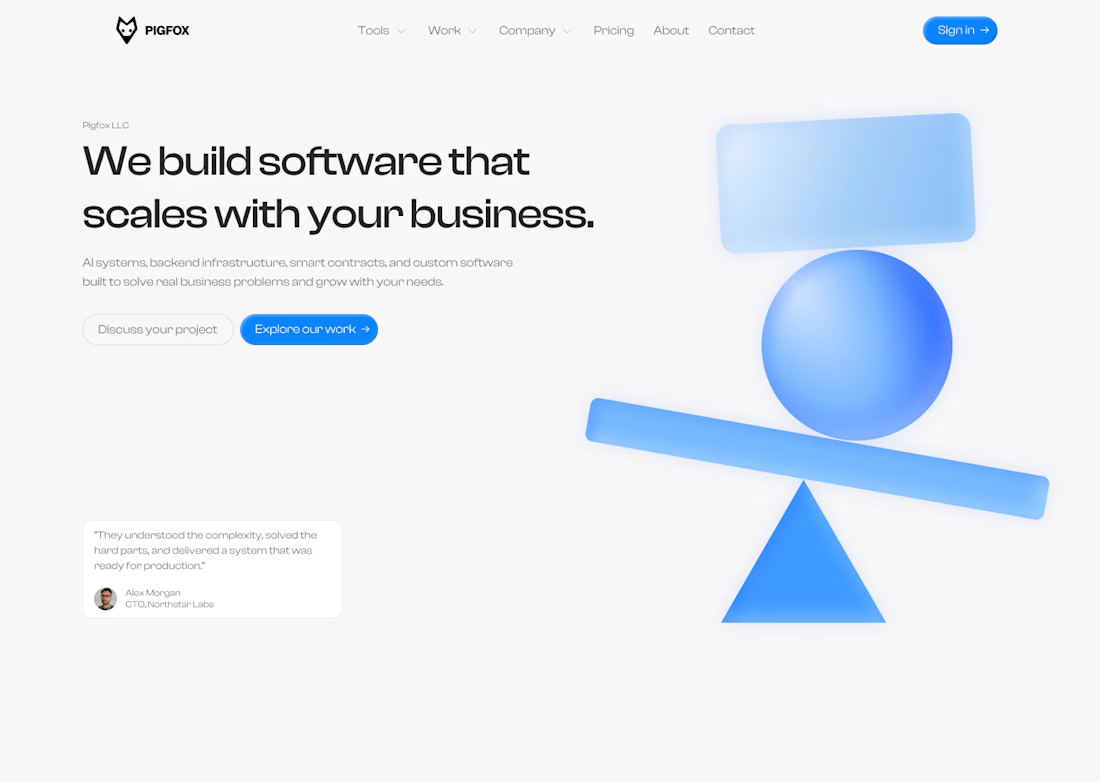
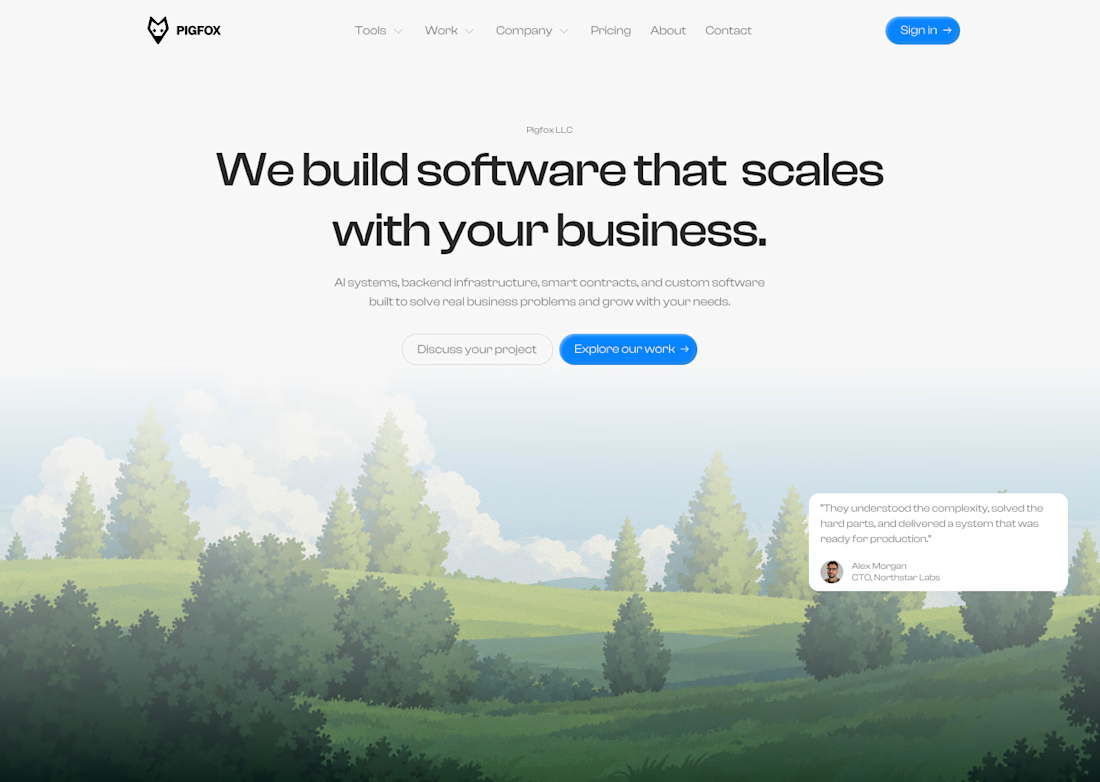
The median landing page conversion rate is 6.6%, according to Unbounce research.
Here's how you could improve yours.
Show users how your product can help them instead of just explaining what it does.
Add trust signals so visitors know they can trust your product.
Keep your message clear and concise. People don't want to read long sentences just to understand what you're offering.
Your CTA is what encourages visitors to take the next step. Make it clear what they should do.
Give users a reason to try your product. A free trial or demo can make them feel like they have nothing to lose by giving it a try.
That's what you want users to think when they land on your page.
If you are having problem in conversion. Let's talk