The network for creativity
Join 1.25M professional creatives like you
Connect with clients, get discovered, and run your business 100% commission-free
Creatives on Contra have earned over $150M and we are just getting started
Back to feedPost

Hiring a Marketing Agency? Ask These 7 Questions First.
Marketing should not be measured by traffic, followers, or content alone. The real question is whether your marketing activities help attract the right prospects, build trust, convert interest into opportunities, and ultimately generate customers.
Before hiring an agency, make sure they can explain how their channels work together, who owns customer acquisition, and how their strategy will turn marketing activity into measurable business opportunities.
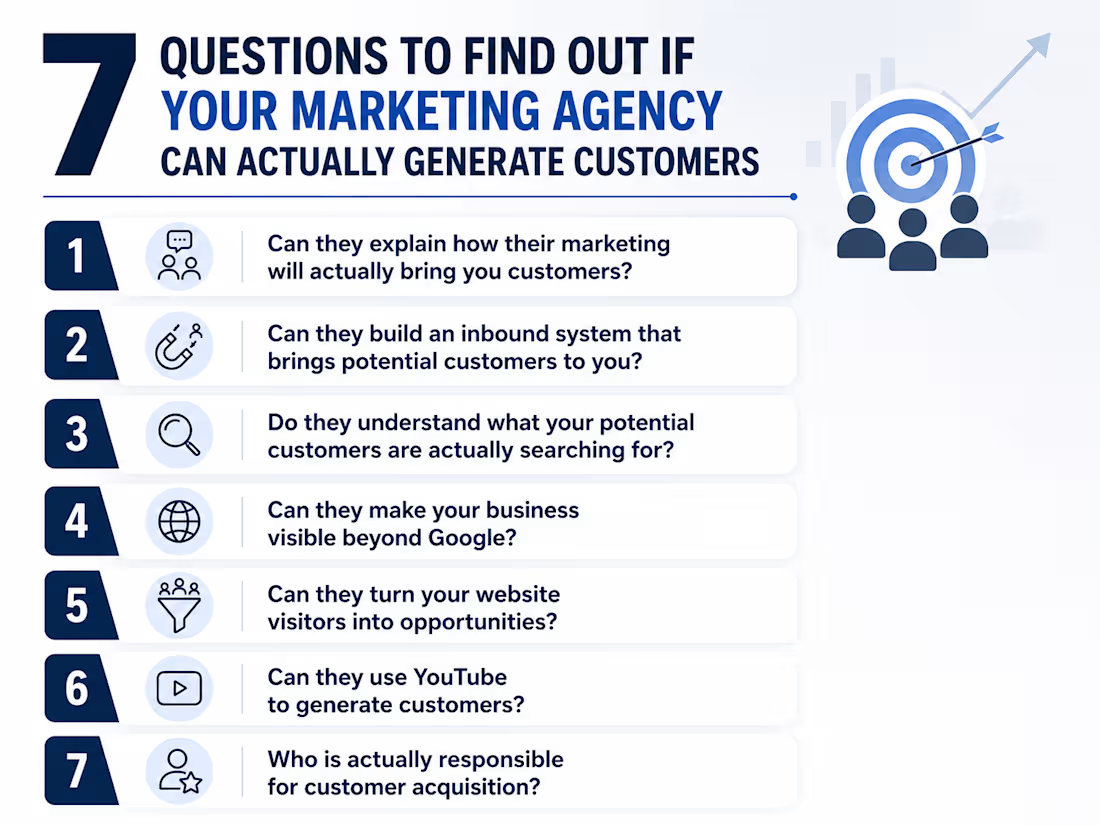
Before You Hire a Marketing Agency, Ask These 7 Questions
1. Can they explain how their marketing will actually bring you customers?
“Improve your SEO” or “grow your social media” isn't a customer acquisition strategy by itself.
Ask: “How will your strategy bring potential customers to my business, and how will those prospects move toward becoming customers?”
Look at your current marketing activities and connect each one to the customer journey. If you can't see a clear path from an activity to a potential customer, something is missing.
2. Can they build an inbound system that brings potential customers to you?
Good inbound marketing isn't just publishing blogs or ranking for random keywords. It should help the right people discover your business when they're actively looking for a solution.
Ask: “How will you make potential customers discover us through search, content, social media, video, and other relevant channels?”
Search Google for questions your potential customers ask before buying. If competitors repeatedly appear while your business doesn't, you've found an opportunity.
3. Do they understand what your potential customers are actually searching for?
Getting traffic isn't enough. The right traffic matters.
Ask: “How do you identify the topics, keywords, questions, and search intent that matter to our potential customers?”
Look at your current traffic sources and keywords. If they bring visitors but very few relevant inquiries, you may be attracting the wrong audience.
4. Can they make your business visible beyond Google?
Your potential customers aren't discovering businesses only through traditional search. AI platforms such as ChatGPT and Perplexity are becoming another part of the discovery journey.
Ask: “How will you optimize our website and content so search engines and AI platforms can understand and surface our business for relevant searches?”
Search your main services on Google, ChatGPT, and Perplexity. If competitors appear consistently while your business doesn't, you've identified a visibility gap.
5. Can they turn your website visitors into opportunities?
Getting people to your website is only part of the job. If relevant visitors arrive and leave without taking action, more traffic won't solve the problem.
Ask: “What will you do to turn relevant website visitors into inquiries and sales opportunities?”
Open your homepage as if you've never seen the business before. Can you immediately understand what it offers, who it serves, why you should trust it, and what you should do next?
6. Can they use YouTube to generate customers?
YouTube is the world's 2nd largest search engine after Google.
If your customers are searching for solutions on YouTube and your business has little or no meaningful presence there, you're potentially missing another important discovery channel.
Ask: “Can you build, manage, optimize, and grow a YouTube channel as part of our customer acquisition strategy?”
Search YouTube for three questions your customers commonly ask. If competitors are answering them and you aren't, you've already found three potential content opportunities.
7. Who is actually responsible for customer acquisition?
This may be the question that matters most.
If one company handles SEO, another handles social media, another creates content, and another generates leads, who is responsible for making everything work together to generate customers?
Ask:
“Who owns the overall customer acquisition strategy?” That's the difference between hiring several marketing vendors and having a customer acquisition partner.
Before you hire another agency, look at your current marketing and ask:
1. What is this activity supposed to achieve?
2. How does it help us acquire customers?
3. Who is accountable for the result?
If you can't get clear answers, you may have found the real problem.
#MarketingAgency #CustomerAcquisition #MarketingStrategy #LeadGeneration #MarketingROI #MarketingAccountability #InboundMarketing #BusinessGrowth #AgencySelection #DigitalMarketing #SEO #SearchIntent #AIVisibility #ConversionOptimization #YouTubeMarketing
The network for creativity
Join 1.25M professional creatives like you
Connect with clients, get discovered, and run your business 100% commission-free
Creatives on Contra have earned over $150M and we are just getting started





Related posts

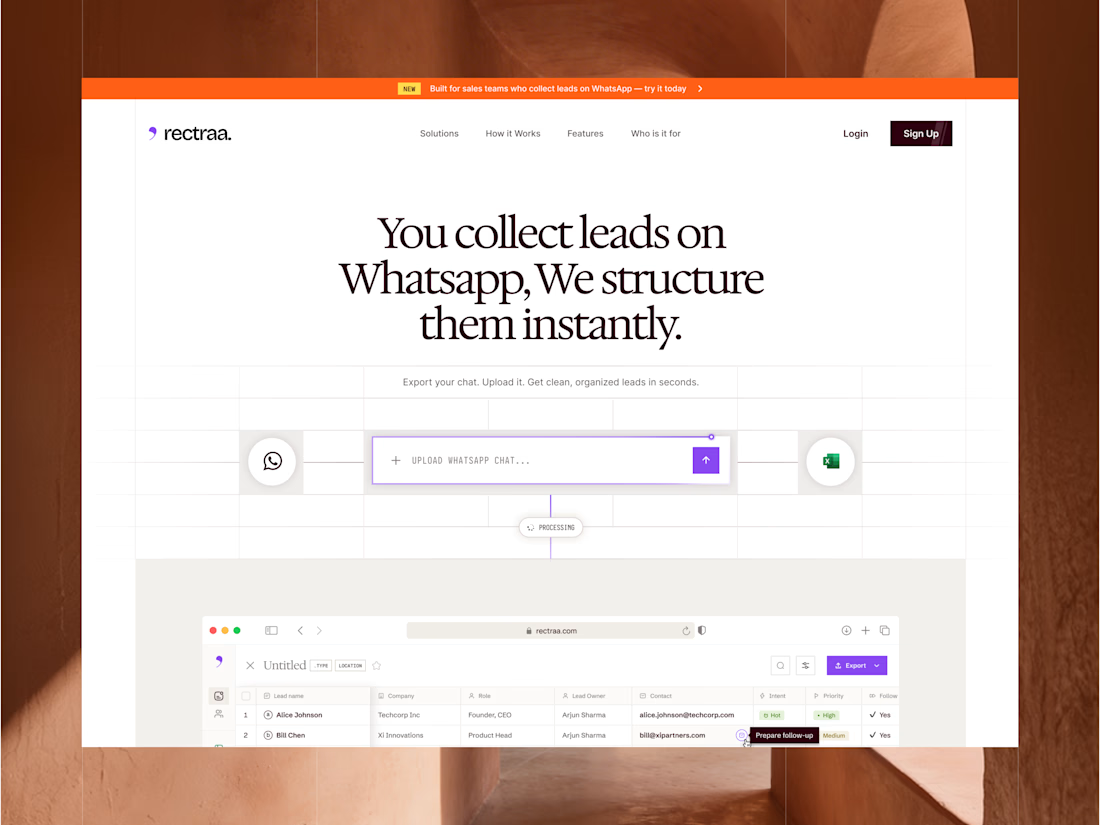
Rectraa helps sales teams extract, classify and organize leads collected through WhatsApp. I designed and developed its marketing website to explain the product clearly, demonstrate its workflow and encourage visitors to try it.
Project information:
Role: Website Designer & Framer Developer
Scope: Website strategy, UI design, responsive design and development
Tools: Figma and Framer
Deliverable: Responsive SaaS marketing website


High end design

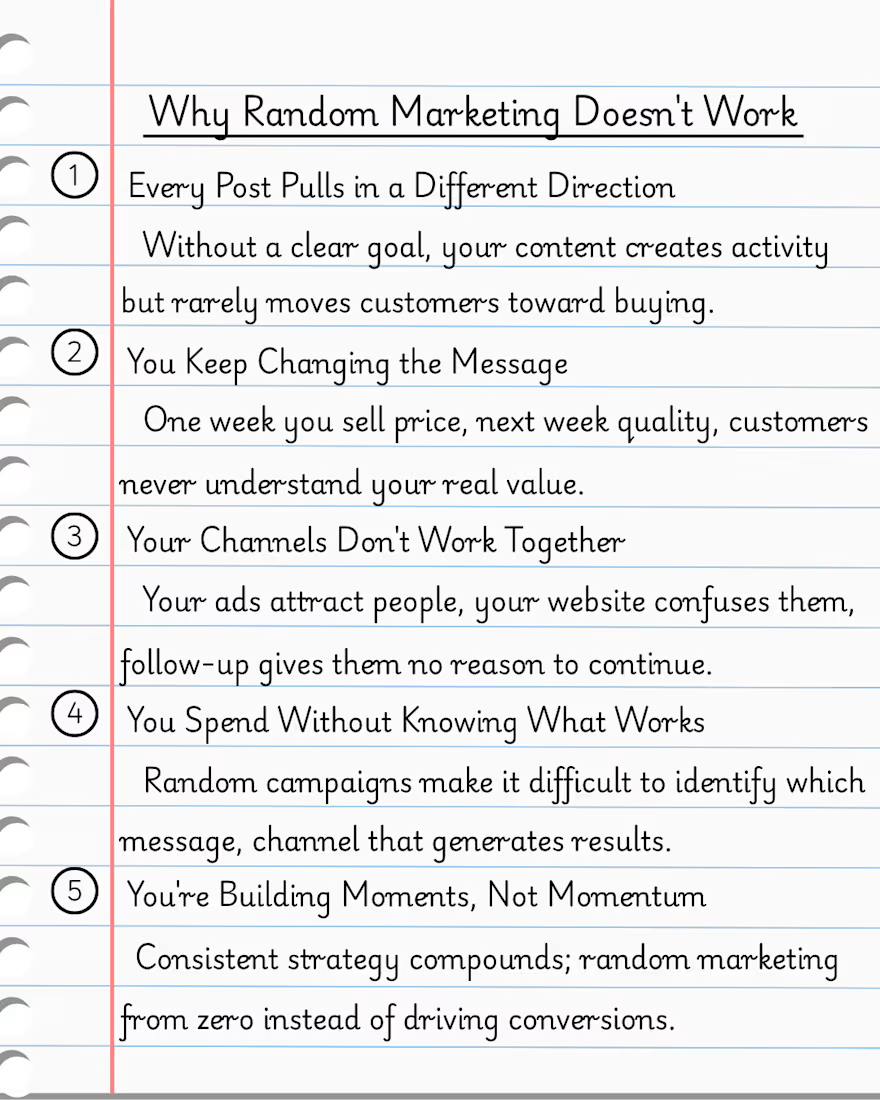
Your marketing looks busy but is it actually moving your business forward?
Random posts, changing messages, and disconnected campaigns create activity without momentum.
Good marketing is connected, consistent, and built around one clear goal.
#MarketingStrategy #DigitalMarketing #BusinessGrowth #Marketing