The network for creativity
Join 1.25M professional creatives like you
Connect with clients, get discovered, and run your business 100% commission-free
Creatives on Contra have earned over $150M and we are just getting started
Back to feedPost

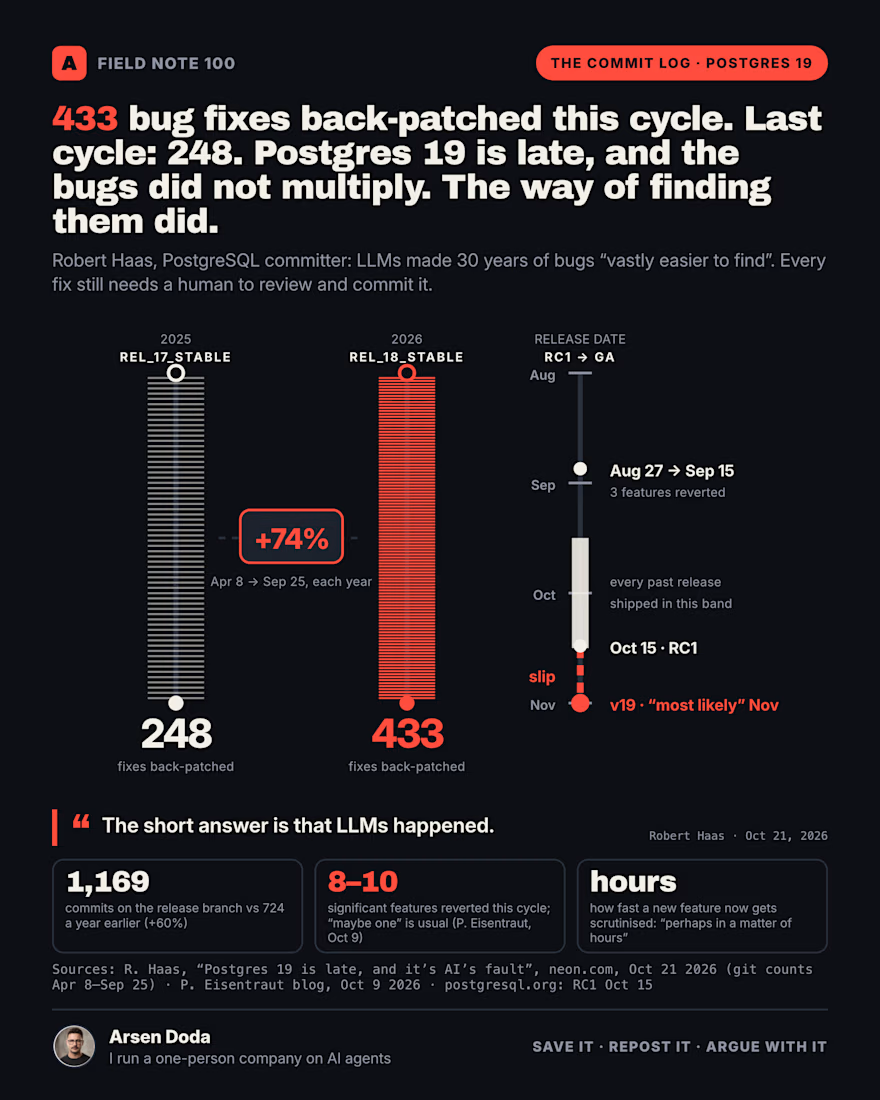
433 bug fixes were back-patched into Postgres this cycle. Last cycle, 248.
Postgres 19 missed its release window, and the committer who explained why says the bugs did not multiply.
The finders did. Here is what changed.
Robert Haas, a long-time PostgreSQL committer, wrote it plainly on October 21: "The short answer is that LLMs happened."
Thirty years of code. The same humans writing it. The same kinds of mistakes.
What changed is that anyone with a model can now read a 30-year-old codebase and find those mistakes, in his words, "vastly easier" than before.
→ Fixes back-patched to the previous stable release, April 8 to September 25: 248 in 2025, 433 in 2026. Up 74%.
→ Commits on the release branch in the same window: 724 last year, 1,169 this year. Up 60%.
→ Three features were pulled between August 27 and September 15, weeks before the planned ship. Another committer, Peter Eisentraut, counts 8 to 10 significant reverts this cycle. The usual number, he says: "maybe one."
→ Past releases landed between mid-September and mid-October. This one, Haas writes, "most likely won't be released until November."
The bottleneck did not move to the model. It moved to the reviewer.
A model can draft the fix. Haas says those drafts are not always correct or up to the project's standards, so a human committer still reviews and commits every one.
Finding got cheap. Judging stayed expensive. That gap is the delay.
I run a one-person company on AI agents, and I live on the other side of this.
My agents write and ship code daily. What limits the pace is never generation. It is the review queue I keep for anything a customer can touch: one human, a fixed number of hours.
If your plan for AI is "it will find and fix everything," read Postgres as a preview. It will find everything. Fixing still runs at the speed of the people you trust to say yes.
Rule 1: Budget review hours, not tokens. The scarce input in 2026 is a qualified person's attention. Count it before you turn the finder loose.
Rule 2: Separate finding from fixing. Let the models hunt all night. Let one named human own the merge, with a daily cap, so the backlog is visible instead of silent.
Rule 3: Treat a slipped date as a quality signal. Postgres chose late over wrong. Most roadmaps would have shipped the reverts.
To be fair to the models: every one of those 433 fixes is a bug a user would have hit. Finding them is the good news. I mean that.
AI did not make Postgres buggier.
It made the bugs visible faster than humans can sign off.
For your own release: Slip or Ship? One word is enough. 👇
The network for creativity
Join 1.25M professional creatives like you
Connect with clients, get discovered, and run your business 100% commission-free
Creatives on Contra have earned over $150M and we are just getting started



Related posts

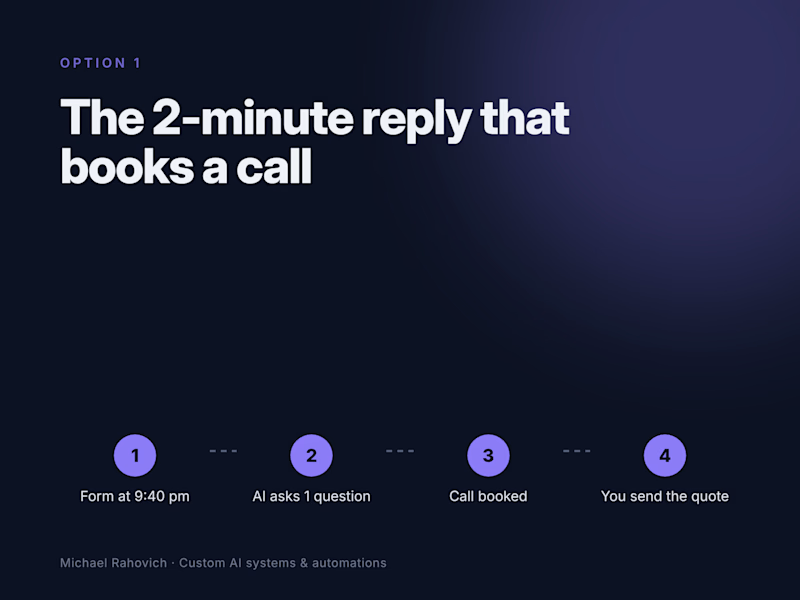
A homeowner fills in your kitchen remodel form at 9:40 pm.
Two AI systems could reply. Which one would you trust with your customers?
Option 1: within 2 minutes, it thanks them by name, asks one question (kitchen size and a photo) and offers 3 call times for tomorrow. You send the quote after the call.
Option 2: within 30 seconds, it reads the form, estimates a price from your past jobs and emails a full quote. No one on your team touches it.
Both reply while you sleep.
One is faster. One keeps you in the loop.
Vote 1 or 2 in the comments. I'll share which one I build for clients, and why, in the replies.

3 votes
Ends in 9h

The Cta for book a call is perfect it’s works anytime


Orra is a landing page concept for a personal AI agent, combining bold editorial typography, a minimal monochrome layout, and vibrant gradient visuals.


Nice design👌Loved those color shades, so calming😊