The network for creativity
Join 1.25M professional creatives like you
Connect with clients, get discovered, and run your business 100% commission-free
Creatives on Contra have earned over $150M and we are just getting started
Back to feedPost


Everyone is talking about Claude Code.
Almost nobody is talking about why one person gets 10x better results than another using the exact same model.
A few weeks ago I watched two people use Claude Code.
One spent 3 hours fighting the AI.
The other shipped an entire project before lunch.
Same tool.
Different system.
The difference wasn't prompting.
The difference was context.
The second person never started from a blank chat.
Claude already knew the project.
Already knew the brand.
Already knew the rules.
Already knew what "good" looked like.
No repeating instructions.
No fixing the same mistakes.
No starting over.
That's when it clicked for me:
Most people are using AI like Google.
The people getting paid with AI are building operating systems around it.
They save context.
They create workflows.
They document rules.
They feed examples.
They let the machine learn from its mistakes.
The result?
Less time explaining.
More time shipping.
And that's where most people get AI wrong.
They keep searching for a better model.
GPT.
Claude.
Gemini.
Whatever comes next.
But the people quietly winning aren't changing models every week.
They're building systems that make any model perform better.
The model is the worker.
The system is the manager.
And in business, the manager usually decides the outcome.
If you're still opening a blank chat every morning, you're probably working harder than you need to.

The network for creativity
Join 1.25M professional creatives like you
Connect with clients, get discovered, and run your business 100% commission-free
Creatives on Contra have earned over $150M and we are just getting started
Related posts

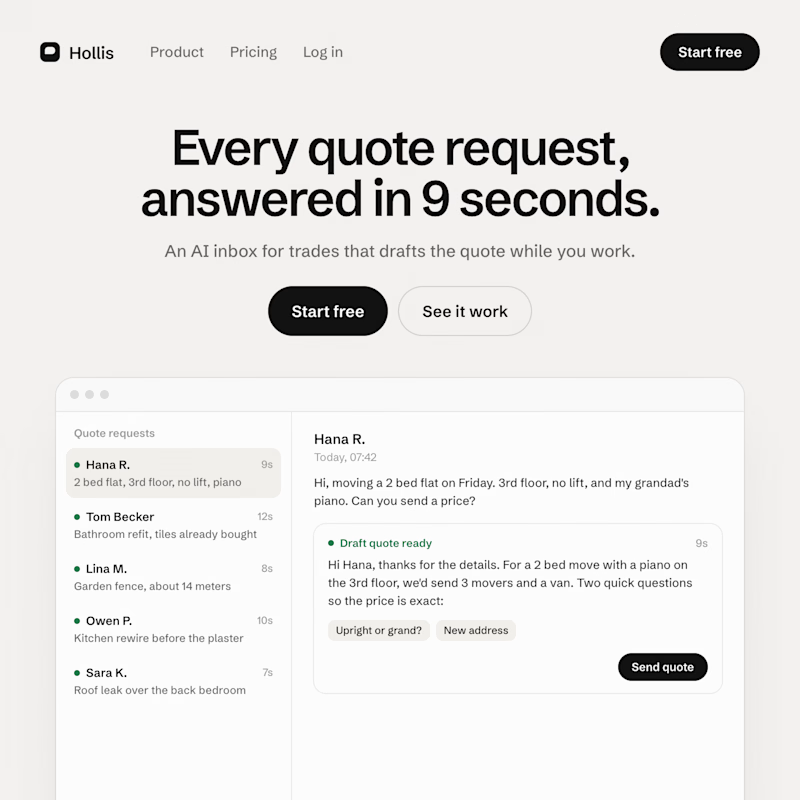
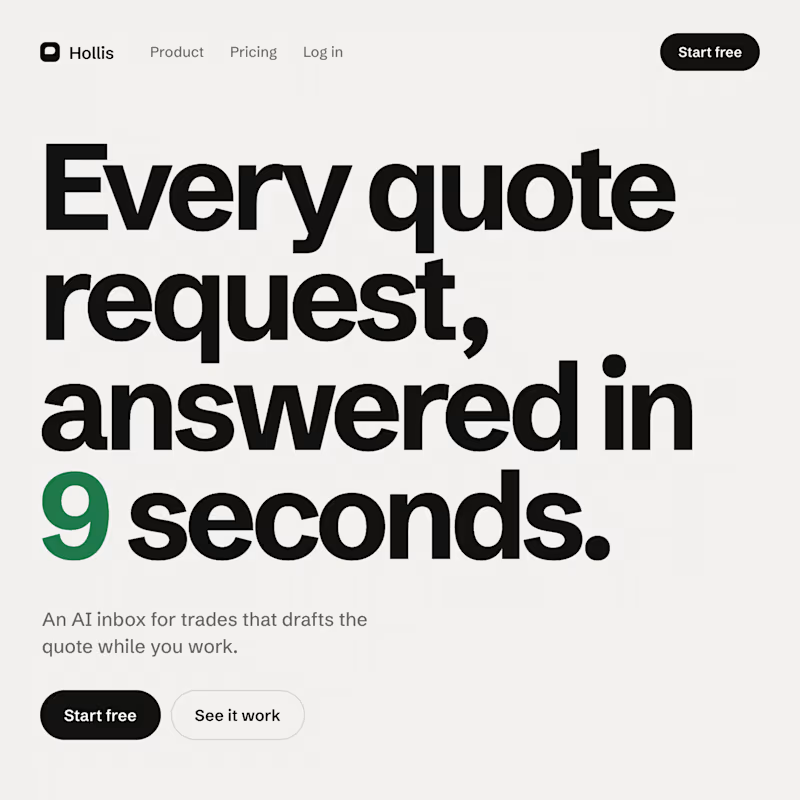
Every landing page picks a side: a product screenshot nobody can read on a phone, or one giant sentence and nothing to look at.
Built both heroes for a concept AI quote inbox in code with Claude Code. Same headline, same buttons. Which one gets you to click Start free, A or B?

3 votes
Ends in 1d

Voted B. The big type reads instantly on a phone, the screenshot gets lost.

Did a motion for the Cockpit concept ⁕ 🔈 ON
Design & Creative Direction: Me
Motion & Sound: Claude Code
Cockpit is an AI agent management platform concept that helps teams:
- Set boundaries
- Monitor activity
- Manage approvals
- Track knowledge sources
- Measure performance and costs
It brings together five key AI UX challenges:
👉 Autonomy
👉 Observability
👉 Human Approvals
👉 Context
👉 Analytics
The idea is simple:
As AI agents become more capable, the experiences we design around them need to make their actions more transparent, predictable, and manageable.
Thanks!

Human approvals is the part most agent UIs skip. Good call making it one of the five challenges.

I’ve been working on a small skill called Manual Orchestrator to make longer projects with AI agents easier to manage.
The problem started with a familiar situation: one chat would accumulate plans, implementation details, corrections, and test results. By the time I was ready for the next phase, I wanted a fresh conversation without losing the decisions we’d already made.
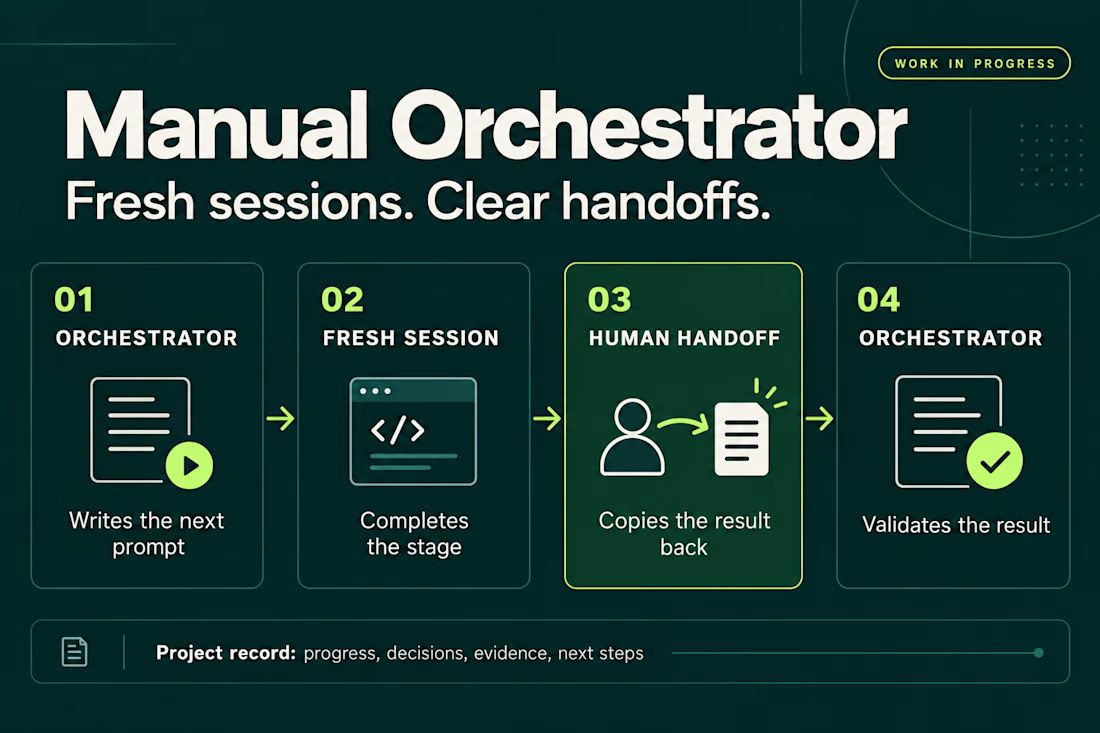
Manual Orchestrator gives that process some structure. One chat acts as the orchestrator: it breaks the work into stages and writes a prompt for the next one. I run that prompt in a new session, then bring the result back. The orchestrator reviews it against the stage’s criteria before preparing the next prompt. If something needs fixing, I go back to the same worker session.
The skill also keeps a record in the project with the current stage, decisions, evidence, and next steps. That makes it easier to pause, resume, or hand the work to another session.
The handoff is manual. I choose when to open a session and carry the result back. The orchestrator and worker sessions can also use different agent CLIs, with the prompt adapted to the capabilities available.
It’s open source and still a work in progress. I’m using it to learn what helps in practice and where the workflow needs to improve. Installation has been checked for Codex, Claude Code, and Gemini CLI, but the full workflow hasn’t been tested across every CLI or version.
If you try it, I’d be interested in hearing what works and where it gets in your way.