The network for creativity
Join 1.25M professional creatives like you
Connect with clients, get discovered, and run your business 100% commission-free
Creatives on Contra have earned over $150M and we are just getting started
Back to feedPost

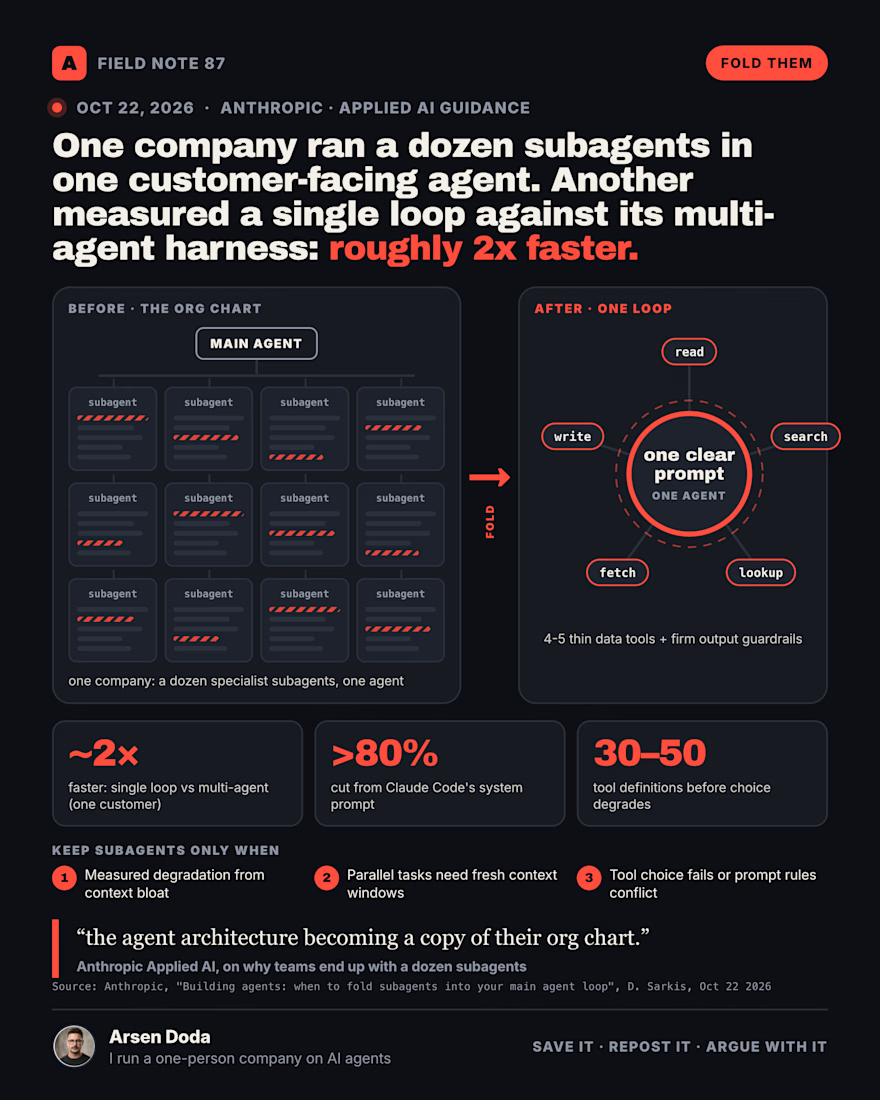
One customer measured a single agent loop against its multi-agent harness. Roughly 2x faster, Anthropic's Applied AI team reports.
I run helper agents every day. This one is aimed at me.
I read it looking for the line that says I am wrong.
The headline will be "multi-agent is over."
The real finding is who designs all those agents, and why.
What Anthropic wrote (Diane Sarkis, Applied AI, Oct 22):
→ One company found "the dozen of specialist subagents within its customer-facing agent" made on-brand consistency hard and added latency.
→ Anthropic's usual feedback on designs like that: "one clear system prompt, 4-5 thin data tools, and firm output guardrails would cover most of the use case."
→ A different customer tested its multi-agent harness against a single agent loop and "saw a roughly 2x faster runtime with the latter".
→ Anthropic "reduced Claude Code's system prompt for more advanced models by over 80%".
→ The ceiling is tools, not agents: "once you exceed 30-50 tool definitions in the system prompt, tool choice tends to degrade."
What the headline hides:
The piece names where a dozen subagents come from: "the agent architecture becoming a copy of their org chart."
Then the prompt rots the same way: "Every team adds a sentence to the system prompt, resulting in conflicting rules and no consistent voice."
Twelve subagents is what happens when twelve teams each want one.
I run a one-person company on AI agents, so I have no org chart to copy. Still, my daily runs use one main agent for the judgment and the clicking, and hand the bulk reading to short-lived helpers with a fresh context window. They return a conclusion under 40 lines, never the page. One browser helper at a time.
That is one of Anthropic's three cases that still earn a subagent. I have not measured the speed. I keep them because the main agent's context stays clean, and that I can see.
If you run agents, this is the test. Anthropic keeps subagents only when:
Rule 1: "A single agent loop hits measurable performance degradation from context bloat". Measurable. If you have not measured it, you do not have it.
Rule 2: "Multiple tasks need to be tackled in parallel with fresh context windows". Reading is parallel. Deciding is not.
Rule 3: "A single agent struggles to select appropriate tools or there are conflicting instructions in the system prompt". First fix: delete tools, not add agents.
Fewer agents, thinner tools and a stronger model is good engineering news. I mean that.
You did not build a multi-agent system.
You gave your org chart an API key.
If you run agents: how many subagents are in your loop, and which of the three conditions earns each one? One line is enough. 👇
The network for creativity
Join 1.25M professional creatives like you
Connect with clients, get discovered, and run your business 100% commission-free
Creatives on Contra have earned over $150M and we are just getting started
Related posts

Thinking about making a course on how I actually work with AI agents.
Not prompts.
The rules, skills and checks that make the agent build things the way my repo wants.
Would that be useful to anyone?

Yes please. The rules and checks part is what nobody teaches. Prompt tips are everywhere, repo setup isn't.


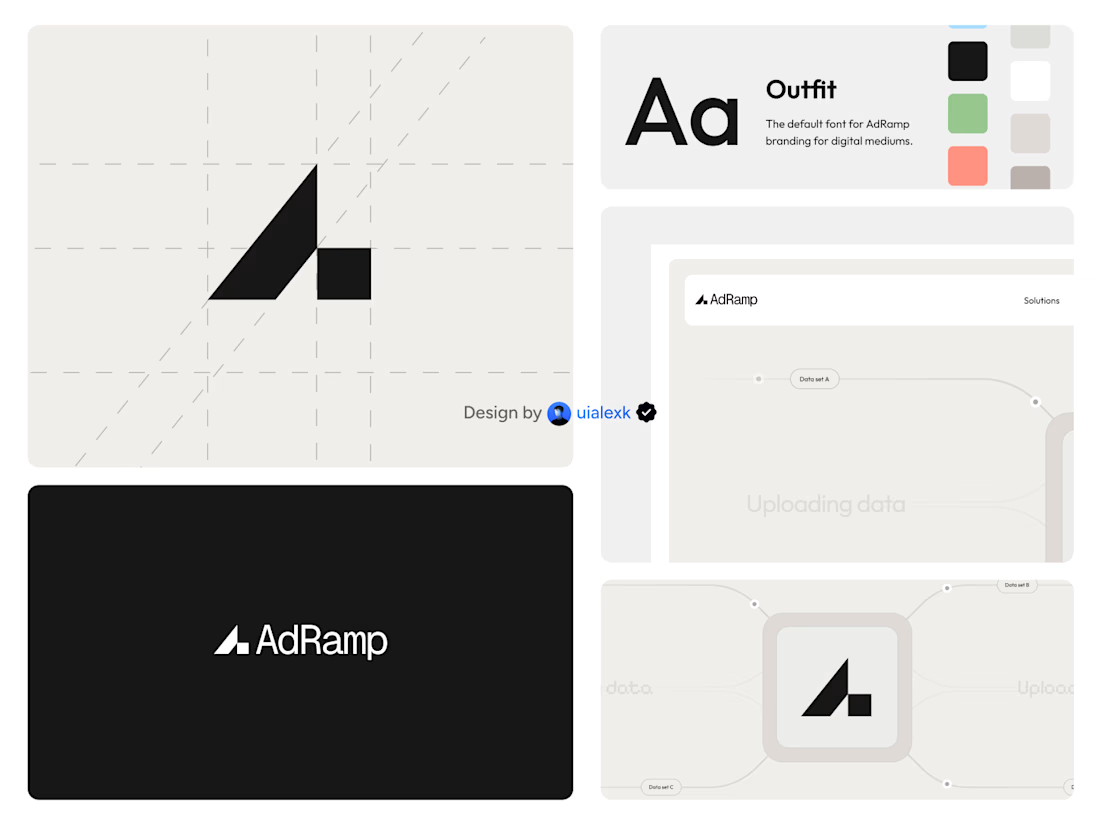

That logo geometry paired with the clean color palette is super slick. Love seeing full brand identity breakdowns like this.


Feels like a lot of companies are trying their luck with AI instead of hiring designers right now.
I think it's going to backfire on them in a few months.
Trying to stay optimistic about it.

I can't wait for them to start hiring designers again. No matter how good AIs are, Human Intelligence will always supercede it.