The network for creativity
Join 1.25M professional creatives like you
Connect with clients, get discovered, and run your business 100% commission-free
Creatives on Contra have earned over $150M and we are just getting started
Back to feedPost

Delivering quality services and engineering solid software applications has been the only thing I know how to do best.
RECOMMENDED
“A great team member with strong determination and initiative”


Evan Landau
weviThe network for creativity
Join 1.25M professional creatives like you
Connect with clients, get discovered, and run your business 100% commission-free
Creatives on Contra have earned over $150M and we are just getting started



Related posts

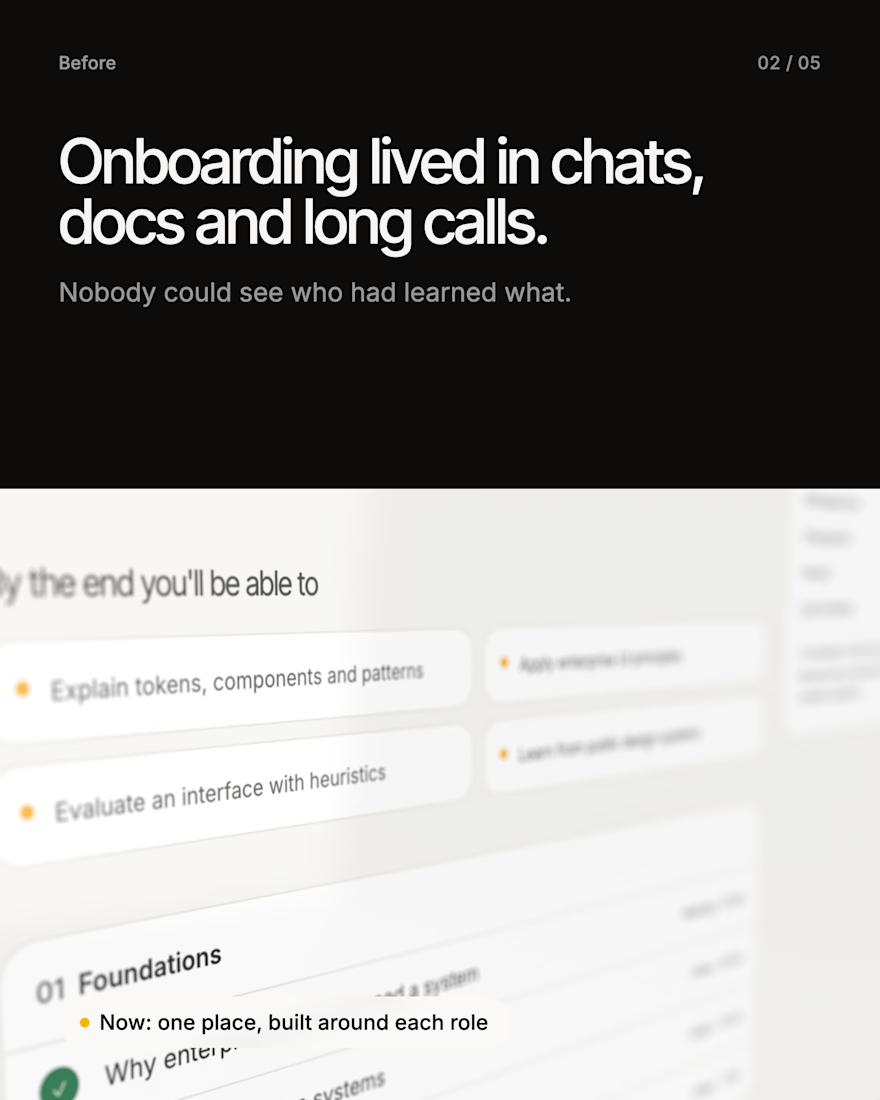
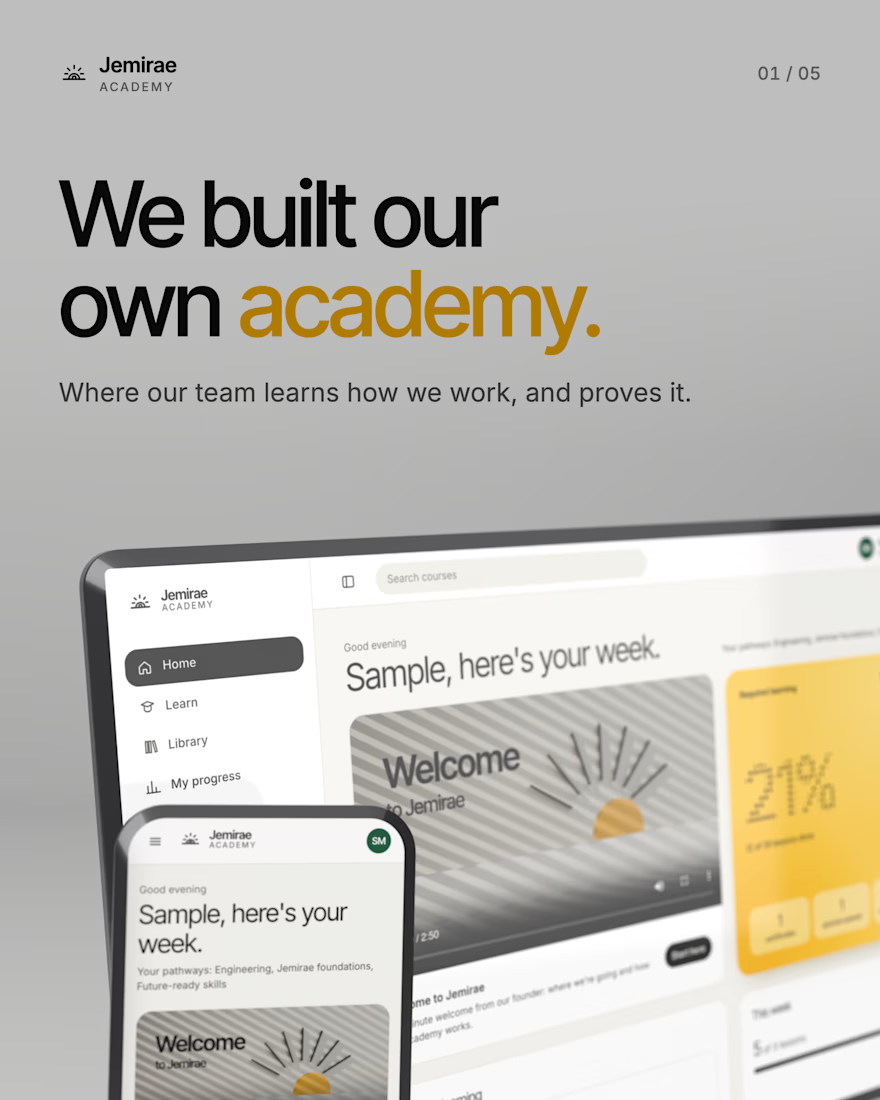
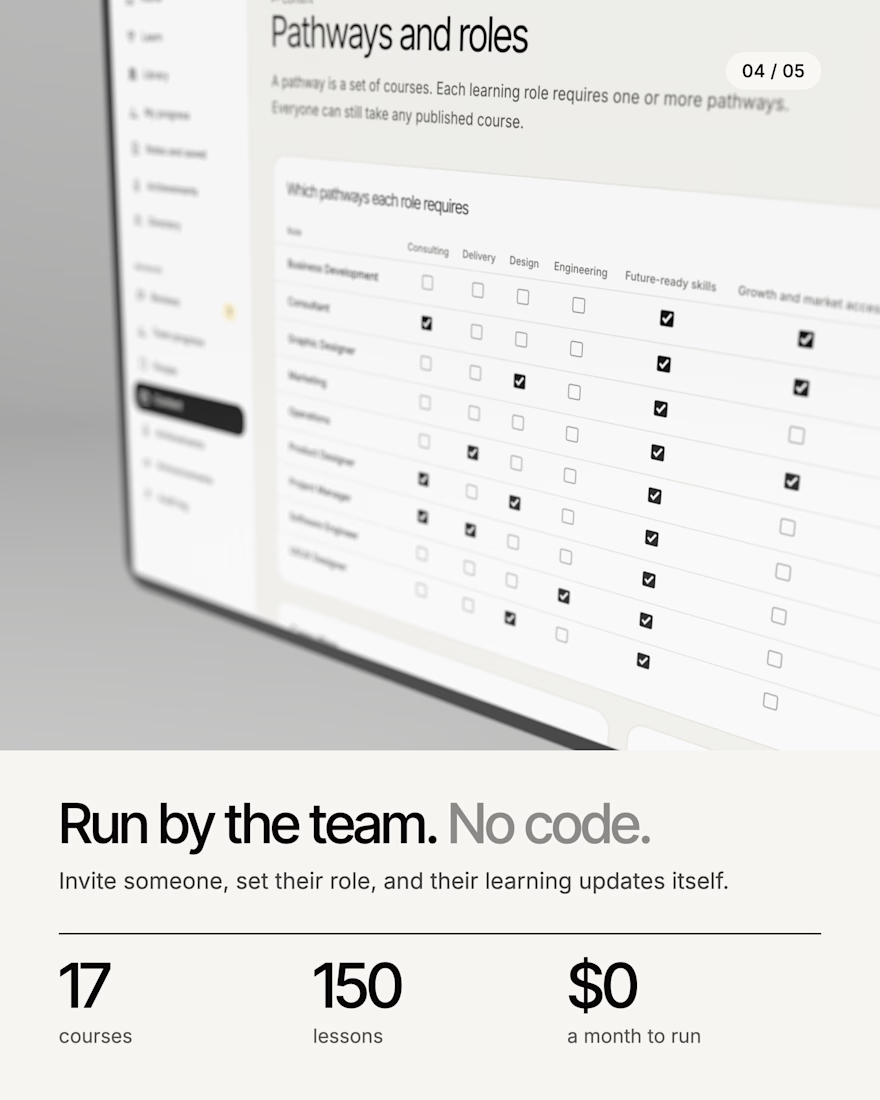
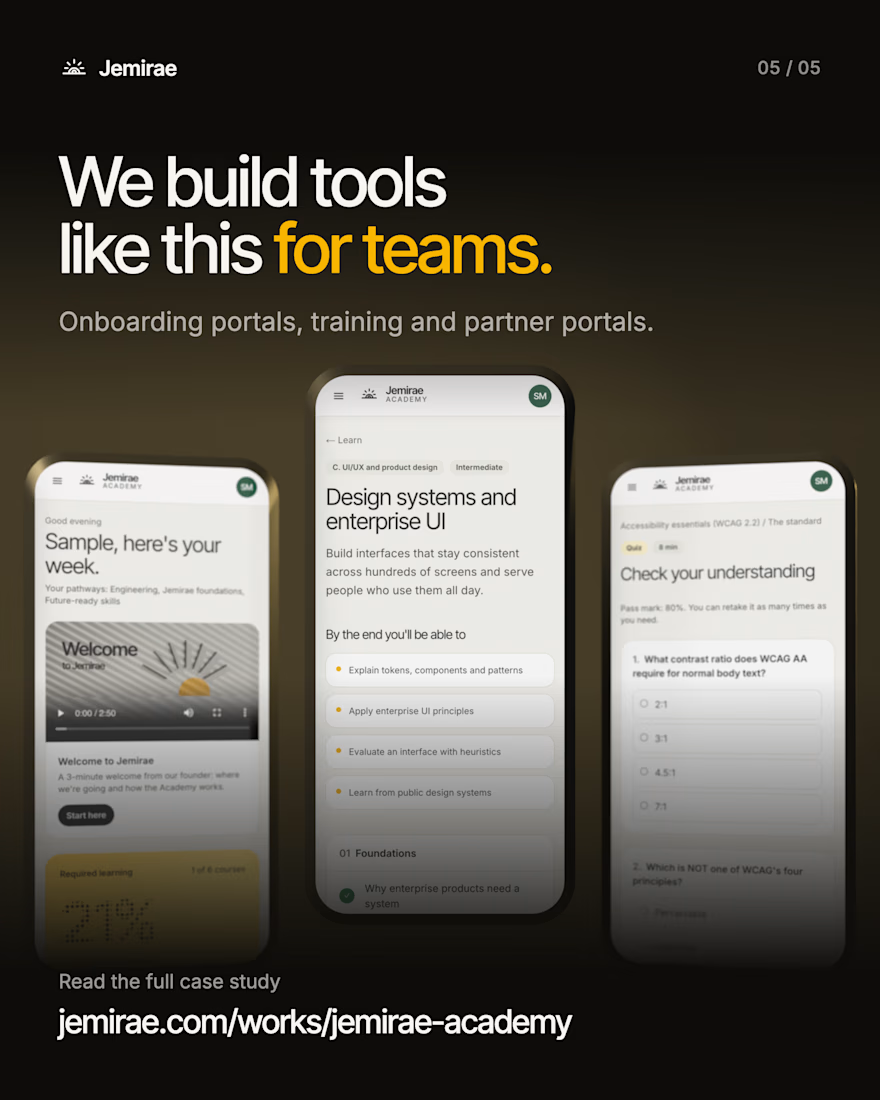
Onboarding at most small teams lives in chats, docs and long calls, and nobody can see who has learned what. I led the design of an academy for our own team to fix that. Each role has a pathway of courses. Finishing a course means passing a quiz, completing a practical exercise that a team lead reviews, and earning a certificate with a code you can check.
It has 17 courses and 150 lessons, runs on Cloudflare's free plan for $0 a month, and admins manage people and content in the browser without code. It is phone friendly.
This is an internal tool we built for our own team, not a client project, and it was only just built, so I have no results to report yet. If you need an onboarding, training or partner portal for your team, send me a message.
Case study: https://jemirae.com/works/jemirae-academy


Building software is getting cheaper. Building the RIGHT software is still difficult.
In 2026, almost anyone can use AI to create a prototype, generate code, or launch a basic application.
But here's what I think many founders underestimate:
Getting something built is only the beginning.
The real challenges start when:
- Users expect a reliable product, not just an impressive demo.
- New features start creating technical complexity.
- AI integrations become expensive to maintain.
- Different tools and systems don't communicate properly.
- The product needs to scale without rebuilding everything.
I've always believed that successful product development isn't about writing more code or adding more features.
It's about making the right technical decisions early.
Sometimes that means building a custom solution. Sometimes it means integrating existing tools. And sometimes the smartest decision is NOT to build something at all.
Founders, what's your biggest challenge when turning an idea into a production-ready product?
Finding the right technical partner
Managing development costs
Choosing the right technology
Moving from MVP to a scalable product
I'd genuinely love to hear your experiences.
#StartupFounders #SaaS #AI #ProductDevelopment #Startups #TechEntrepreneurship

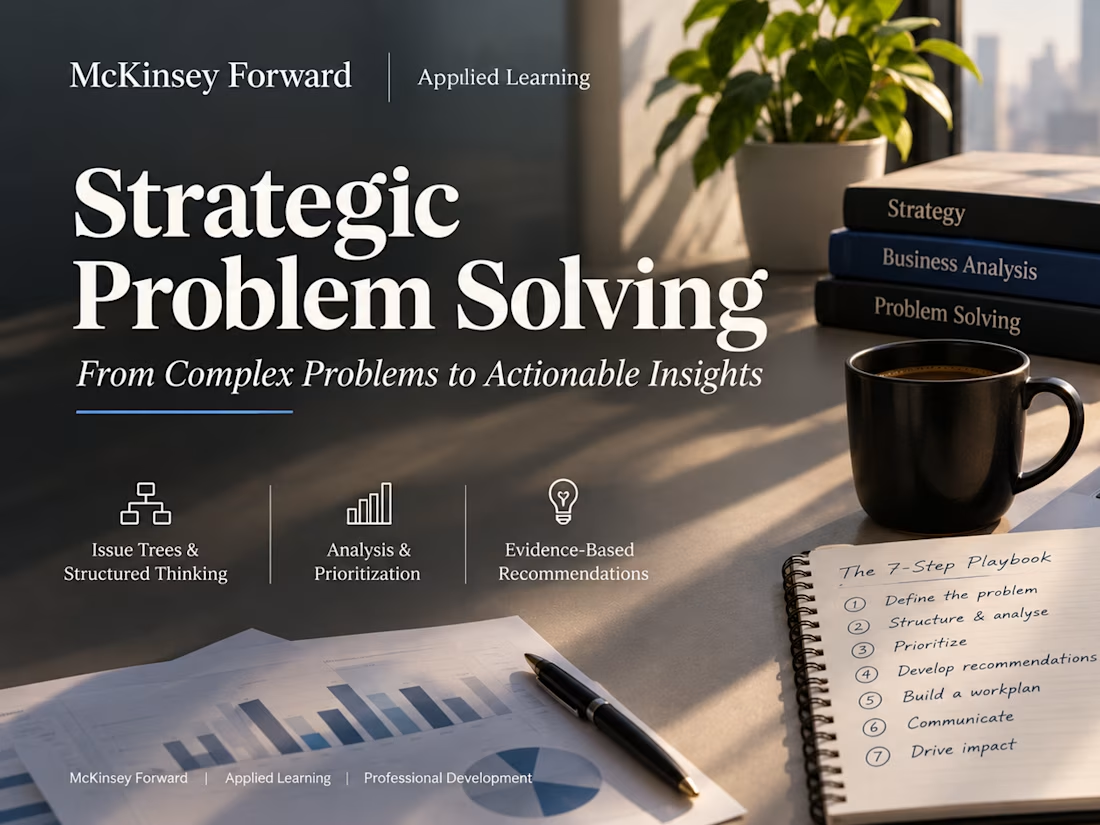
I've been investing in strengthening a skill that goes beyond any single industry: structured problem-solving.
Through the McKinsey Forward learning experience, I worked through three simulated business scenarios covering product innovation, supply chain investigation and urban mobility strategy.
The experience helped me practise breaking complex problems into smaller questions, building MECE issue trees, evaluating evidence and translating insights into actionable recommendations.
I've documented this learning journey and its case studies in my Contra portfolio.
Always learning. Always building. Always questioning better.
#McKinseyForward #ProblemSolving #BusinessStrategy #ContinuousLearning #ProfessionalDevelopment

Great Teju!