The network for creativity
Join 1.25M professional creatives like you
Connect with clients, get discovered, and run your business 100% commission-free
Creatives on Contra have earned over $150M and we are just getting started
Back to feedPost

🎯 Negative Keywords: The Simple Optimization Most Advertisers Ignore
Your Google Ads can get plenty of clicks and still waste money.
One common reason? Irrelevant search terms.
Negative keywords help prevent your ads from showing for searches that have no value for your business.
I regularly check:
• Irrelevant search terms
• Low quality traffic
• Unqualified searches
• Unwanted clicks
A clean search term report can reduce wasted spend and improve lead quality.
Before increasing your budget, make sure you’re paying for the right traffic.
The network for creativity
Join 1.25M professional creatives like you
Connect with clients, get discovered, and run your business 100% commission-free
Creatives on Contra have earned over $150M and we are just getting started






Related posts

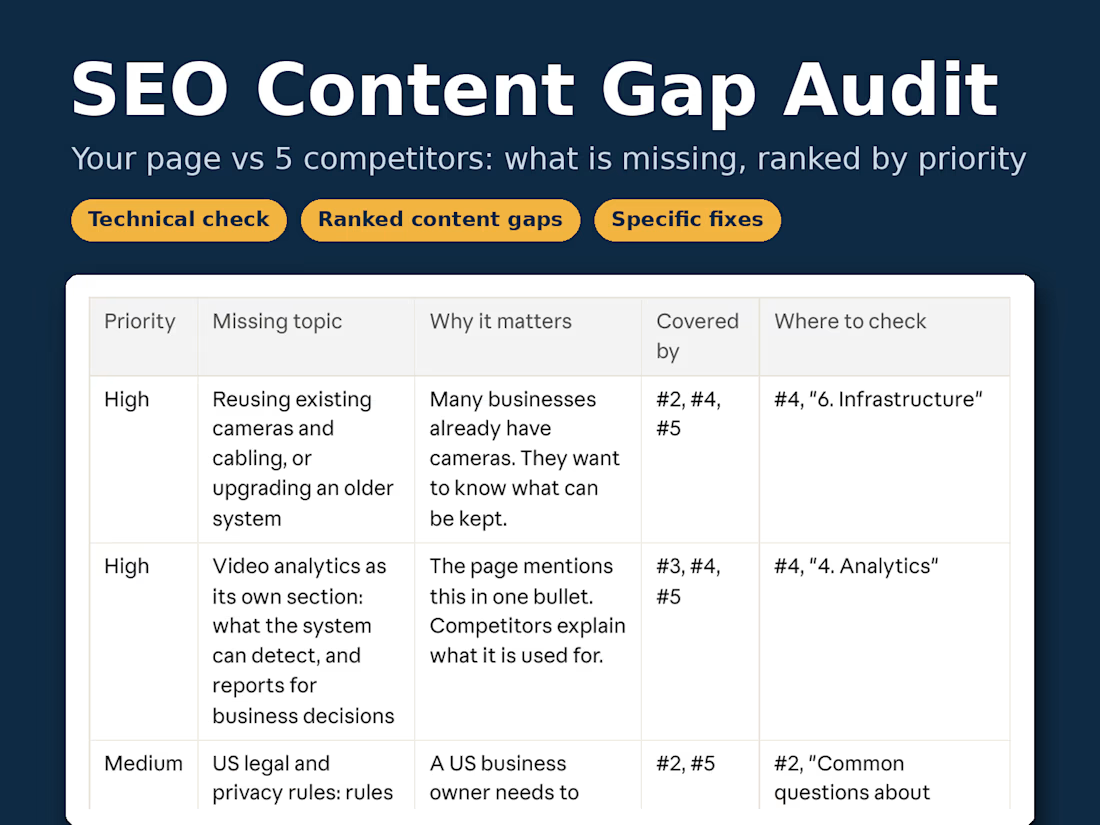
Built an SEO analysis API and AI agent skill to identify competitor content gaps, prioritize missing topics, and generate actionable audit reports.

Want to show up more often in AI answers? Build dedicated pages around the exact angles buyers search for:
- Industries you serve
- Customer problems you solve
- Markets you work with
Targeted pages win AI search.


When an Ad Looks AI-Generated, Does It Lose the Click?
AI can now produce remarkably polished advertising images. But could that polished appearance sometimes work against the advertisement?
A study recently published in Marketing Science examined 4,633 comparable display ads on Taboola, representing more than 369 million impressions.
On average, ads using AI-generated images showed no detectable click-through disadvantage compared with those using human-made images.
The more interesting finding was about perception.
In a separate evaluation, participants often misidentified which images were AI-generated. And ads whose images appeared more artificial tended to receive fewer clicks, regardless of how the images had been produced.
Highly aesthetic images and intense color saturation were among the visual cues participants associated with AI.
What interests me is the gap between how we evaluate creative work and how an audience might perceive it.
A marketing team may approve an image because it looks technically impressive. But that doesn't tell us whether the same visual qualities will resonate with its customers.
The research doesn't establish that natural-looking images always perform better, and clicks aren't sales.
It does suggest that perceived artificiality is worth examining alongside other measures of advertising effectiveness.
Could the qualities that make an AI image look impressive also make an advertisement less appealing?