The network for creativity
Join 1.25M professional creatives like you
Connect with clients, get discovered, and run your business 100% commission-free
Creatives on Contra have earned over $150M and we are just getting started
Back to feedPost
Looking at funnels from the outside often reveals issues.
But there’s another layer that’s less visible. There’s a specific kind of issue I keep running into when reviewing funnels.
Not the obvious ones.
The ones that technically work — but lead to the wrong outcome.
For example, an upsell that leads to a form which looks correct, but is tied to a different setup in the background.
No error.
No broken step.
From a user perspective, everything works as expected.
But internally, it affects how leads are tracked, attributed or evaluated later on.And it often goes unnoticed — at least until someone in sales starts questioning the numbers, or results don’t line up during a review.
These aren’t careless mistakes.
They usually happen because someone is very familiar with the system — and often moving quickly within it. When you build a flow yourself, you know how it’s supposed to work.
So when you test it, you naturally follow that logic.
You click the expected path.
You interpret outcomes in context.
And small inconsistencies are easy to miss — especially when they’re not visible in the interface.
In many cases, everything is configured exactly as set up.
It’s just that a small detail in the setup doesn’t match the intended logic anymore.
And that’s much harder to catch.
It usually takes someone looking at it from the outside, with a clear head, to spot these things.
Not more effort — just a different perspective.
Have you ever come across something like that in your own setups?

In some cases, the only way to spot this is by checking what’s actually embedded or triggered in the background — not just what’s visible in the interface.
The network for creativity
Join 1.25M professional creatives like you
Connect with clients, get discovered, and run your business 100% commission-free
Creatives on Contra have earned over $150M and we are just getting started
Related posts

Your SaaS product might be solving the wrong problem. And most designers don't realize it.
Before jumping into Figma, designing dashboards, or creating beautiful interfaces, there's something much more important to understand.
The difference between a Business Problem and a User Problem.
In Part 01 of my SaaS Product Design Masterclass, I'm breaking down:
🔹 1.1 — Start with the Business Problem
🔹 1.2 — Understand the Business Impact
🔹 1.3 — Identify the User Problem
🔹 1.4 — How Business Problems and User Problems are connected, but different.
Here's an important thought:
A business wants to achieve a goal.
A user wants to solve a problem.
Great digital products understand both.
This is where meaningful product differentiation begins — not with UI, but with problem understanding.
🎯 This is Part 01 of my 10-hour practical SaaS Product Design series, where I'll walk through the complete process of understanding and designing a SaaS product.
If you're a UX/UI Designer, Product Designer, aspiring designer, or SaaS founder, this series is for you.
One question: Do you start your design process with business problems or user problems?
Share your thoughts below!
#SaaSProductDesign #UXDesign #ProductDesign #UXResearch #DigitalProduct


Business problem first, but I don't design until I can name the user problem underneath it. Example from Usetally, an invoicing SaaS I built: the business problem was small businesses getting paid late. The user problem was that owners hate chasing customers. So the fix wasn't a...

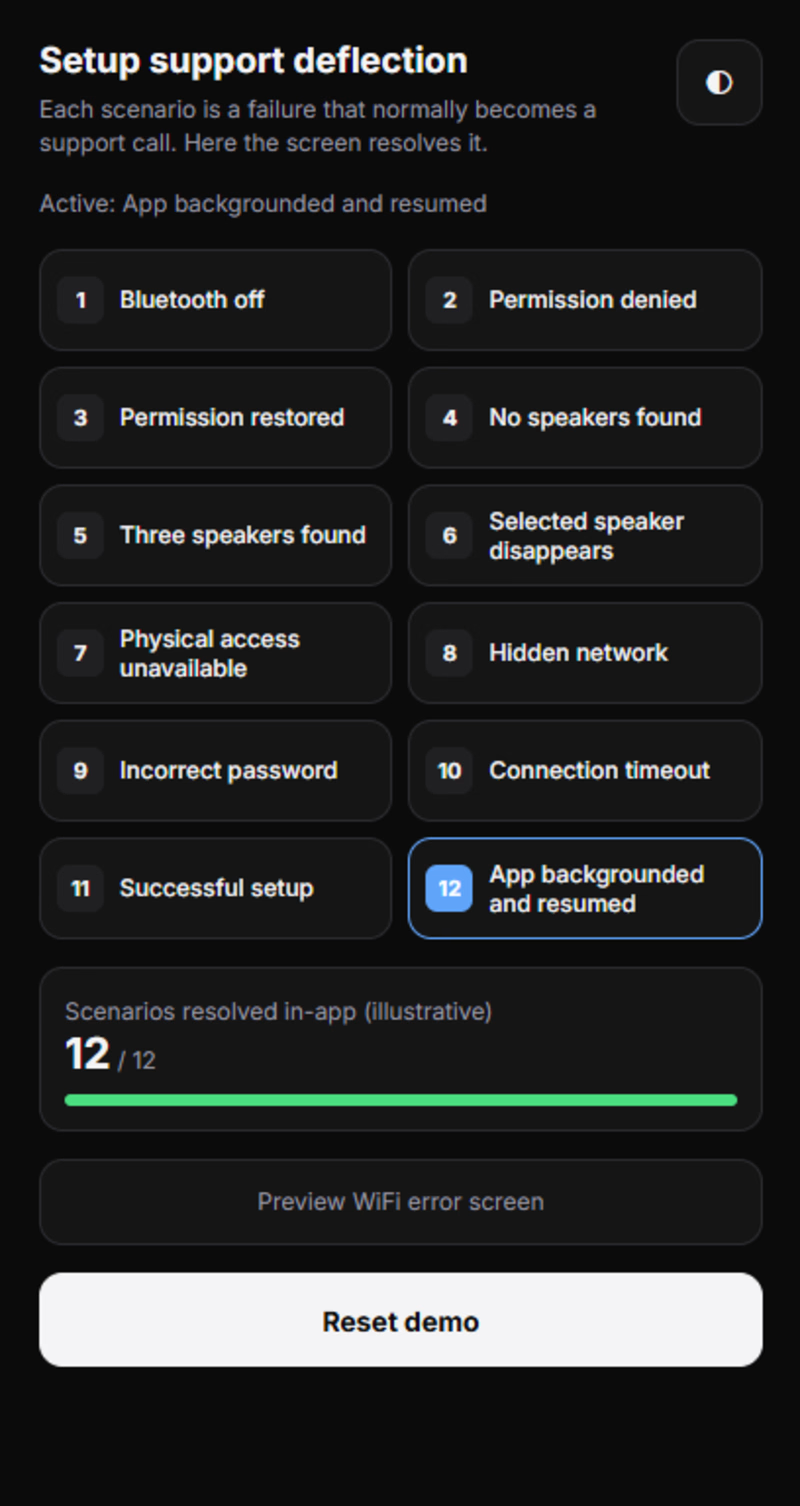
12 Scenarios. 1 Mission: Make Setup Friction Disappear. | SONOS UX
What if a setup failure didn't mean the end of the experience? 🎵
I turned 12 frustrating setup scenarios into 12 opportunities for a smarter, smoother user experience.
No generic error loops. Just clearer guidance, smarter recovery, and better product thinking.
This is what happens when design meets problem-solving. ⚡
Curious? Explore the project, test the demo, and tell me what you think!
If this inspires you, share it with your design community. 🤝
Want to experience it yourself? The live demo link is waiting for you in the comments!
— Arif Khan | Design Forensics

0 votes
Ends in 6h

Designing for the setup failure instead of just the happy path is the right call, since that is where people get frustrated. Which of the 12 scenarios turned out to be the hardest to make feel smooth?

Most brands don’t have a targeting problem. They have a creative problem.
After managing millions in Meta ad spend, one pattern keeps showing up: the ads that scale are rarely the prettiest ones. They’re the ones that make it obvious in the first 2 seconds who it’s for and what problem it solves.
What works for me:
- Test 4–5 completely different concepts, not 5 versions of the same ad
- Lead with the problem, not the product
- Keep one proven winner running as your control
- Use AI to produce variations fast, then let the data decide
Creative is the new targeting. The brands that test more, win more.
Need help with ad creatives or AI video ads? Let’s talk.