The network for creativity
Join 1.25M professional creatives like you
Connect with clients, get discovered, and run your business 100% commission-free
Creatives on Contra have earned over $150M and we are just getting started
Back to feedPost

Kling AI 3.0 is now here — and it’s already delivering in 4K.
The latest update marks a significant leap in AI video generation, pushing the boundaries of cinematic storytelling, realism, and visual fidelity.
Key improvements in Kling AI 3.0:
-Advanced AI video generation in 4K resolution
-More detail and high-definition textures
-Enhanced cinematic realism and lighting quality
-Improved motion consistency and lifelike animation
-Stronger text-to-video accuracy and scene coherence
-Optimized output for short-form content (TikTok, Reels, ads)
Kling AI 3.0 sets a new standard for AI-generated video content, enabling creators to produce high-end cinematic visuals without traditional production limitations.
The evolution of generative AI video is accelerating, moving toward fully hyper-realistic content creation.
Currently working with Higgsfield AI & Kling AI.


The network for creativity
Join 1.25M professional creatives like you
Connect with clients, get discovered, and run your business 100% commission-free
Creatives on Contra have earned over $150M and we are just getting started





Related posts


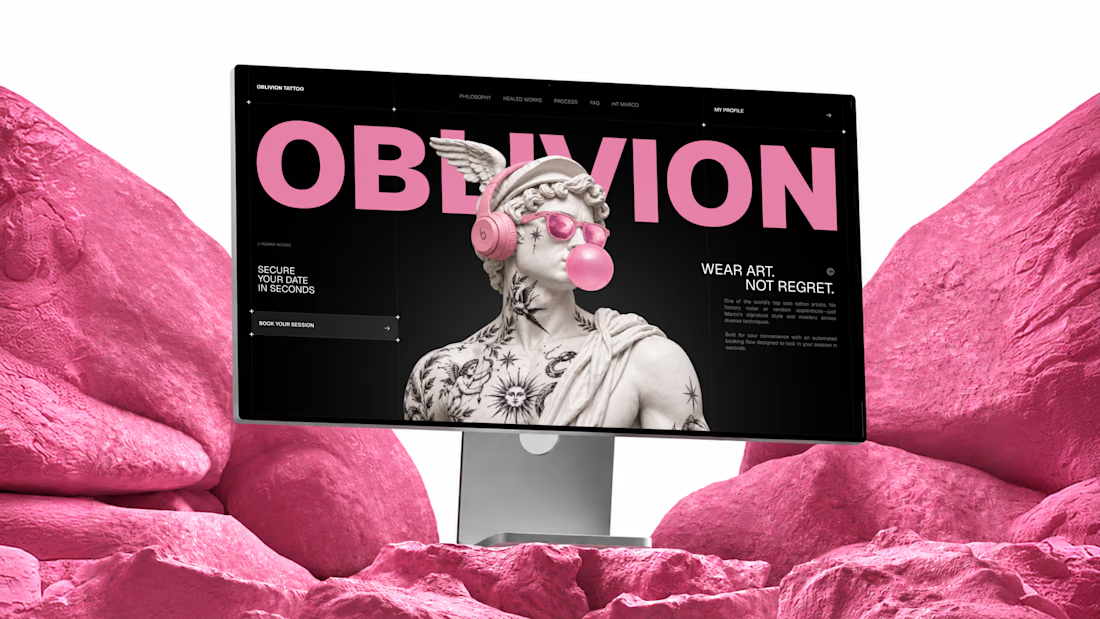
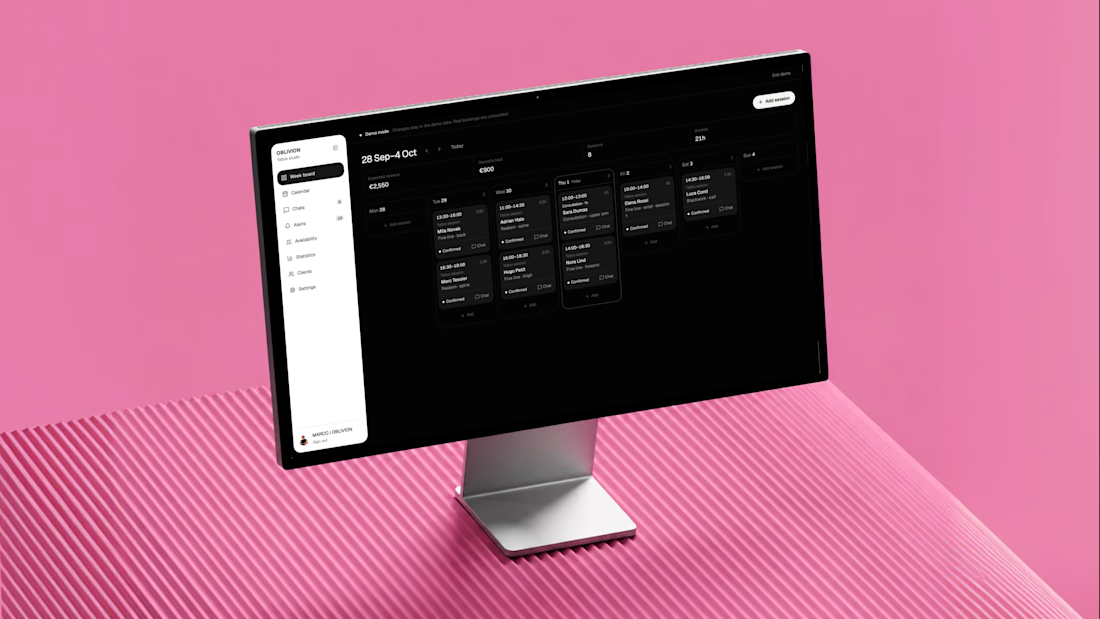
I built OBLIVION Tattoo service for the @Lovable #lovablechallenge
OBLIVION is a private tattoo studio in Kraków, Poland, run by one artist.
As a solo artist, Marco handles every inquiry, reference, estimate, booking, and schedule change himself.
OBLIVION turns complex tattoo inquiries into confirmed appointments by collecting the full client brief, estimating the work, finding real availability, and keeping the entire booking in one connected artist workspace.
One system, three jobs:
1) Attract — custom animated landing page
https://oblivion-tattoo.lovable.app/
2) Book — guided tattoo booking flow
https://oblivion-tattoo.lovable.app/booking
3) Manage — demo artist admin panel
https://oblivion-tattoo.lovable.app/demo
*The public demo admin resets after refresh. The real admin is private, fully persistent, and connected to live bookings, clients, chats, availability, and studio data.
A smoother booking experience for the client, and far less manual work for the artist.


Ideogram 4.5 just launched and I stopped making new images and just kept editing one.
With the early access, I have been testing this new image model.
Most models get worse the longer you stay on one image. Pixel shift, color drift, texture junk. Ideogram 4.5 is built to cut that down, so you can keep going. I tried it across lighting, color, outfits, product shots, interiors, text, and close crops. Fast. And the parts I didn’t ask to change mostly stayed put. Here are some examples I made during the test.


Good work