The network for creativity
Join 1.25M professional creatives like you
Connect with clients, get discovered, and run your business 100% commission-free
Creatives on Contra have earned over $150M and we are just getting started
Back to feedPost

When Conceptual Art Meets JAMstack Code
Art is about vision. Code is about execution. But when they meet, you get a digital presence that doesn't just function—it feels.
Behind every system I architect, there's a creative process that starts with a story, not just a wireframe.
I work with Astro, 11ty, or Jekyll to build websites that are:
Lightning-fast
Easy to manage (Decap or Tina CMS)
Built to scale (from startup to enterprise)
SEO-ready (meta, sitemap, schema)
A good system is invisible. A great system is felt.
Not just a website. A digital architecture.
CTA:
Ready to bring that vision to life?
Let's talk →
https://contra.com/s/QvbXkYgv-ja-mstack-website-architecture-astro-11ty-jekyll-ssg


The network for creativity
Join 1.25M professional creatives like you
Connect with clients, get discovered, and run your business 100% commission-free
Creatives on Contra have earned over $150M and we are just getting started
Related posts


Some concept work from the agency. Planning to share more of what we create, from clean interfaces to the little motion details that bring them to life.
Check out the website: https://urest.agency/


Most websites I build start from one of these 6 layouts.
The layout decides where the eye goes before the design does: Z for one big CTA, F for reading, bento for "show me everything fast".
Which one do you reach for most? Drop the number 👇
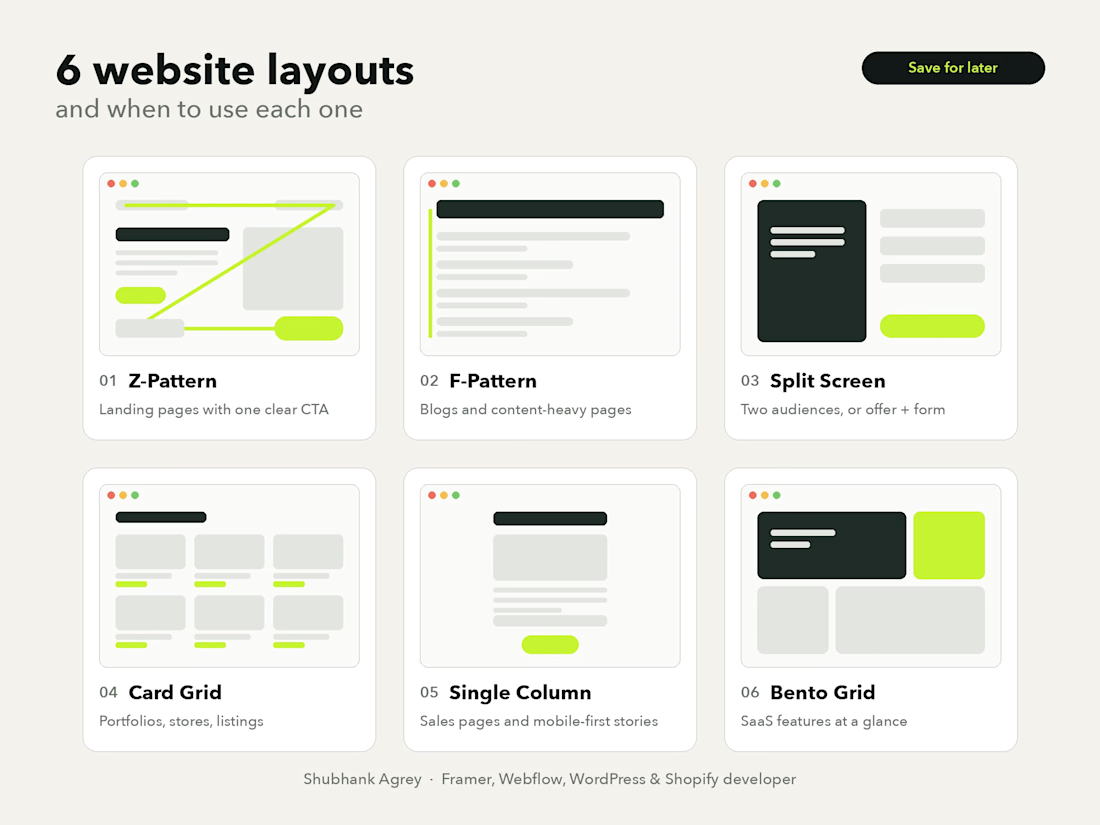

Z with one big CTA is hard to beat for landing pages, while bento shines when a product has lots of features to show fast.

Not every website needs more elements.
Sometimes, it needs better decisions.
A thoughtful layout.
A strong typographic hierarchy.
The right images.
Consistent spacing.
A clear navigation.
And enough room for the design to breathe.
These details might seem small, but together they shape how people experience a website.
That's one thing I appreciate about working with Framer: the opportunity to explore layouts, interactions, and visual details while keeping the experience intentional.
For me, good web design isn't about adding more.
It's about knowing what to keep, what to remove, and what deserves attention.
Less noise. More meaning. Better experiences.
What's one small design detail that immediately makes a website feel premium to you?
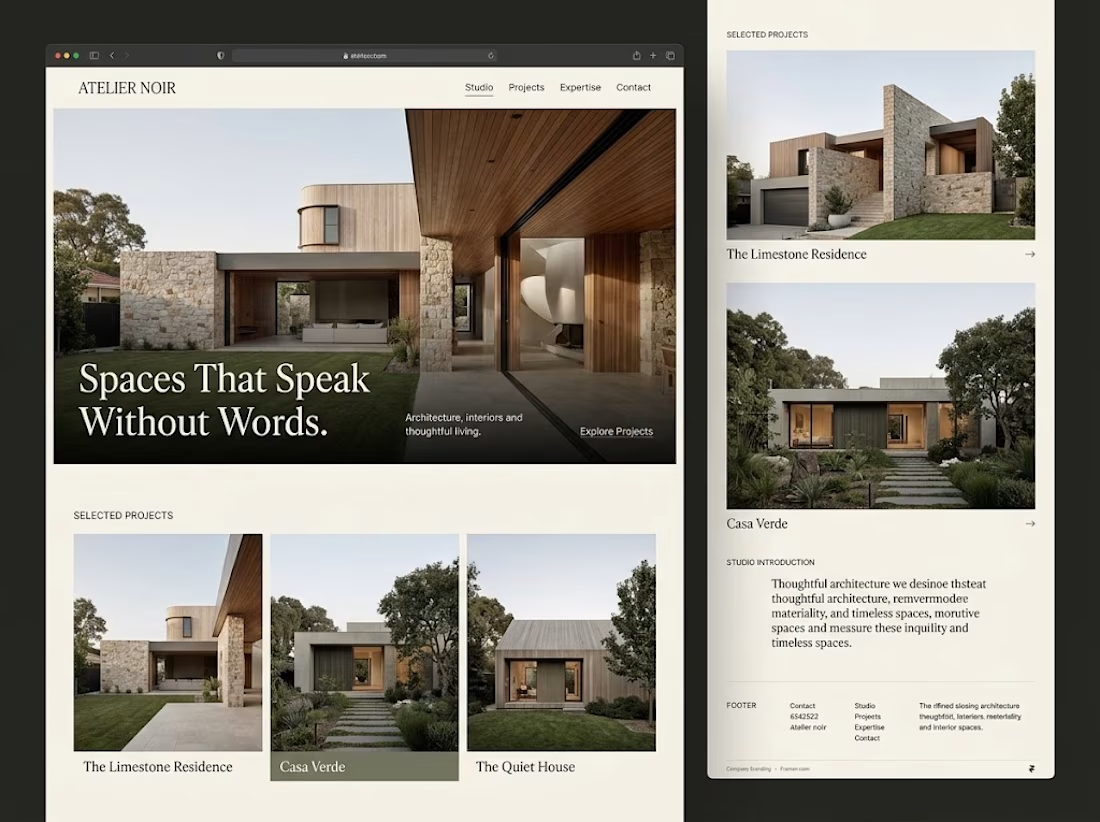

Generous whitespace for me. The serif headline over the photo on your Atelier Noir layout is a good example.