The network for creativity
Join 1.25M professional creatives like you
Connect with clients, get discovered, and run your business 100% commission-free
Creatives on Contra have earned over $150M and we are just getting started
Back to feedPost

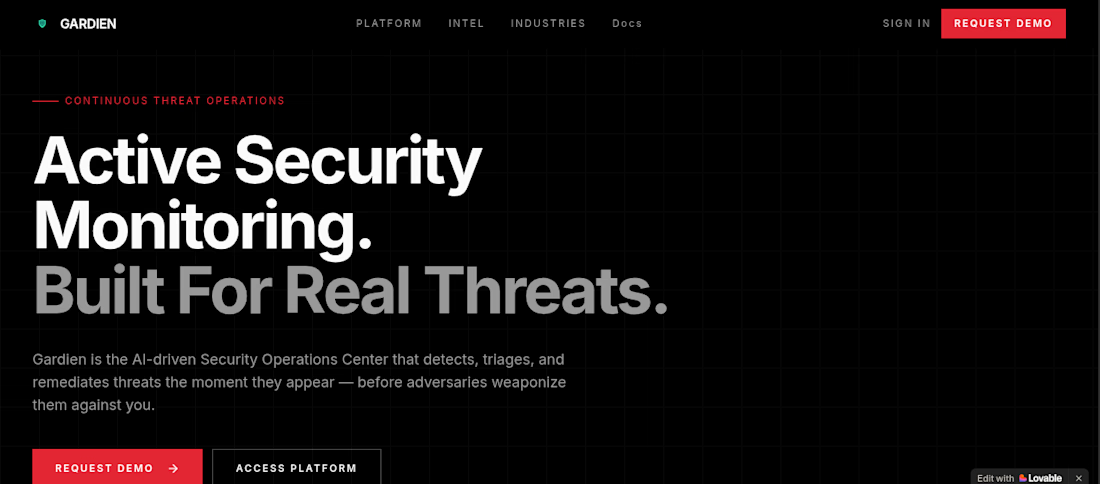
I spent the last few weeks turning a rough idea into something that actually runs. Gardien is an AI-augmented Tier 1 SOC analyst. It ingests SIEM events, enriches them with threat intel, runs them through a language model, and pushes the result to Slack, Discord, email, or a webhook.
Anyone who has worked a SOC queue knows the shape of the problem. Alerts pile up across a dozen tools, most of them are noise, and the ones that matter get buried under the ones that don't. I wanted to see how much of the triage I could automate without automating away the judgement that makes an analyst worth having.
What came together quickly
The core loop was the easy part: scan, create the alert, run the analysis, route it. I built in multiprovider AI support (OpenAI, Anthropic, Google, DeepSeek, Groq, Mistral, OpenRouter, plus custom endpoints) so teams can pick based on budget rather than being locked to whatever I happened to prefer.
What ate the time
Two things, and neither was the AI.
Wazuh integration. Wazuh is a solid SIEM but it does not want to be integrated with. Basic auth with Base64-encoded credentials, a manager and an indexer that are not the same thing and do not behave the same way, and self-signed certificates the edge runtime flatly refused to trust. I ended up shipping a trust self-signed cert option and a CA certificate paste path so people could connect without standing up a reverse proxy first.
Moving to my own infrastructure. The first version ran on a managed platform, which was fine for prototyping but meant I did not control the stack. Frontend went to Vercel, backend to my own Supabase project: recreating cron jobs, redeploying edge functions, migrating secrets, reconfiguring auth providers. Useful reminder that "it works in the prototype" and "it works in production" are different claims.
Where I landed
Gardien is not going to replace an analyst and I would not want it to. What it does is hand back the hours currently lost to alert triage, hunting for log context, and copying values between tabs. If the tool can summarise the event, pull host, rule, source IP, and full log context into one place, and suggest a remediation path, the analyst gets to spend their attention on the decision instead of the assembly.
It currently handles Wazuh, Splunk, Elastic, Sentinel, QRadar, Chronicle, and custom sources. Scheduled scans, automatic analysis, notifications that arrive with context already attached. Plenty left to improve, but it runs in production on my own infrastructure, which was the bar I set.
Debugging TLS and reading edge function logs at midnight taught me more than the tutorials did.
The network for creativity
Join 1.25M professional creatives like you
Connect with clients, get discovered, and run your business 100% commission-free
Creatives on Contra have earned over $150M and we are just getting started











Related posts

AI Automation SaaS Website Design
AUTONIX is a modern AI automation SaaS website concept designed to help businesses streamline workflows, automate repetitive tasks, and manage AI agents more efficiently.
The design combines a clean, minimal interface with bold typography, futuristic visuals, interactive UI elements, and a seamless user experience. From AI-powered task automation to real-time productivity insights, every section is designed to communicate the value of intelligent automation in a clear and engaging way.
This project explores how thoughtful UI/UX design can make complex AI technology feel intuitive, accessible, and easy to use for modern businesses.
Services: SaaS Website Design, UI/UX Design, Landing Page Design, AI Product Design.


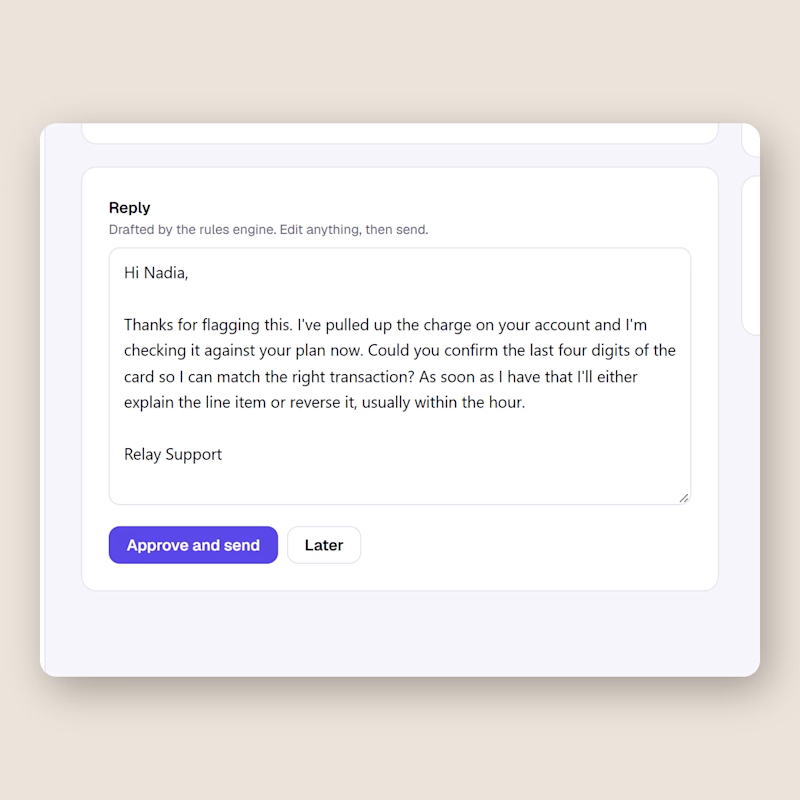
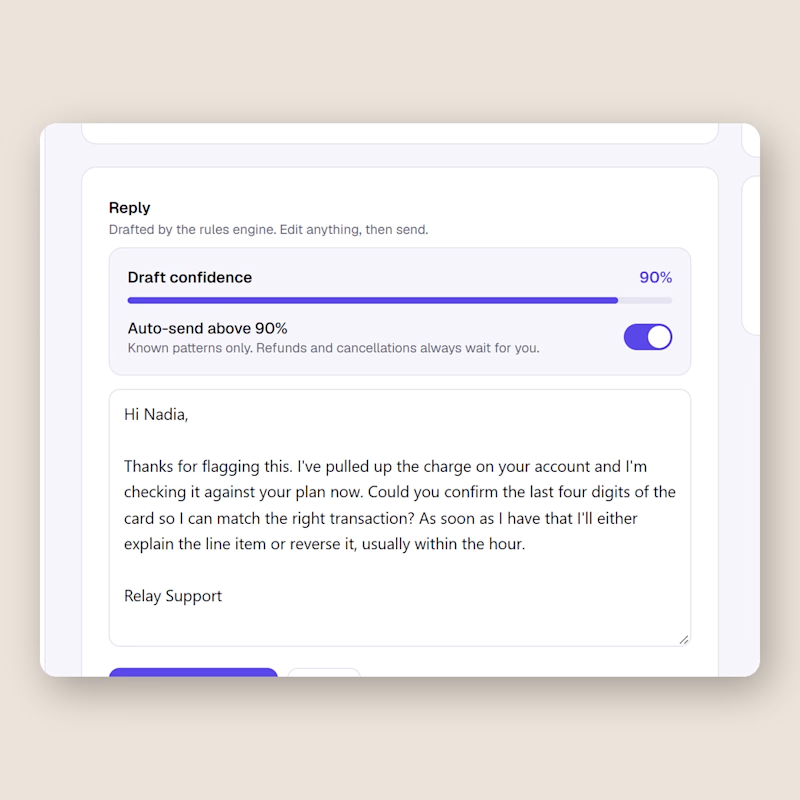
Same support inbox, one difference. Left keeps a human on every send. Right lets the AI send on its own once the draft confidence passes 90, refunds and cancellations excluded.
I built both in Relay this week and I still cannot decide.
Would you flip that switch for your own customers, and at what number?
0 voted
0%
2 voted
100%
2 votes
Closed

I'd flip it per topic, not per score. A 90 on a question the AI has answered hundreds of times is safe. A 90 on a question it has never seen is still a guess. Can Relay set a different threshold per topic?

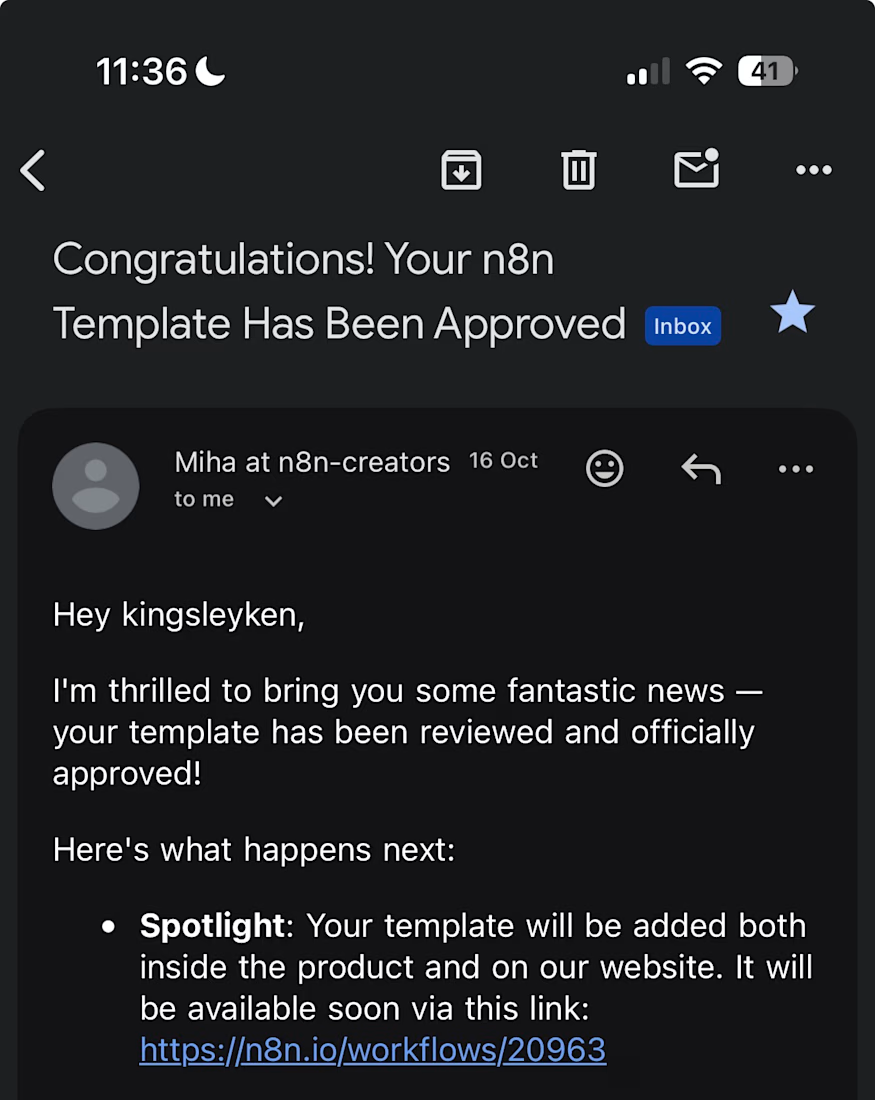
My first n8n template is now live in the official n8n library, and it is free to use.
After a sales call, most people either rush the follow-up email or forget it. This workflow does the first draft for you.
When Fireflies finishes transcribing a call, it:
pulls the full transcript
uses OpenAI to write call notes: a summary, open questions, the next step and the outcome
saves a follow-up email to the contact as a Gmail draft
logs the call in Google Sheets and emails you the notes
Nothing is sent to the contact automatically. The follow-up waits in your drafts until you check it and press send.
Works with the free Fireflies plan and n8n Cloud.
Get it here: https://n8n.io/workflows/20963


Congrats on getting it approved. Drafting instead of auto-sending is the right default. One edge case worth a guard: calls where the transcript comes back empty or cut short, otherwise the model writes a confident follow-up from almost nothing.