The network for creativity
Join 1.25M professional creatives like you
Connect with clients, get discovered, and run your business 100% commission-free
Creatives on Contra have earned over $150M and we are just getting started
Back to feedPost

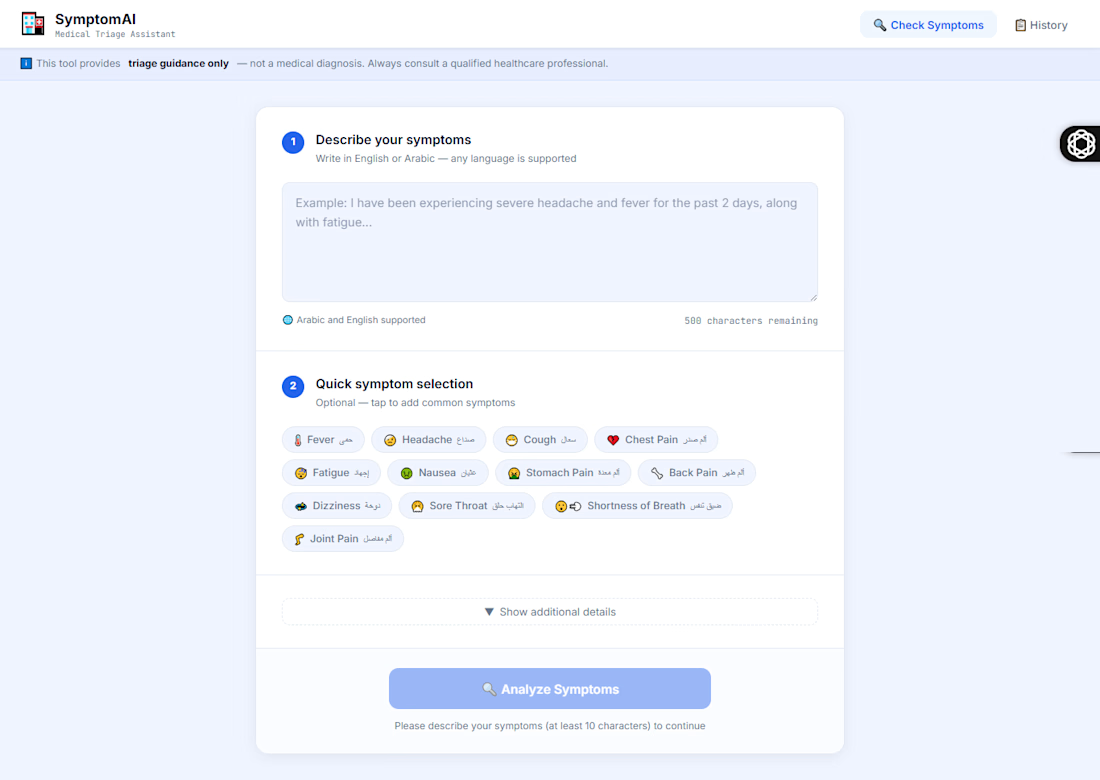
A self-directed learning project exploring full-stack AI integration for a HealthTech scenario — the user enters symptoms, the backend calls an AI provider through a swappable abstraction, and returns triage guidance. Built to study the Facade and provider-abstraction patterns.


The network for creativity
Join 1.25M professional creatives like you
Connect with clients, get discovered, and run your business 100% commission-free
Creatives on Contra have earned over $150M and we are just getting started





Related posts

I Built "My Perfect Interior" an Interior Design company website.
This website combines a premium, editorial design experience with AI-powered room visualization. Visitors upload a photo of their empty room, describe their vision, and receive a generated design concept. Each submission is automatically saved to a studio dashboard with the client's email, original photo, generated concept, and design brief.
This addresses a key challenge in interior design: translating a client's imagination into something a designer can understand and act on. By automating early-stage visualization and enquiry collection, the platform helps interior design businesses understand client needs faster, reduce repetitive consultations, and turn ideas into actionable project leads—all within a beautifully designed, responsive experience.


Solving the imagination translation problem is the smart move here, Charles. Letting visitors upload a room photo and get back a generated design concept turns the early consultation into something genuinely productive, and saving every brief to the studio dashboard makes the whole flow work like a real business.

AI made exploration much cheaper for me
i'm not sure it made the work more enjoyable.
i enjoyed manually exploring different directions
even when it took a lot of effort
once i had a solid foundation,
new screens came together pretty easily
now i can generate a dozen directions and get something functional quickly
but it's often almost unusable.
most of my work comes afterward:
rearranging things,
discarding bad ideas,
removing generated slop...
feeling like this limping little guy
protecting you from the slop
That limping little guy protecting us from the slop is painfully relatable, Anton. I feel the same: generating a dozen directions is cheap now, but the rearranging, discarding and de-slopping afterward is where the real craft lives.

BloomyMind is a next–generation AI mental wellness assistant designed to help people feel seen, supported, and more emotionally balanced in their everyday lives. Our studio was invited to create a visual identity and product experience that seamlessly blends the precision of artificial intelligence with warmth, empathy, and human-centered design. Project Goal To build a brand and interface system that communicates BloomyMind’s core purpose: making emotional care accessible, gentle, and meaningful. We aimed to craft a personality that feels uplifting, calm, and trustworthy a digital companion users can rely on during moments of stress, reflection, or self-growth.


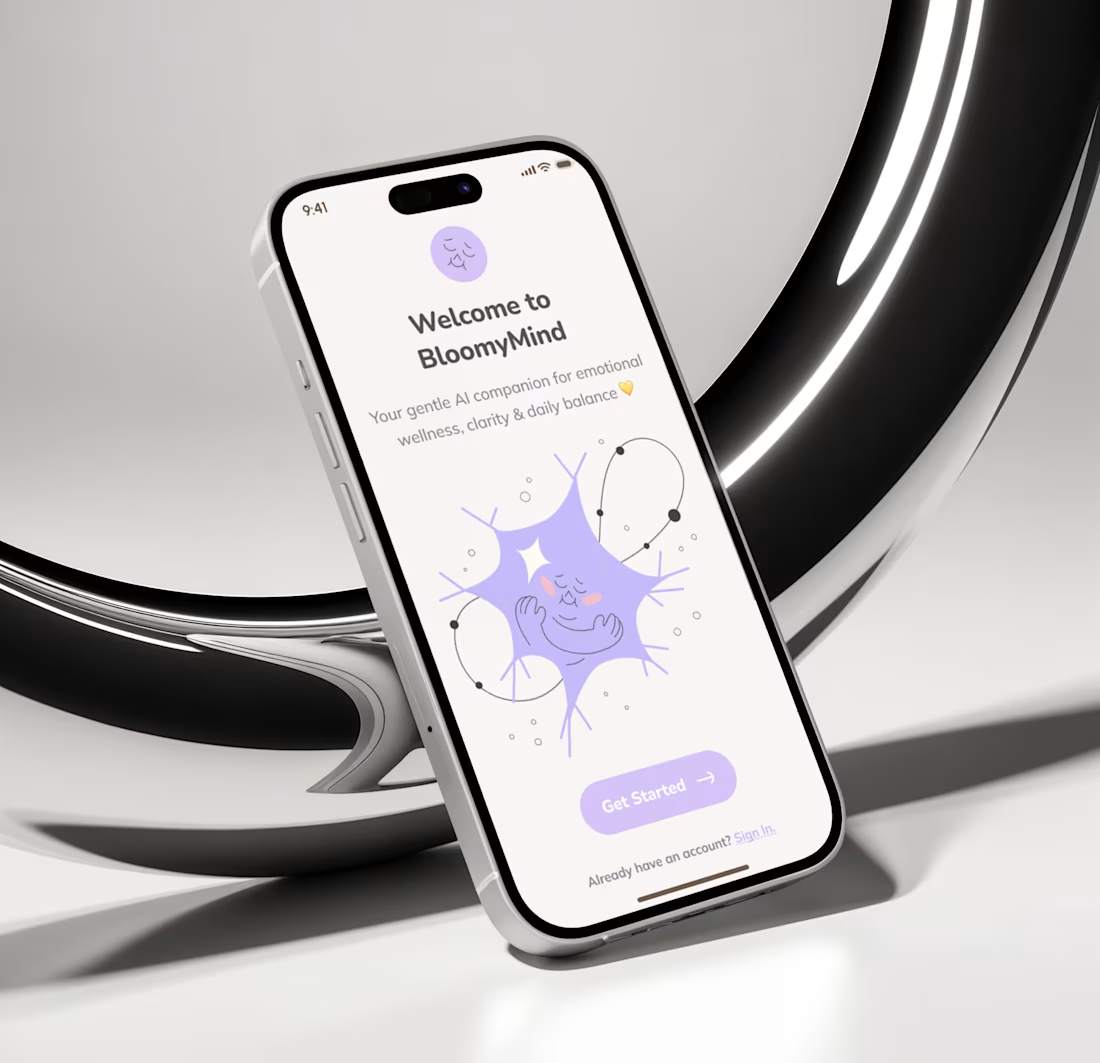
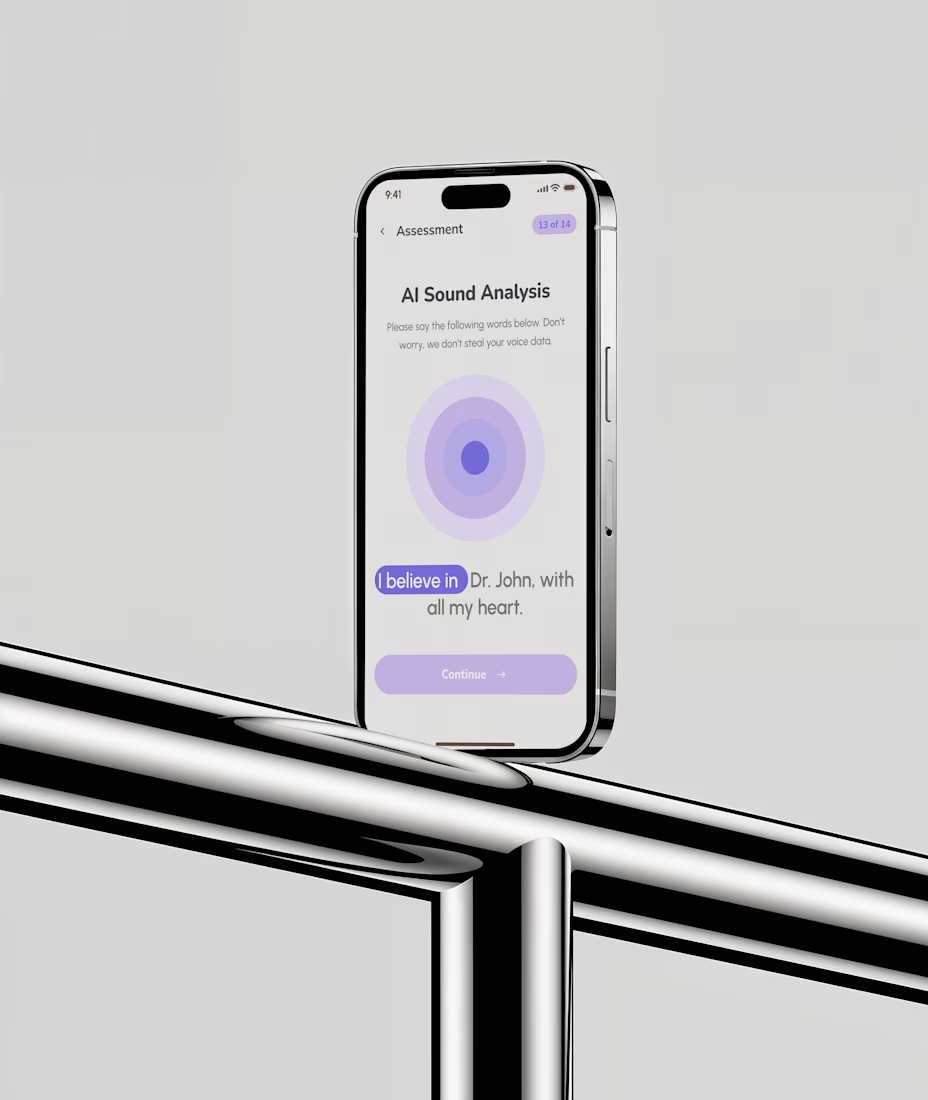
Blending the precision of AI with warmth and empathy is exactly the right brief for a mental wellness product, Huzaifa. That soft lavender bloom personality makes BloomyMind feel like a companion you would trust during moments of stress or reflection.