The network for creativity
Join 1.25M professional creatives like you
Connect with clients, get discovered, and run your business 100% commission-free
Creatives on Contra have earned over $150M and we are just getting started
Back to feedPost
One of the worst bugs you can ship in a SaaS is charging a customer's card and leaving their account locked.
It happens way more often than founders admit. A user finishes Stripe checkout, their bank sends an SMS that money was deducted, but your dashboard still shows "Free Plan". Three minutes later, an angry support ticket lands in your inbox.
The checkout page itself almost never fails. What breaks is what happens three seconds later in the webhook handler.
Most rushed setups try to do everything inside that incoming HTTP request: verify the Stripe signature, query the database, provision team seats, create default settings, and trigger a welcome email. If an external API stutters or the database query hangs for three seconds, Stripe times out and retries the delivery.
If your code doesn't guard against duplicate events, those retries run the same queries twice. Suddenly you have duplicate customer records or corrupted workspace state.
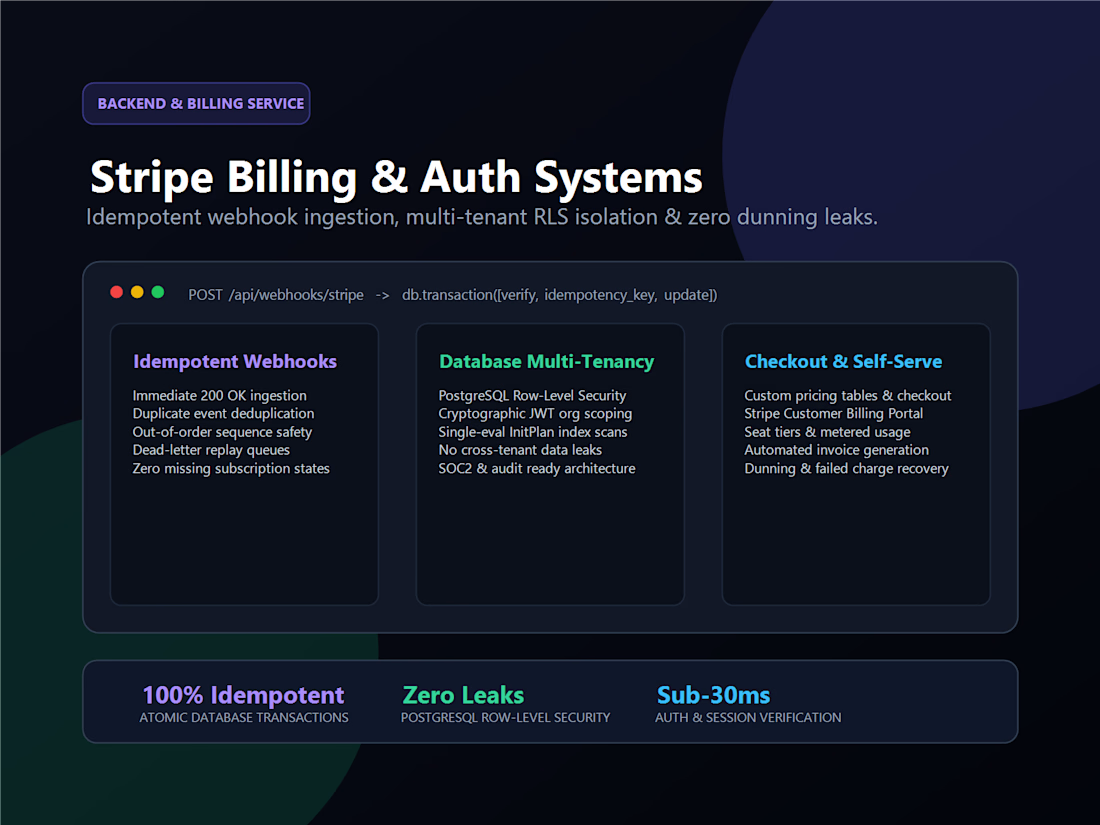
When building PulseMetrics, I stripped the webhook handler down to two strict principles:
First, return a 200 OK fast. The route does nothing except verify the cryptographic signature, save the raw payload to an audit queue, and close the connection in under 40ms. Never let heavy business logic run on the webhook listener thread.
Second, wrap database updates in an atomic transaction keyed directly on Stripe's event ID. If that ID is already flagged as processed in the database, the transaction aborts instantly without touching customer records.
The other trap engineers overlook is event arrival order. Stripe does not guarantee that events arrive chronologically. In production, invoice.payment_succeeded can arrive before customer.subscription.created. If your database schema assumes linear arrival, foreign key lookups fail. You have to decouple invoice state from initial subscription provisioning and reconcile based on event timestamps, not receipt order.
Wiring up a Stripe checkout button takes an afternoon. Engineering resilient webhook ingestion that survives network drops, concurrency, and out-of-order events is what actually keeps a SaaS running.
The network for creativity
Join 1.25M professional creatives like you
Connect with clients, get discovered, and run your business 100% commission-free
Creatives on Contra have earned over $150M and we are just getting started



Related posts

Hi everyone, I’m Dani from Innsbruck, Austria.
I’m a senior full-stack developer and technical consultant with experience in C#/.NET, PHP/Laravel/Symfony, TypeScript/Angular, APIs, SQL, e-commerce and AI integrations.
I enjoy turning business requirements into reliable applications, integrations and practical AI-assisted workflows. I’m currently available for remote freelance collaborations and happy to connect with other builders, founders and teams here on Contra.
Nice to meet you!
contra.com
Danijel Bumbar’s Work | Contra
View Danijel Bumbar’s work on Contra. The Independent-first, commission-free freelance marketplace shaping the future of work.

Nice!

BlazePlus is a full-stack web application featuring user authentication, verification, and a structured directory system. Built with a focus on user verification, secure access, and a clean, user-friendly interface.


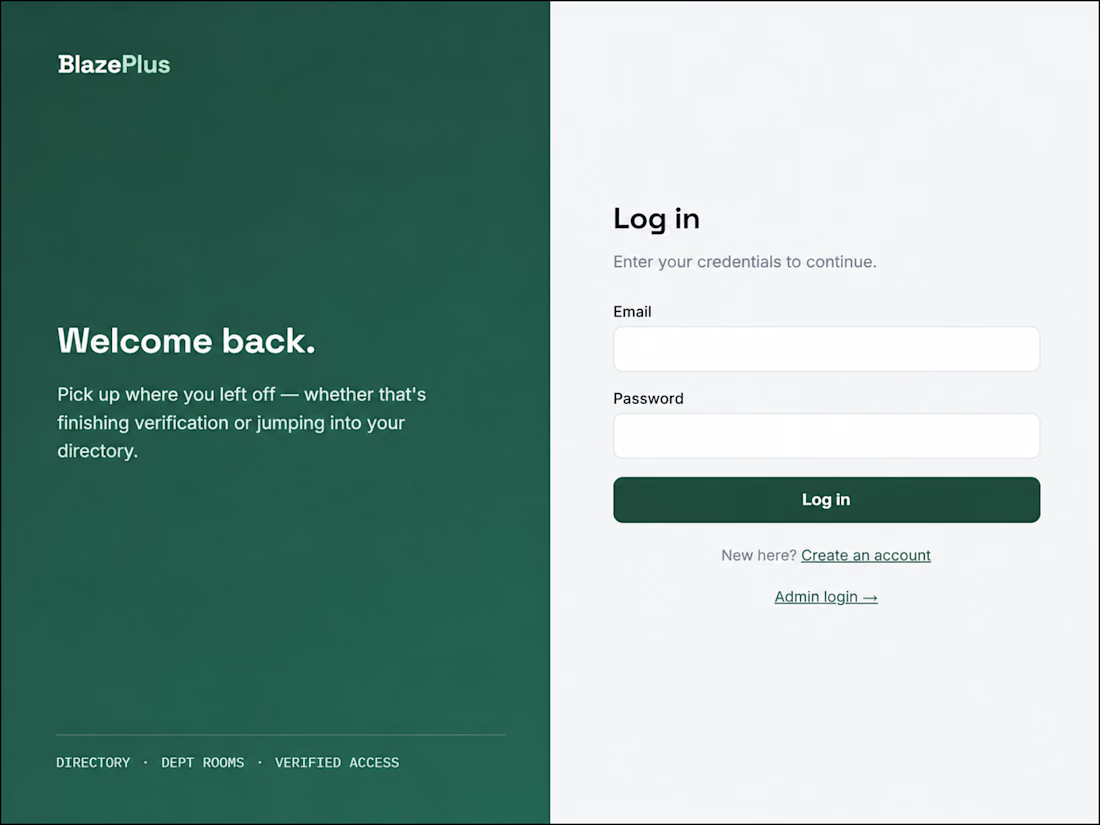

The green makes this feel welcoming.

Overview
DocuMind AI is an enterprise-grade multimodal document intelligence platform designed to extract, analyze, and synthesize critical insights from messy unstructured PDFs, financial statements, and legal agreements in real time.
The Problem
Traditional OCR and text extractors lose contextual hierarchy, choke on multi-column tables/scans, and induce heavy latency—often freezing the UI while large documents are processed. Moreover, sending raw full documents to LLMs causes expensive token overhead and hallucinations.
The Solution & Architecture
Multimodal Ingestion Pipeline: Streamed document parsing using Claude 3.5 & Gemini Multimodal models for rapid vision-level layout extraction and risk identification.
Dynamic Context Compaction: Built intelligent chunking and token-budget pruning algorithms, reducing LLM API token consumption by 42% while eliminating hallucinated clauses.
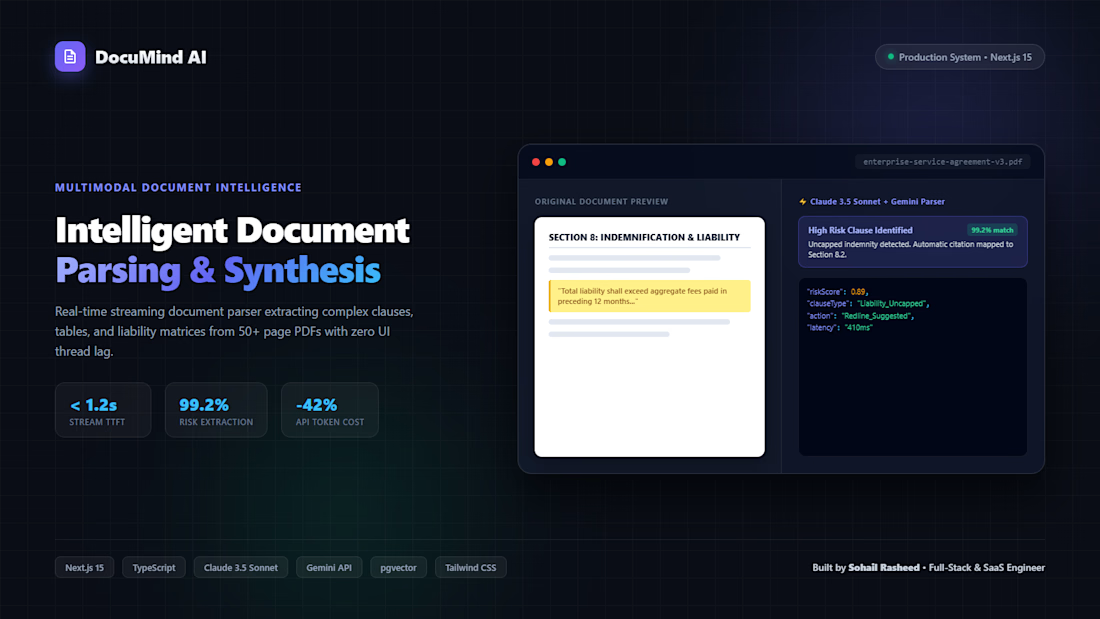
Sub-Second Streaming UI: Implemented Next.js 15 Server-Sent Events (SSE) streaming with a dual-pane responsive viewer (original document on the left, interactive citation breakdown and risk matrix on the right) with zero main-thread lag.
Key Impact & Metrics
99.2% Accuracy in extracting high-risk contractual clauses and numerical tables.
< 1.2s Time-to-First-Token (TTFT) on 50+ page PDF documents.
40%+ Cost Reduction via aggressive prompt caching and token pruning.


The split view makes sense.