The network for creativity
Join 1.25M professional creatives like you
Connect with clients, get discovered, and run your business 100% commission-free
Creatives on Contra have earned over $150M and we are just getting started
Back to feedPost
For the @Lovable challenge, I chose one of the most vulnerable booking experiences I’ve encountered through my work with therapists: reaching out for a first consultation.
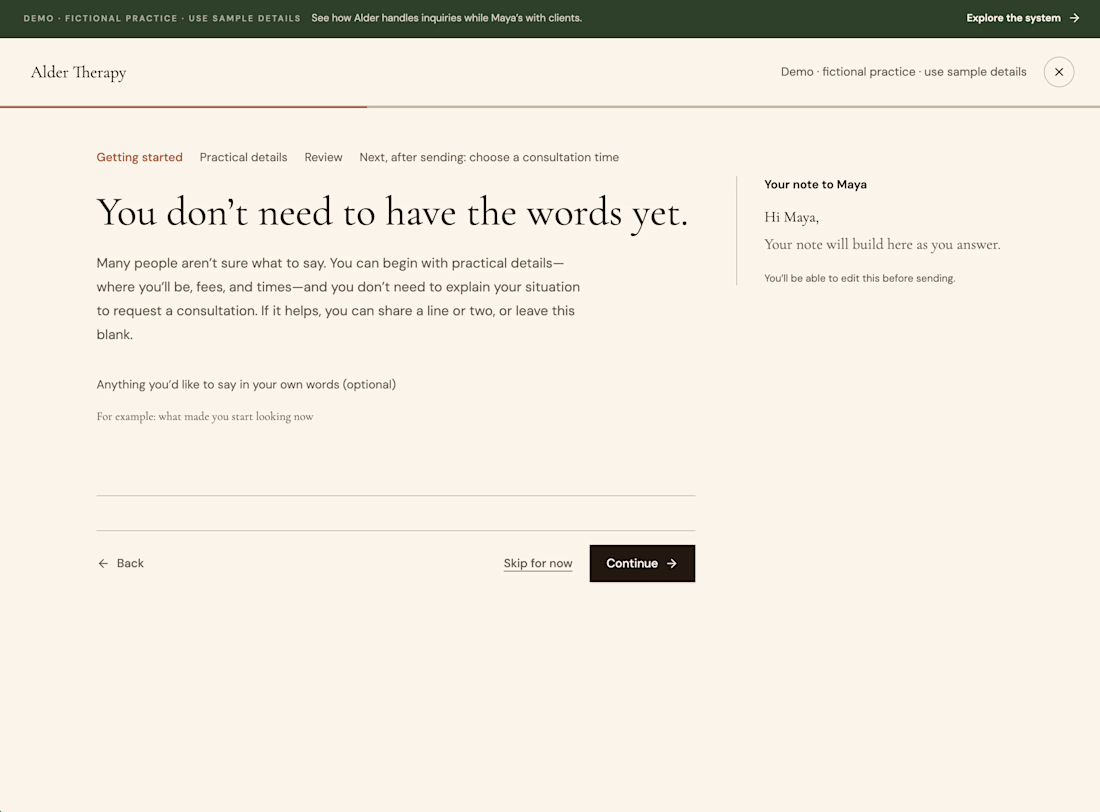
By the time someone clicks “book,” they may have spent weeks finding the words.
They send an inquiry, share something personal, and wait. Sometimes, only after hearing back do they discover that the therapist isn’t accepting clients, can’t meet in person, or doesn’t have hours that work for them.
Now they have to start again.
I wanted to make that first step gentler and reduce the coordination falling on a therapist who’s already spending her day with clients.
🍃 Meet Alder Therapy, a fictional solo practice in Portland, Oregon, run by Maya.
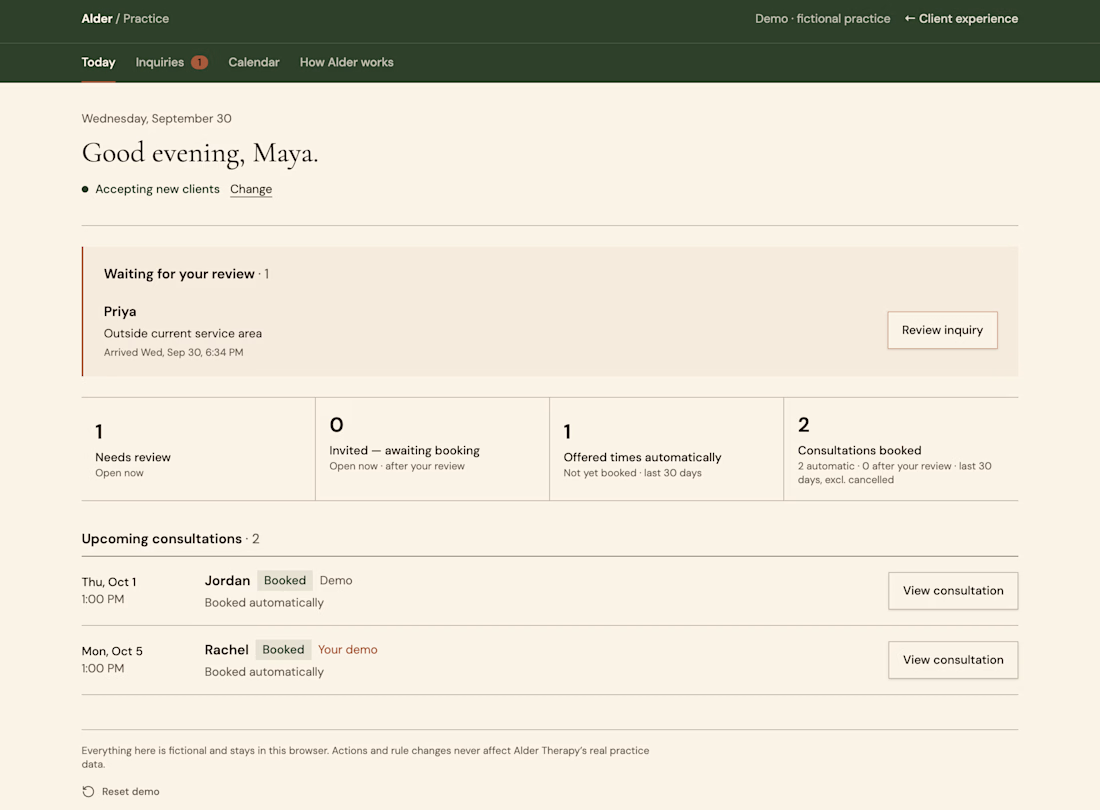
The problem I rebuilt: turning “Can I book a consultation?” into a confirmed appointment without repeated emails about practical details, while keeping Maya involved when someone needs a personal response.
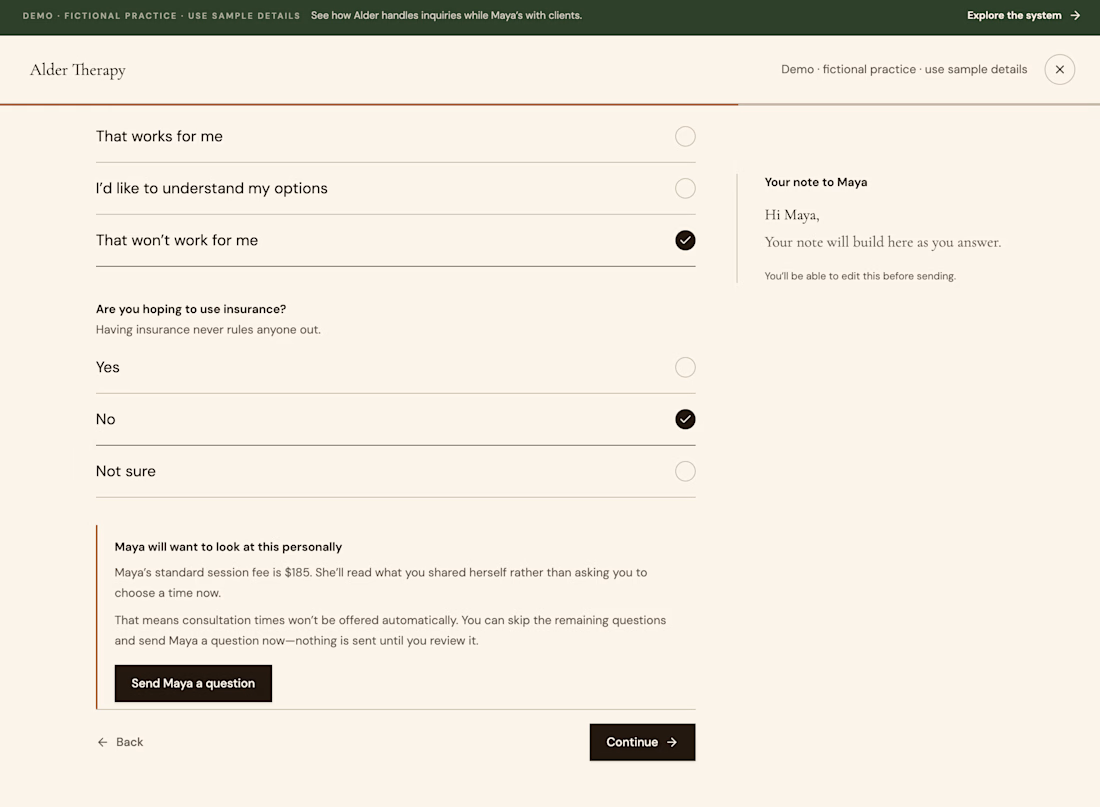
Alder brings location, fees, insurance expectations, and ongoing availability into the conversation early. Sharing personal concerns is optional. Someone can understand the arrangements before deciding how much of their story to tell.
📝 As they answer, a short note to Maya takes shape. They can read it, edit it, and see what happens next before sending.
When the practical arrangements line up, they can choose a consultation time directly. When a question needs Maya, their inquiry is saved with a welcoming handoff and its context intact.
That distinction matters to me. Through working with therapists, I’ve seen that reducing admin doesn’t mean they want to hand every decision to a system.
Maya can see everyone who has reached out, what’s already been handled, and who needs her attention. She sets the rules, pauses new-client bookings when needed, and can invite someone to book after reviewing their question.
For the challenge, my goal was to remove the repeated coordination around that first appointment while preserving the care that belongs in it.
💚 Less uncertainty for someone taking a difficult first step. More time and context for the person they’re hoping to speak with.
Watch the walkthrough or try both perspectives:
https://alder-therapy-connect.lovable.app
Alder is an interactive demo of a fictional practice. Records stay in your browser, and no login is required.

Love this! 💚 We both built for therapy practices, but from such complementary angles, and I really appreciate the sensitivity you brought to the first consultation. "By the time someone clicks 'book,' they may have spent weeks finding the words" is so true. Letting people...

Omg! I love your submission so much! We need both in action. :)
Loom with captions here :) https://www.loom.com/share/a392cbf1e1c741e79abd579578dc2933
The network for creativity
Join 1.25M professional creatives like you
Connect with clients, get discovered, and run your business 100% commission-free
Creatives on Contra have earned over $150M and we are just getting started











Related posts

The Lovable Challenge is officially done! Big shoutout to everyone who participated, liked, commented, shared, and scrolled through 🙌
Congratulations to the winners:
1st place: Sergey Bertagnini
2nd place: Lubos Belak
3rd place: Alice D.
Social Media Superstar: Victoria Lishchuk


I built LeadPilot, a lead management and outreach workspace for freelance web designers and small studios.
Finding potential clients is only one part of freelance work. Understanding where you can add value, reaching out with a relevant offer, and keeping track of follow-ups can be just as challenging.
LeadPilot brings these steps into one workflow. It helps freelancers organize prospects, identify potential opportunities, prepare personalized outreach, and manage follow-ups without losing context between tools.
My focus was on building something practical, with a clean interface and a workflow designed around how independent designers actually find and approach clients.
Built with Base44 for the #Base44Challenge.
Live project: https://spicy-pilot-lead-flow.base44.app
#Base44Challenge @Base44


Is a login required to see the LeadPilot project?


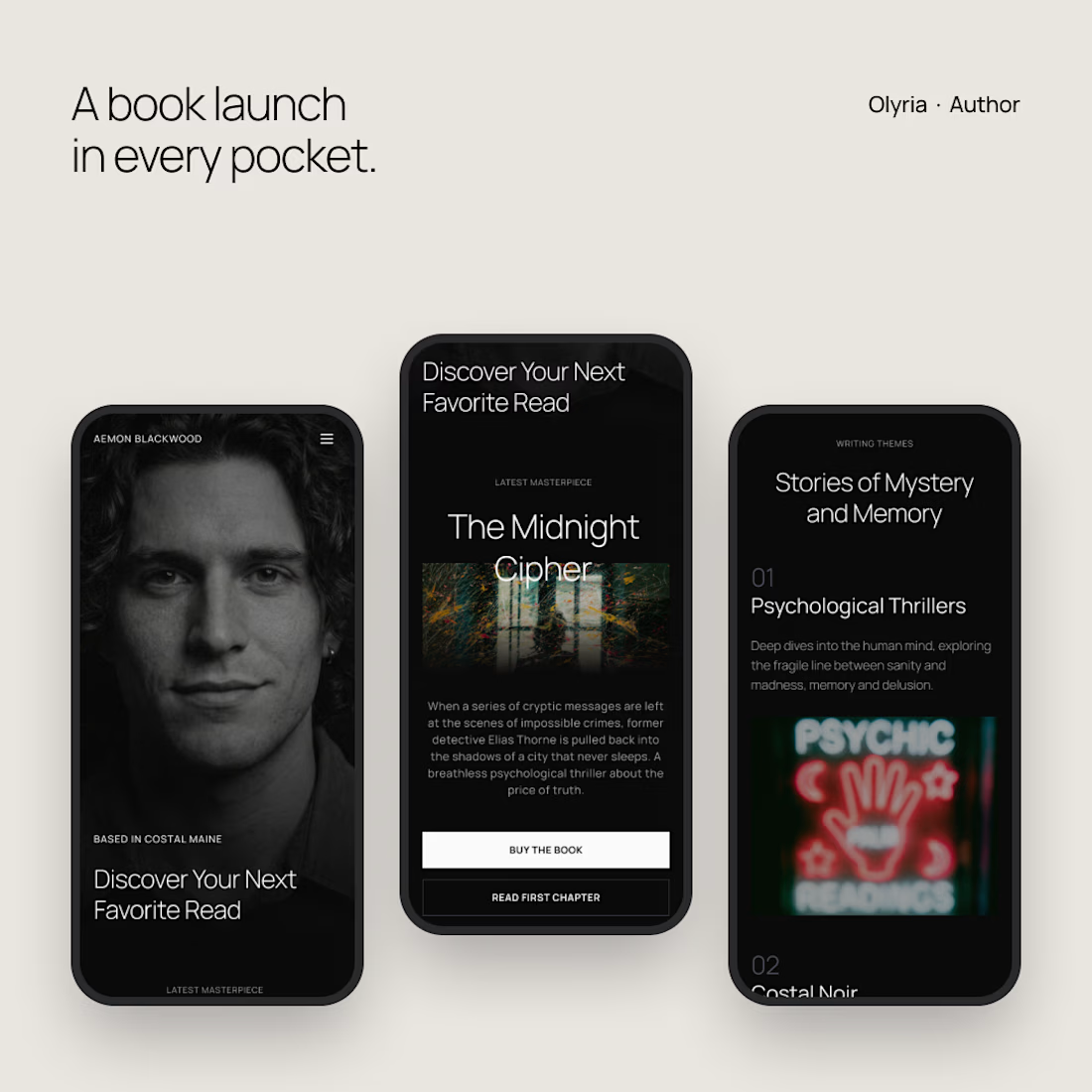
A book launch in every pocket.
Think about where readers actually find you. A bookstagram post. A podcast mention on the commute. A friend saying "you have to read this" over dinner. Almost always on a phone.
AEMON was designed for that moment, not adapted to it:
→ The portrait and invitation still fill the first screen
→ The new book, with "Get the book" and "Read the first chapter" buttons, sits right underneath
→ The journal, "Stories of Mystery and Memory," reads easily on a small screen
When curiosity strikes, the book should be one tap away.
A Framer template for authors, made in Framer: https://framer.link/GTsjE6L
#Framer #FramerTemplates #MobileFirst #BookMarketing #AuthorWebsite