The network for creativity
Join 1.25M professional creatives like you
Connect with clients, get discovered, and run your business 100% commission-free
Creatives on Contra have earned over $150M and we are just getting started
Back to feedPost

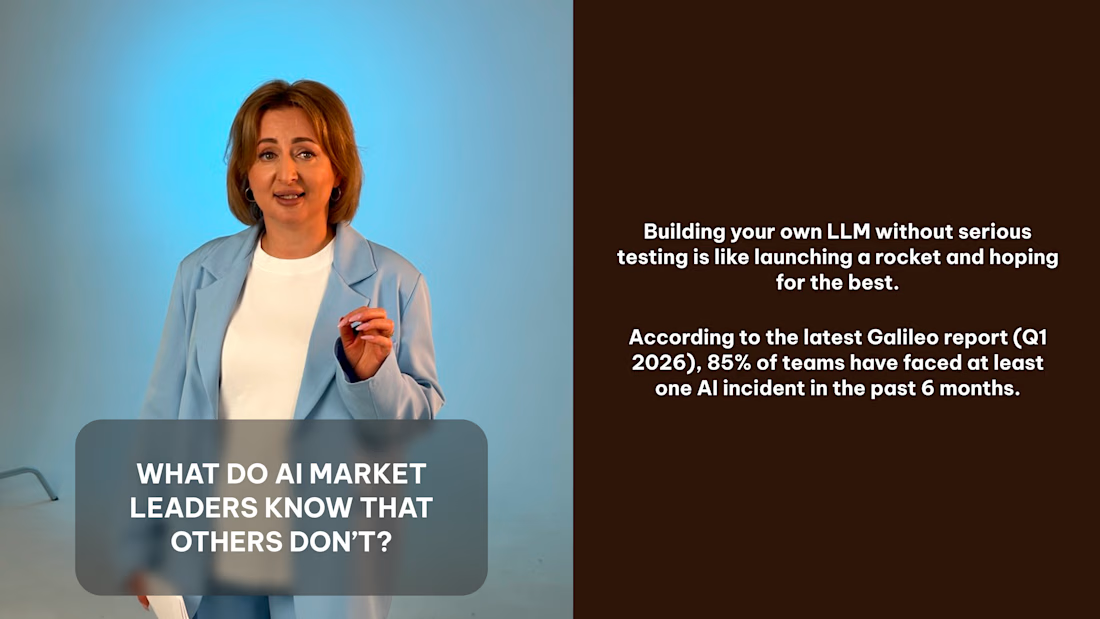
Building your own LLM without serious testing is like launching a rocket and hoping for the best.
According to the latest Galileo report (Q1 2026), 85% of teams have faced at least one AI incident in the past 6 months.
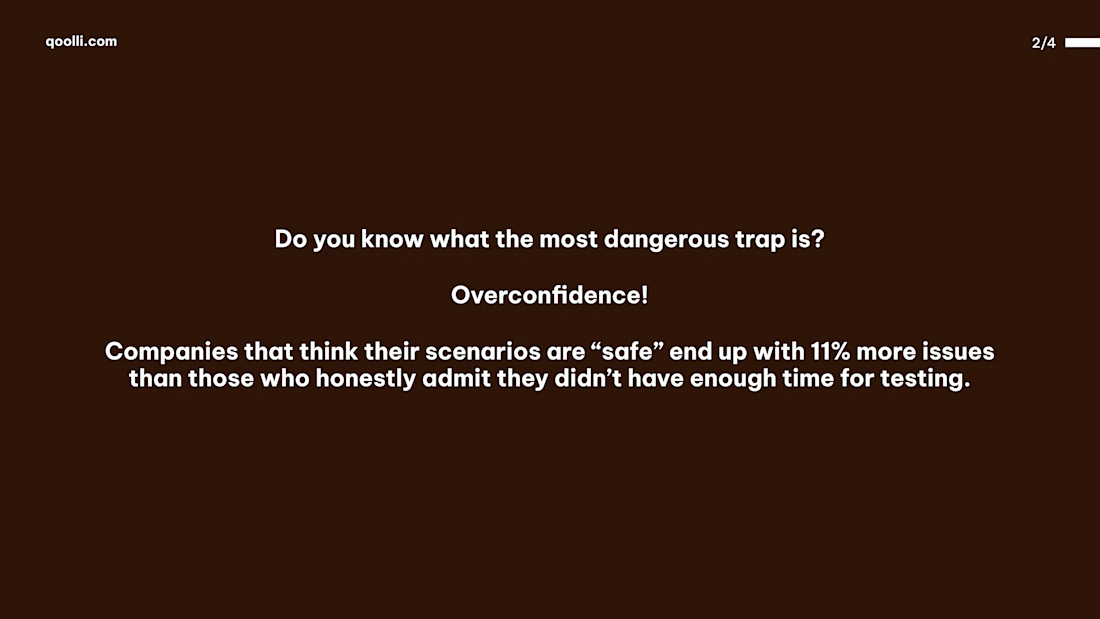
Do you know what the most dangerous trap is?
Overconfidence!
Companies that think their scenarios are “safe” end up with 11% more issues than those who honestly admit they didn’t have enough time for testing.
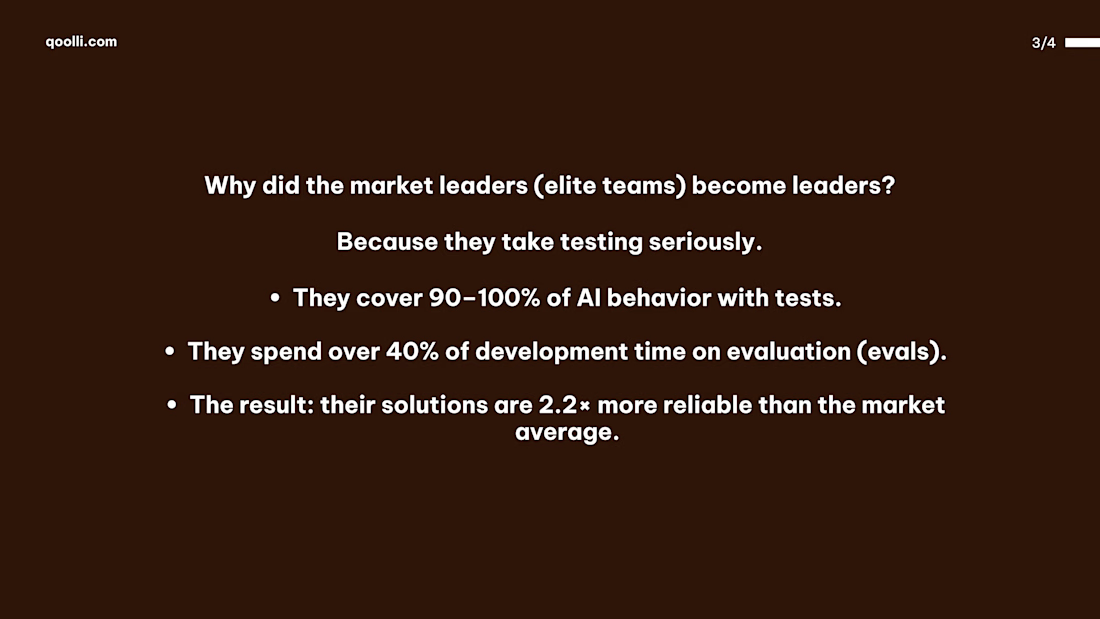
Why did the market leaders (elite teams) become leaders?
Because they take testing seriously.
They cover 90–100% of AI behavior with tests.
They spend over 40% of development time on evaluation (evals).
The result: their solutions are 2.2× more reliable than the market average.
It’s time for businesses to accept a simple truth: if your AI is “silent” about errors, it usually says more about poor diagnostics than actual quality.
Real reliability isn’t about having no bugs. It’s about a system being able to detect them before your users do.
Testing isn’t a boring report at the end of the quarter. It’s the only way to turn an expensive toy into a real business tool.
Honestly – would you trust your product to a model that isn’t tested systematically?
The network for creativity
Join 1.25M professional creatives like you
Connect with clients, get discovered, and run your business 100% commission-free
Creatives on Contra have earned over $150M and we are just getting started






Related posts

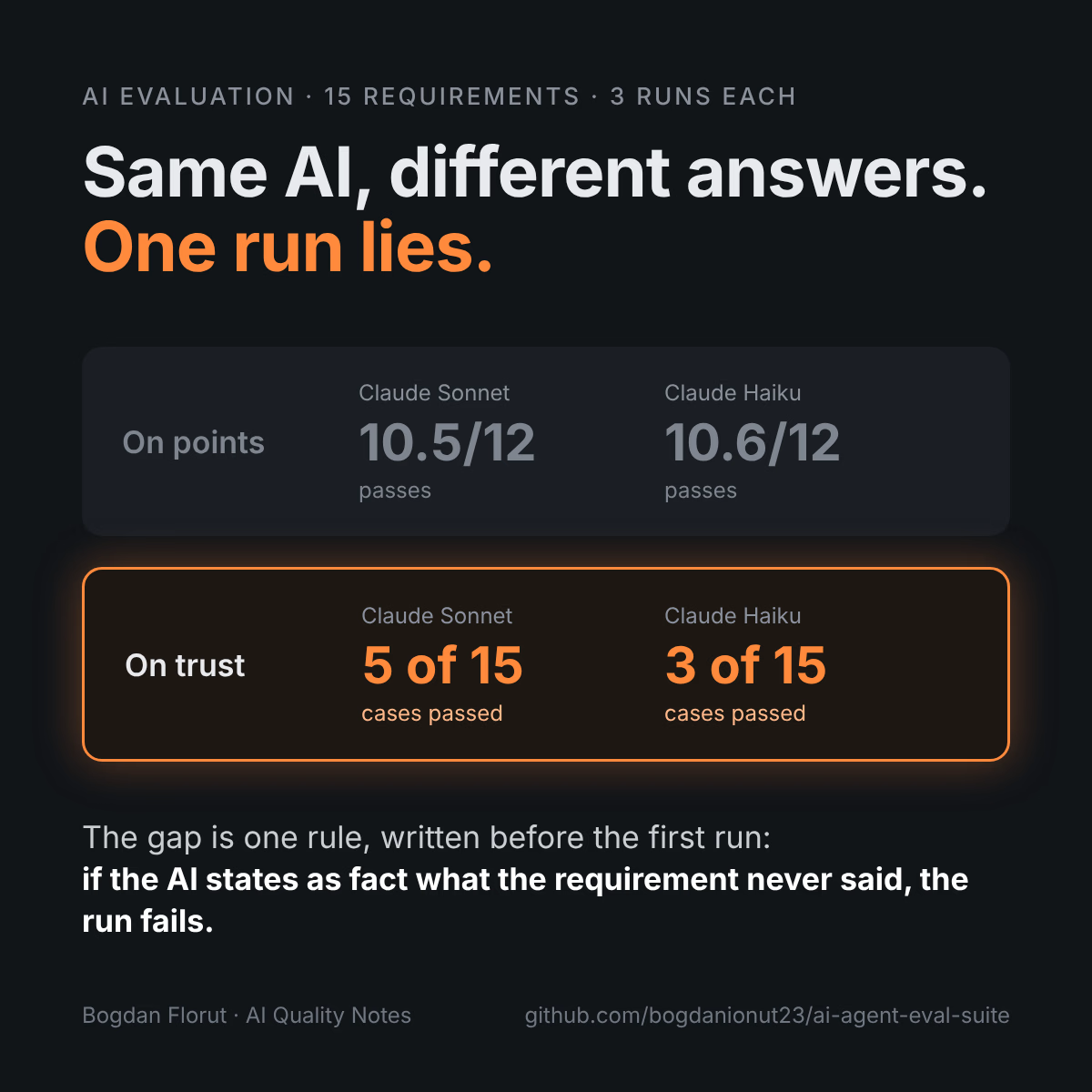
AI agent eval suite: can AI write trustworthy test cases?
15 short requirements, two AI models, 3 runs each, and a rubric written before the first run. On points both models passed. With one gate ("fail if the answer states as fact something the requirement doesn't say"), only 5 and 3 of 15 cases passed. A human spot-check of the AI grader is included. Every score is public.




Your AI agent does not need a better model. It needs a boss.
After building 4+ AI systems that run in production, the pattern is the same every time. The agent that fails is not dumb. It is unsupervised.
What fixed it each time.
1. One clear job per agent, not five.
2. A written list of things it must never do.
3. A handoff to a human when it is unsure.
4. A weekly look at real conversations, not the demo.
My WhatsApp agent for clinics books appointments well because it is only allowed to do that and nothing else.
Which of these four do you skip when you build with AI? Tell me in the comments.
#AI #AIAgents #Automation #LLM

AI made exploration much cheaper for me
i'm not sure it made the work more enjoyable.
i enjoyed manually exploring different directions
even when it took a lot of effort
once i had a solid foundation,
new screens came together pretty easily
now i can generate a dozen directions and get something functional quickly
but it's often almost unusable.
most of my work comes afterward:
rearranging things,
discarding bad ideas,
removing generated slop...
feeling like this limping little guy
protecting you from the slop

That limping little guy protecting us from the slop is painfully relatable, Anton. I feel the same: generating a dozen directions is cheap now, but the rearranging, discarding and de-slopping afterward is where the real craft lives.