The network for creativity
Join 1.25M professional creatives like you
Connect with clients, get discovered, and run your business 100% commission-free
Creatives on Contra have earned over $150M and we are just getting started
Back to feedPost

Before an organisation can make better decisions with AI, it needs to know what information to trust.
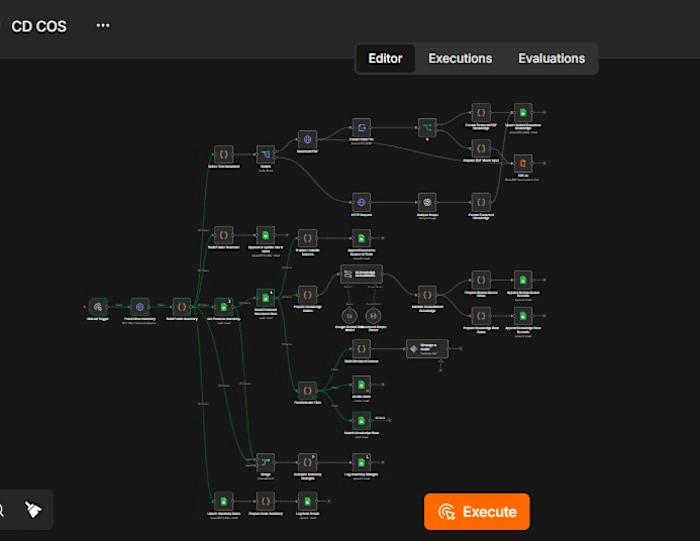
While building a Chief of Staff system for an EdTech founder, I'm working on what I call the Source of Truth.
Think about how information accumulates inside an organisation: policies change, targets get revised, processes evolve, and decisions are documented across different files and tools.
Now imagine an AI system retrieving an old policy or an outdated target and presenting it confidently as current information.
The problem isn't necessarily the AI model. It's the organisational context behind the answer.
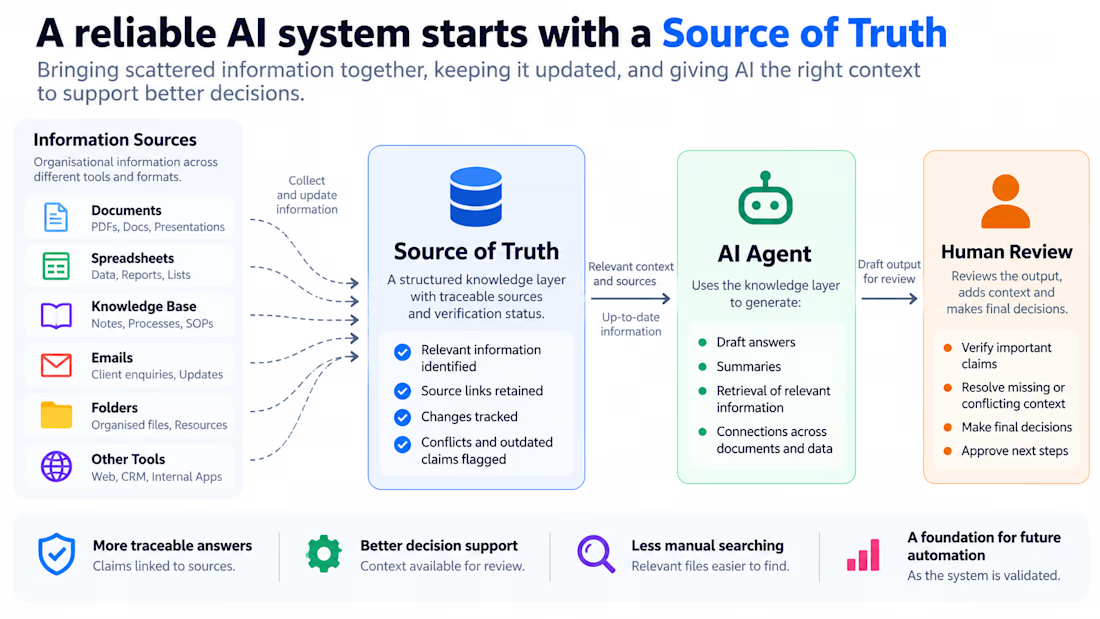
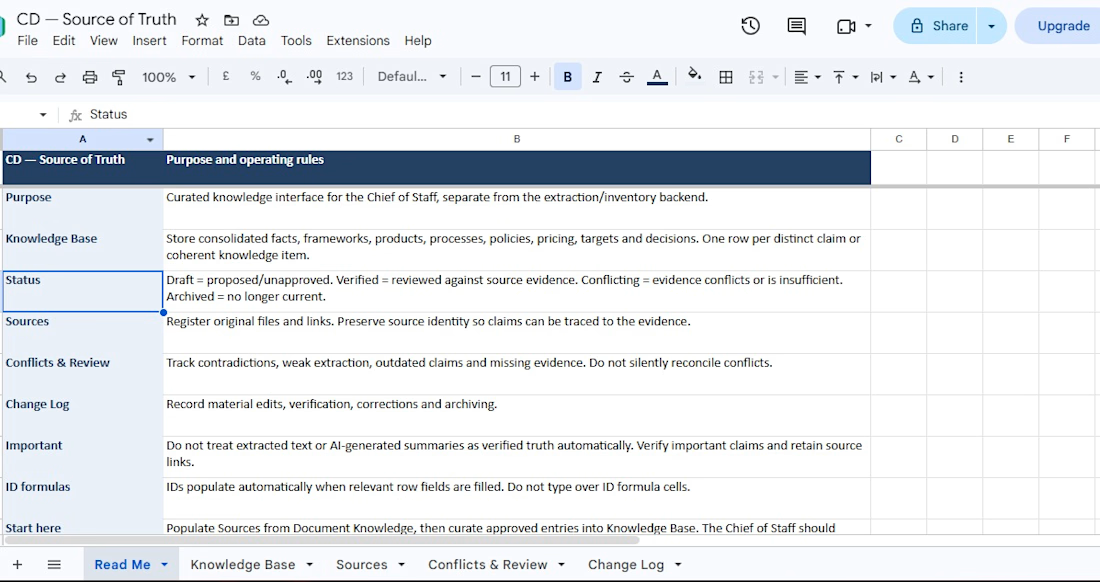
That's why I'm building a structured knowledge layer designed to:
→ Keep information linked to its original sources.
→ Track changes and verification status.
→ Flag conflicting or outdated information rather than silently treating it as fact.
→ Give the AI system relevant context while keeping important decisions under human review.
The bigger lesson I'm exploring is that AI adoption isn't just about making systems more capable. It's also about making the information they rely on more dependable.
I'm still building and validating this approach, one layer at a time.
#AIForBusiness #KnowledgeManagement #DecisionMaking #ChiefOfStaff #BusinessOperations
The network for creativity
Join 1.25M professional creatives like you
Connect with clients, get discovered, and run your business 100% commission-free
Creatives on Contra have earned over $150M and we are just getting started
Related posts

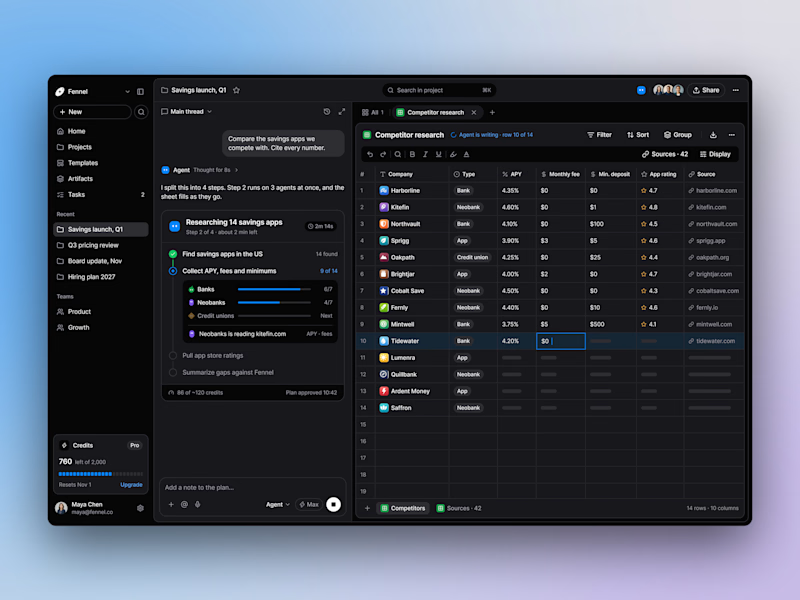
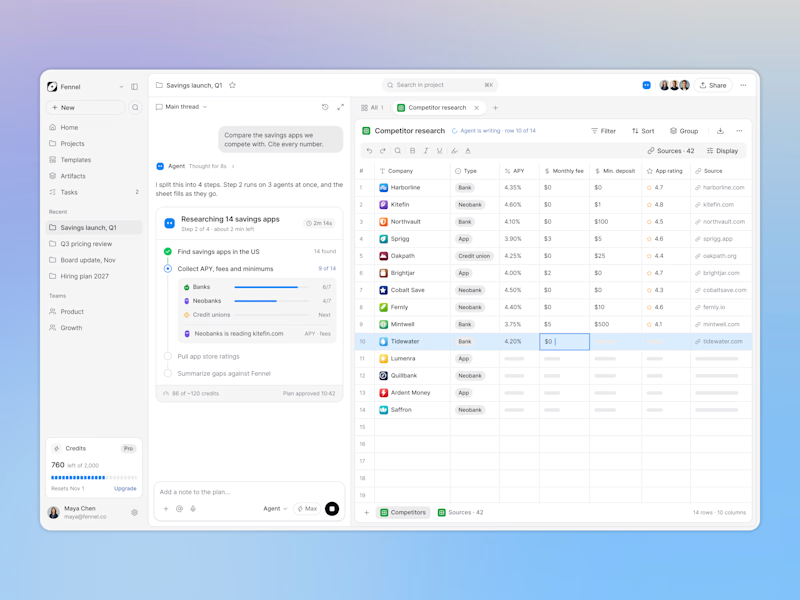
Designed an AI research workspace where the agent plans the work and fills a sheet with cited sources as it goes.
Same screen, two modes. Which one would you work in all day? 👀


13 voted
72%
5 voted
28%
18 votes
Closed

Keeping the research plan and cited results side by side is a useful way to make the agent’s work easier to inspect. I’d lean toward light mode for reading the table in daylight. How do you distinguish a verified source from one that still needs review?

AFTER THE INTERNET / 2480
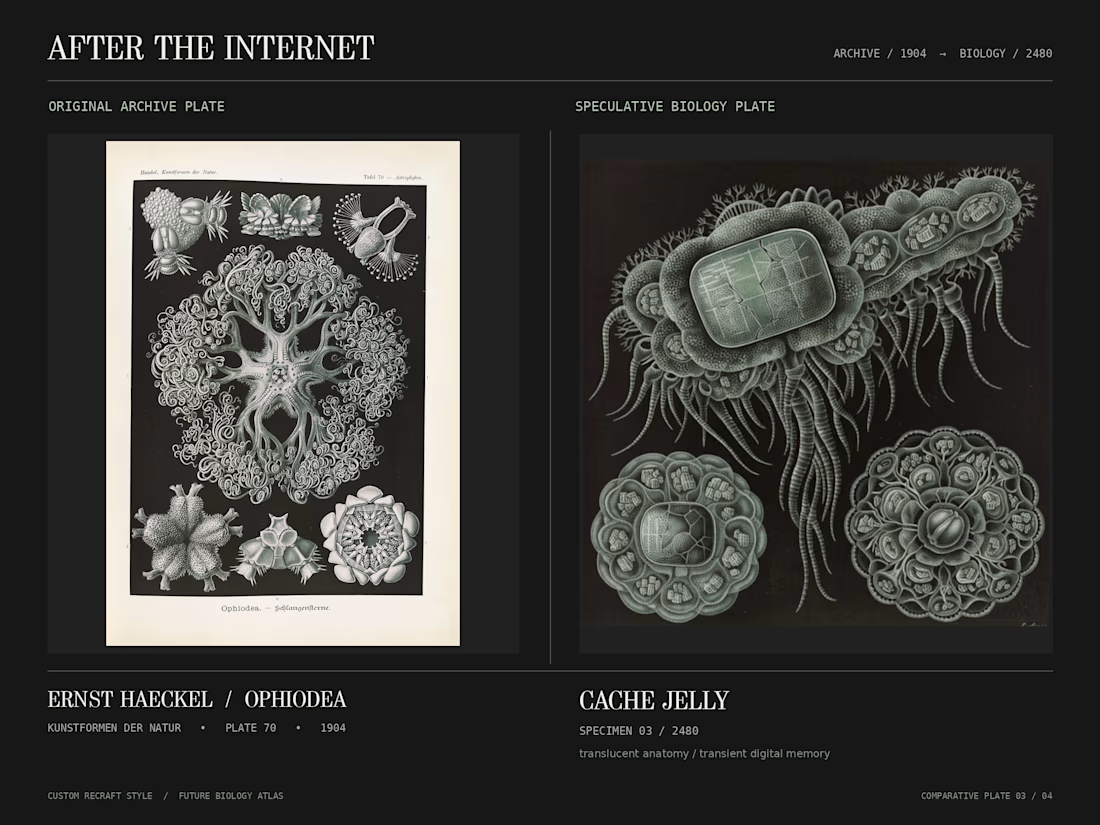
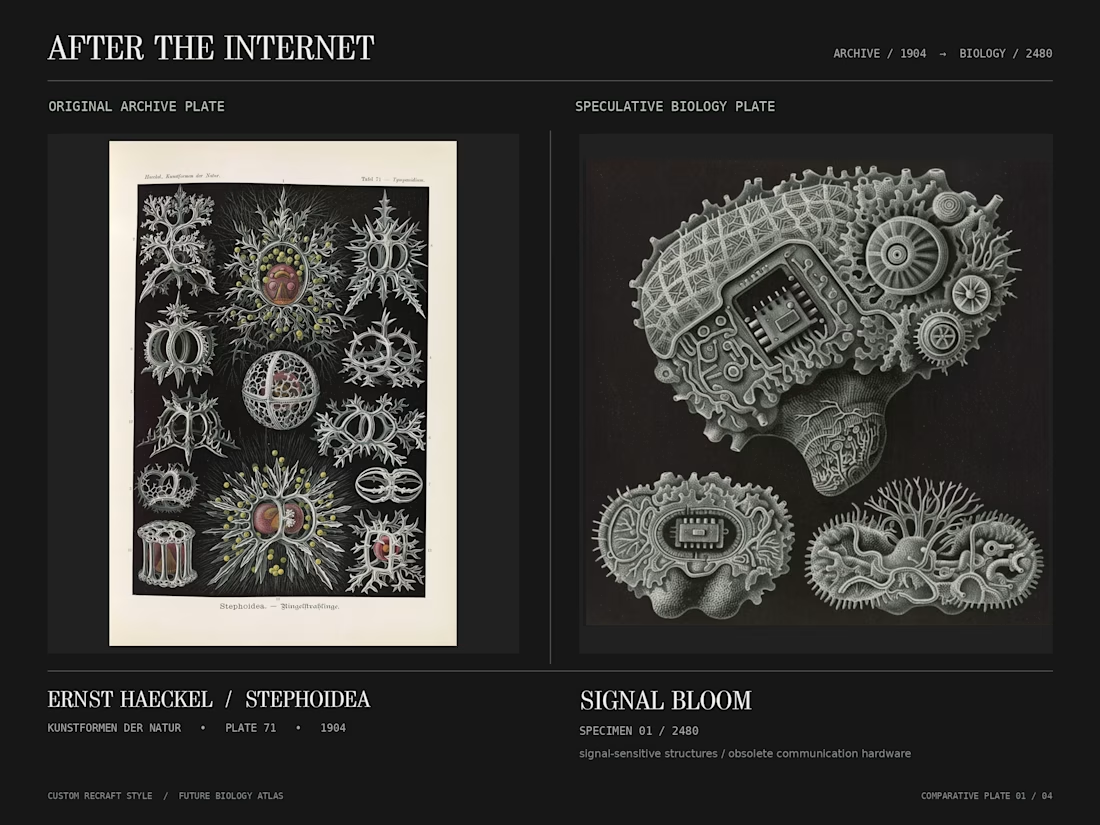
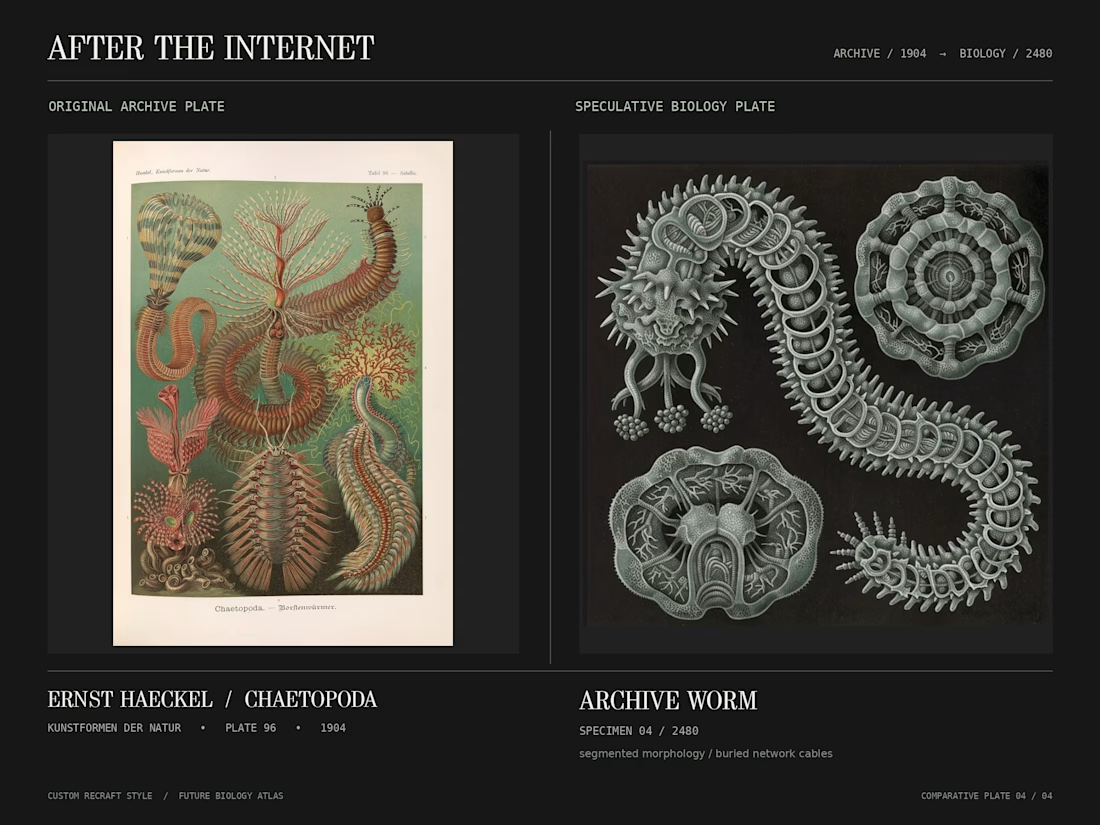
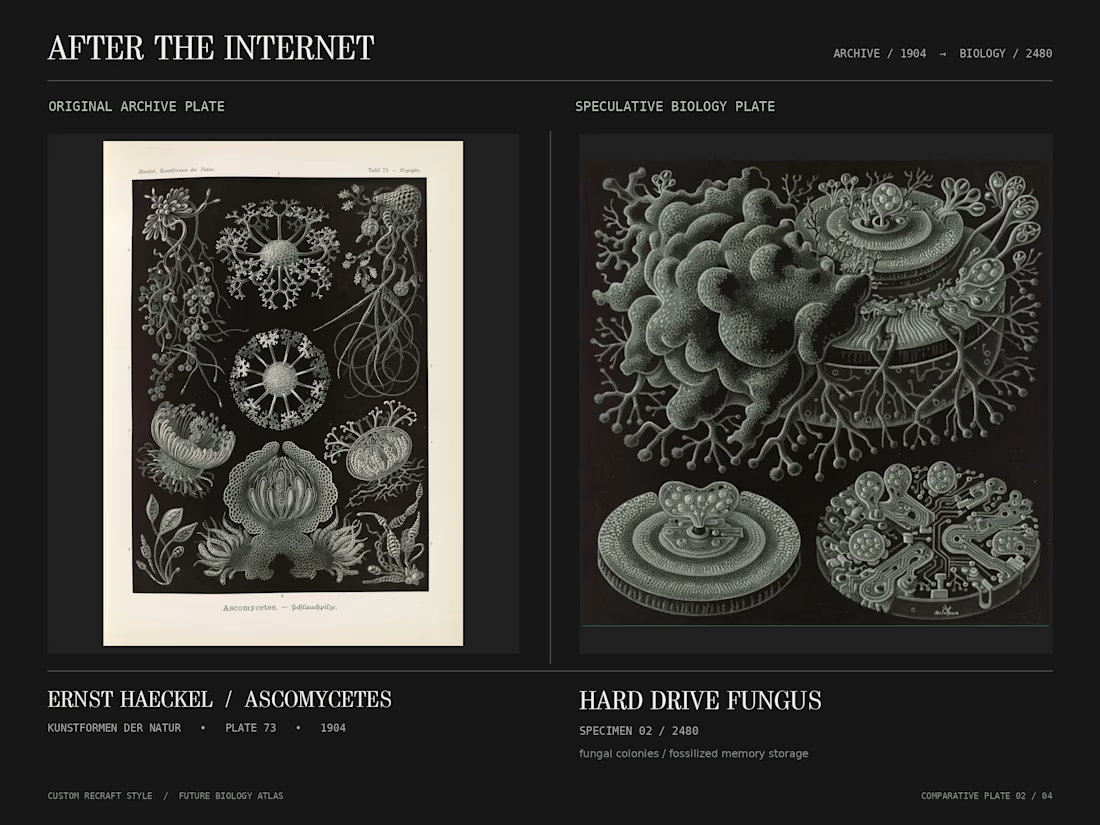
After the Internet imagines a biology atlas from the year 2480, documenting species that evolved from the remains of digital civilization.
I built a Custom Recraft Style using four historical plates from Ernst Haeckel's Kunstformen der Natur (1904), preserving their intricate linework, organic structures, and scientific compositions.
I wanted to revive the visual language of historical natural history atlases to document a world that has never existed.
Across nine illustrated plates, abandoned technology becomes biological anatomy, from primitive organisms inhabiting old hardware to post-human species and collective intelligence.
The result is a fictional evolutionary history in which technology becomes nature itself.
Technology became anatomy. Memory became tissue. Networks became living organisms.
#recraftstyleschallenge


Mot du Jour: French vocabulary by CEFR level, with spaced repetition. Built while learning the language myself. motdujour.app