The network for creativity
Join 1.25M professional creatives like you
Connect with clients, get discovered, and run your business 100% commission-free
Creatives on Contra have earned over $150M and we are just getting started
Back to feedPost


Most complex websites don’t have a content problem. They have an arrival problem.
I built TobyGodden.com/help because my work is spread across browser instruments, film, live video, music, writing and AI systems. A project grid left the visitor to make sense of all that alone.
The guide begins somewhere else: why are you here?
Commissioning, researching, listening, reading, collaborating—or simply curious. It works from a small, approved corpus, asks one useful question, then points to one place rather than ten.
There’s no vector database and no chatbot pretending to know everything. It’s plain JavaScript, PHP, Claude, a 25KB curated corpus and deterministic fallback routing when the model fails.
The interesting part isn’t really the AI. It’s deciding what the system is allowed to know, what it must never claim, and what counts as a useful next step.
I think more portfolios, archives and cultural websites need a conversational front door—not more navigation.
Working example: https://tobygodden.com/help/

tobygodden.com
Ask the Guide | Godden Interactive
A lightweight guide to Toby Godden’s browser-based creative technology, music, writing, film and interactive work.
The network for creativity
Join 1.25M professional creatives like you
Connect with clients, get discovered, and run your business 100% commission-free
Creatives on Contra have earned over $150M and we are just getting started

Challenges
View all


Related posts

A while back, I designed a website for an architecture studio.
The studio was fictional. The thinking behind it wasn't.
I started with one question.
What does someone need to see
before they trust a studio with their home?
Not just the finished rooms.
The decisions behind them.
So every project became a short story.
The site. The challenge. The solution. The result.
A team page, so you know who does the work.
A process page, so the first call doesn't feel like a leap.
That's how I like to work.
Start with what the client needs to feel.
Then let the layout follow.
If your studio needs a site that shows how you think,
I'd love to help.


This is a genius website.
All tools that you might need to work with text, images, files, design, code under one roof. No account needed, and most tools run in your browser.
Thank you whoever created it.
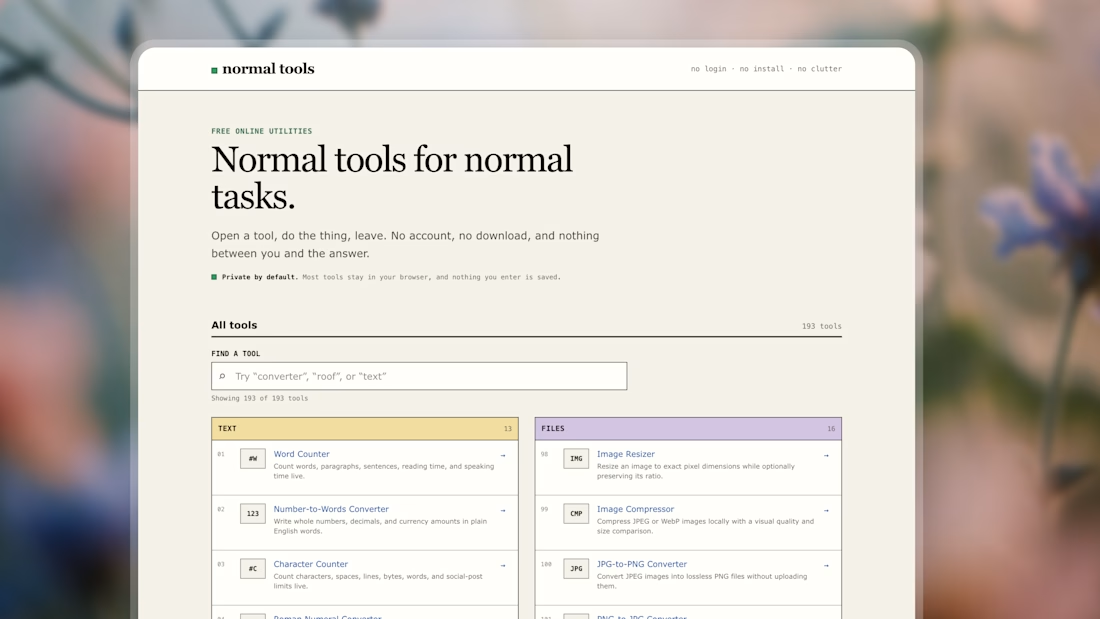

Super clean work!

What will make a website template worth buying in the age of AI?
At AliThemes, we believe the value of a template will increasingly come from the decisions already built into it.
As AI makes it easier to generate layouts and code, a polished demo becomes a starting point. The bigger opportunity for template creators is understanding what a specific business needs to launch and run its website.
For a home renovation company, that might mean before-and-after projects, service areas, testimonials and a straightforward estimate request. For a clinic, it could mean treatment pages, practitioner profiles and a clear booking journey.
Those choices shape the content, CMS, navigation and mobile experience. They also help the buyer spend less time figuring out what their website should include.
We still see a place for distinctive visual design and thoughtful motion. Their value grows when they support a useful, adaptable foundation: real content, accessible interactions, reliable performance and an easy handoff.
Our view is that templates and AI can work well together. A well-structured template gives customization a foundation, while designers bring judgment, industry knowledge and quality control.
For us, this opens up a broader role for template studios: building focused website products and helping customers adapt them through setup, customization and ongoing support.
As AI becomes part of your workflow, what would make a website template worth paying for—and how is that changing what you build or buy?