The network for creativity
Join 1.25M professional creatives like you
Connect with clients, get discovered, and run your business 100% commission-free
Creatives on Contra have earned over $150M and we are just getting started
Back to feedPost

Why I treat my Data Analysis like a Software Engineering project.
Most dashboards fail because they are built on a "black box." When I tackle an analysis, like my recent work on a £17.3M retail dataset, I apply a software engineer’s rigor to the data lifecycle:
Version Control: Every SQL query and Python cleaning script is versioned in GitHub. If a number changes, I can tell you exactly which line of code changed it. (View the Project here)
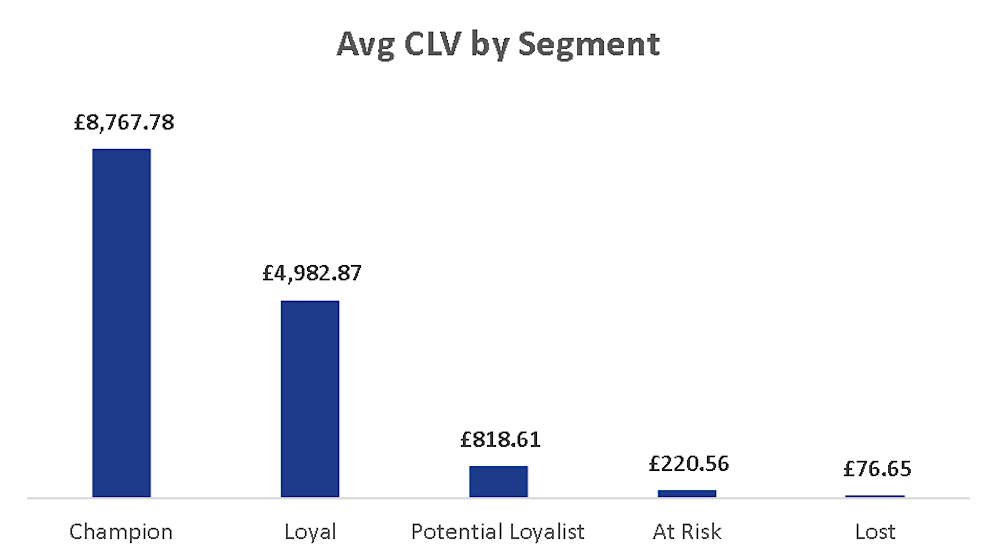
Defensive Logic: In my RFM models, I don’t just use defaults. I engineer custom thresholds to isolate high-value "Champions" (worth 40x more than at-risk users) to ensure marketing capital isn't wasted.
Data Provenance: I document every schema constraint and "blindspot"—like the 23% missing guest IDs I identified in my latest audit, to ensure leadership makes decisions on facts, not assumptions.
I'm a Data Analyst who believes that a dashboard is only as good as the engineering behind it.
If you’re a founder who needs more than just "pretty charts," let’s talk about building a reliable source of truth for your revenue.
The network for creativity
Join 1.25M professional creatives like you
Connect with clients, get discovered, and run your business 100% commission-free
Creatives on Contra have earned over $150M and we are just getting started











Related posts

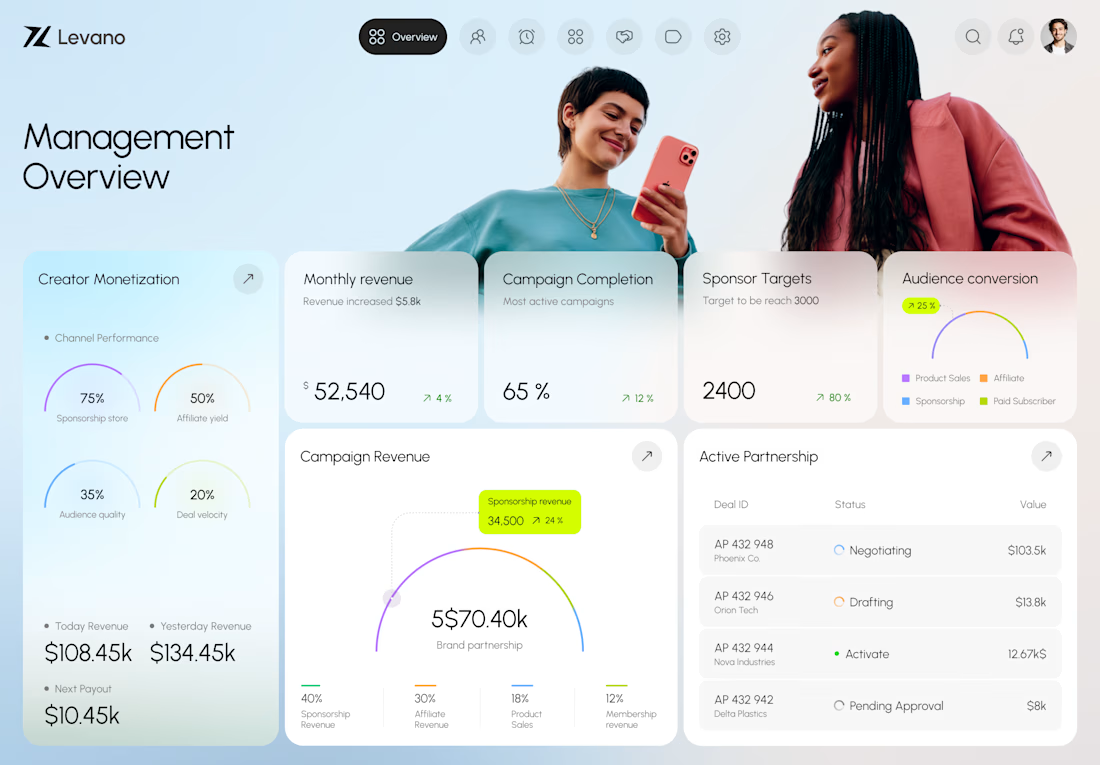
Creatora - Creator Management Dashboard
Creator focused businesses manage a lot of data across campaigns, revenue, sponsorships, audience performance, partnerships, and payouts.
The challenge wasn’t showing more data, but helping users quickly understand what’s happening and what needs attention.
For Creatora, we organized the dashboard around the metrics teams check most often, with a clear hierarchy between KPIs, trends, campaign performance, and partnership details.
We used soft gradients, rounded cards, clean typography, and focused data visualization to keep the interface premium without making it harder to use.
The result is a centralized dashboard where teams can quickly see what’s performing, what’s changing, and where they should focus next.
At Orvio, we design and build digital products that solve real problems, create better user experiences, and help businesses grow.
From product design and development to AI-powered solutions, we help ambitious businesses turn ideas into products that work.



Amazing work


Self-serve insights to explore data in plain language
Dashboard design for Corvane

Love the clean, intuitive design! The smooth motion and transitions make the whole experience feel polished and engaging.

Hi everyone! 👋
I'm Anastasiia, a Product Analyst with experience in mobile games and a background in business analytics.
I enjoy exploring user behavior, finding patterns in data, and turning numbers into insights that help teams make better product decisions.
🛠️ What I work with:
- SQL (BigQuery, PostgreSQL)
- Python (Pandas, NumPy)
- Product metrics, funnels, and cohort analysis
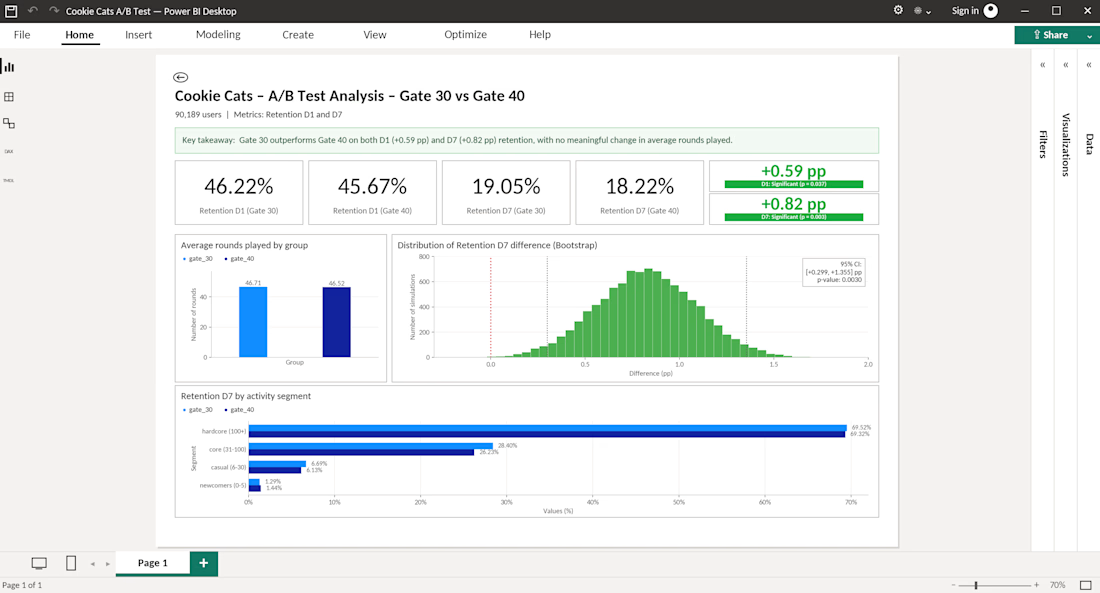
- Retention and A/B testing
- Data visualization and dashboards
I'm currently expanding my portfolio and open to freelance projects involving data analysis, SQL queries, reporting, and product analytics.
Looking forward to connecting with other data professionals and collaborating on interesting projects!
#DataAnalytics #ProductAnalytics #SQL #Python



nice work