The network for creativity
Join 1.25M professional creatives like you
Connect with clients, get discovered, and run your business 100% commission-free
Creatives on Contra have earned over $150M and we are just getting started
Back to feedPost

Before proposing work to a business, ask what happens if the customer leaves the problem as it is. Neil Rackham's SPIN Selling is useful reading for that conversation: it examines how questions about a problem's implications help develop an understanding of need.
A contact can understand the need and still have colleagues to bring into the decision. The Challenger Customer, by Brent Adamson, Matthew Dixon, Pat Spenner and Nick Toman, focuses on building agreement within the buying organisation. If several people must approve your proposal, identify whose agreement is still needed before choosing the next sales technique.
I've included both in a guide to ten books for complex B2B sales, with publisher links and notes on each book's use and limits. I publish the guide; AI assisted the research and writing.
https://topmoller.com/articles/sales-books-for-complex-b2b-deals/?utm_source=contra&utm_medium=community&utm_campaign=sales-reading-202610&utm_content=need-and-agreement

topmoller.com
10 sales books for complex B2B deals | Jacob Top Møller
Choose a sales book for the work in front of you: discovery, buyer champions, internal agreement or a decision that keeps slipping.
The network for creativity
Join 1.25M professional creatives like you
Connect with clients, get discovered, and run your business 100% commission-free
Creatives on Contra have earned over $150M and we are just getting started




Related posts

As a copywriter, I transform ordinary product details into compelling words that:
Highlight unique product features.
Turn features into customer benefits.
Create emotional connections with buyers.
Build trust and increase purchase interest. Encourage customers to take action.
Don’t just describe your product. Make customers want it!


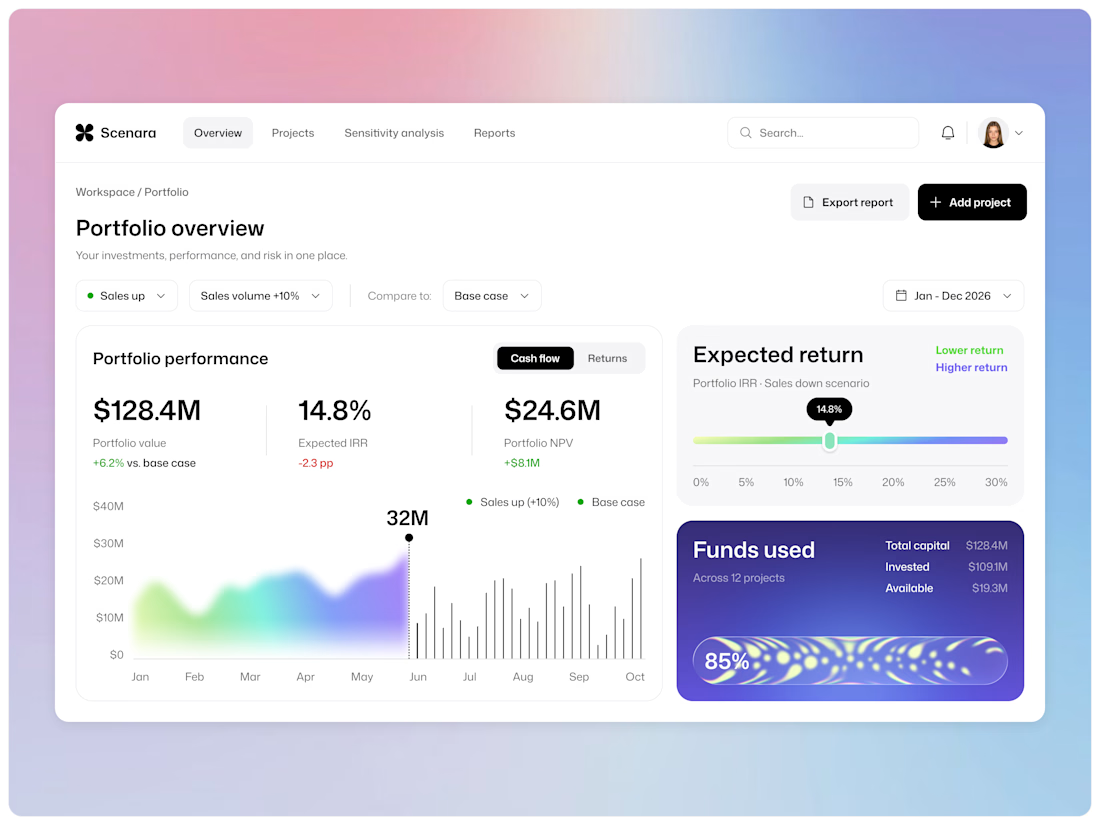
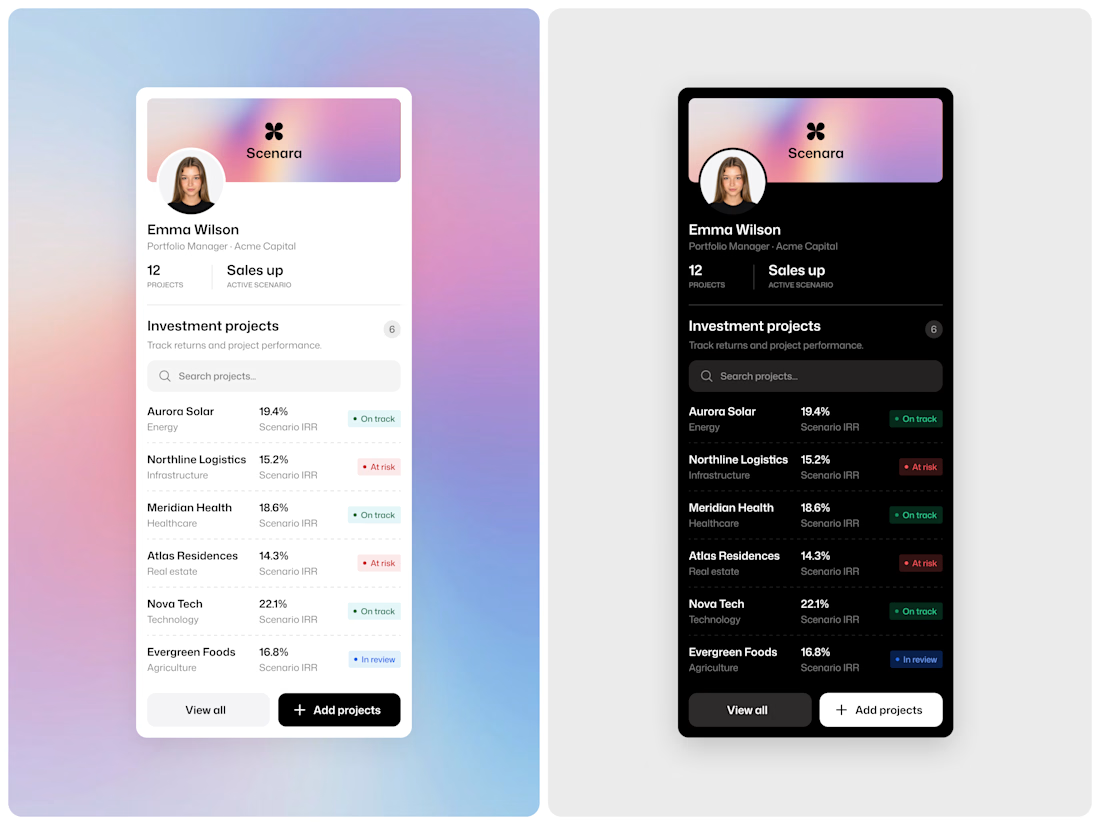
“What if sales drop 10%?” For a portfolio manager working across multiple investment projects, answering that question can mean days of rebuilding spreadsheets.
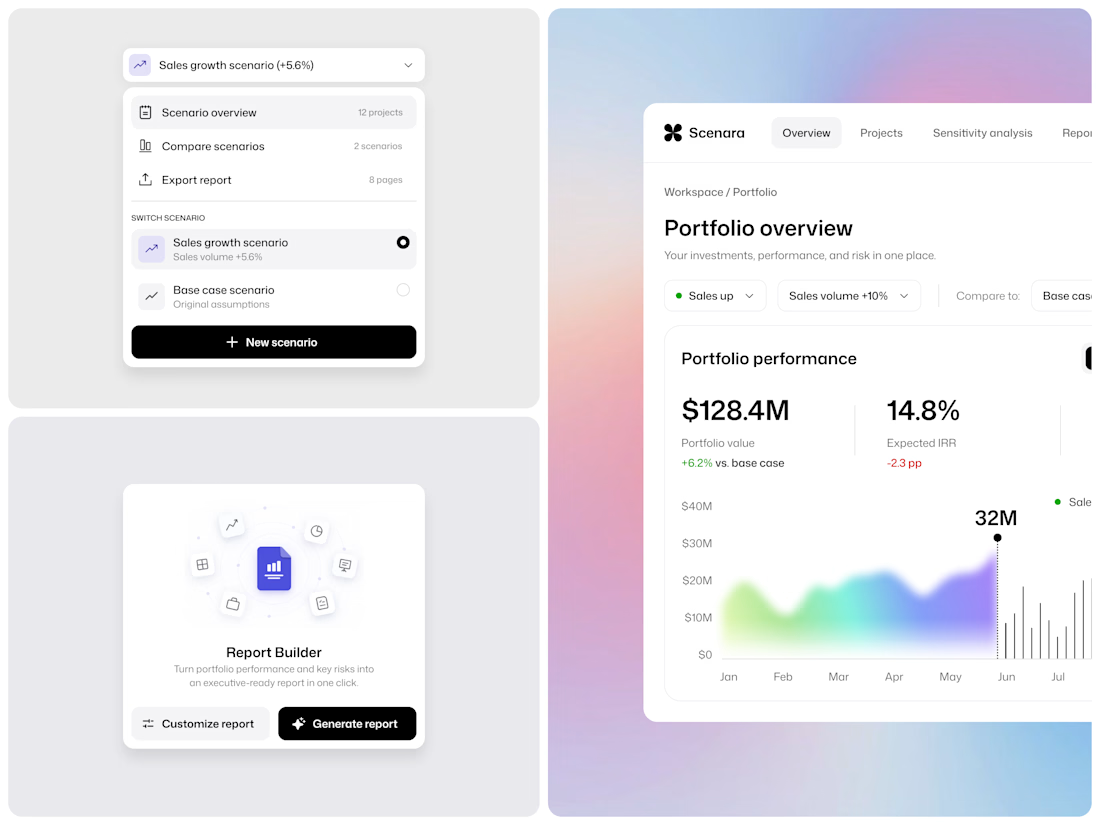
Scenara is an investment portfolio dashboard designed to make scenario analysis faster and clearer. Change one assumption and compare it with the base case. Review project status and returns across a 12-project portfolio. Turn performance and key risks into an executive-ready report.
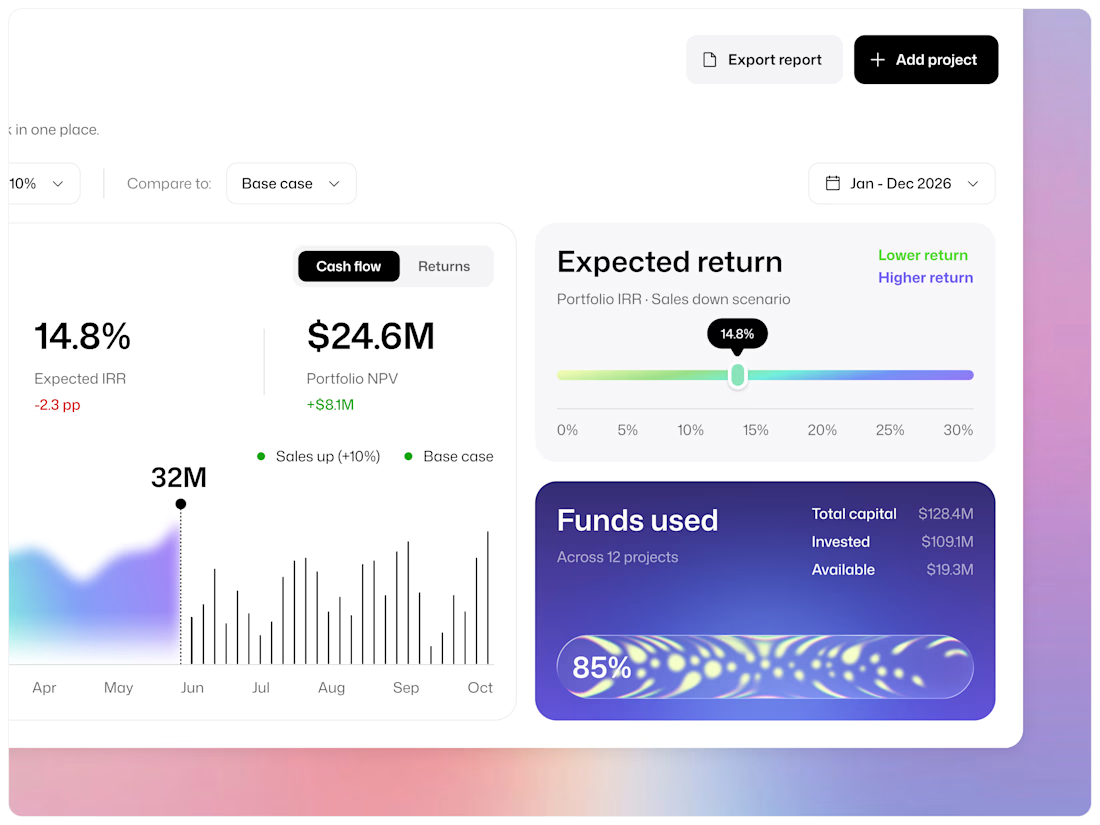
In one “Sales up” scenario, portfolio value grows by 6.2% while IRR drops by 2.3 percentage points. The dashboard makes this trade-off visible so teams can consider the full picture before making a decision.
Numbers stay calm and easy to read. Color is reserved for meaningful differences, including return ranges, cash flow, and invested capital. The mobile view brings the portfolio into one list, with light and dark modes.
This is a self-initiated exploration shaped by our experience with investment and banking projects, most of which are covered by NDA.
For fintech teams, what’s the first number you check on Monday morning?
Emote is a UX/UI design studio for fintech, SaaS, health tech, and AI products. Get in touch to discuss your project and see how we approach our work.

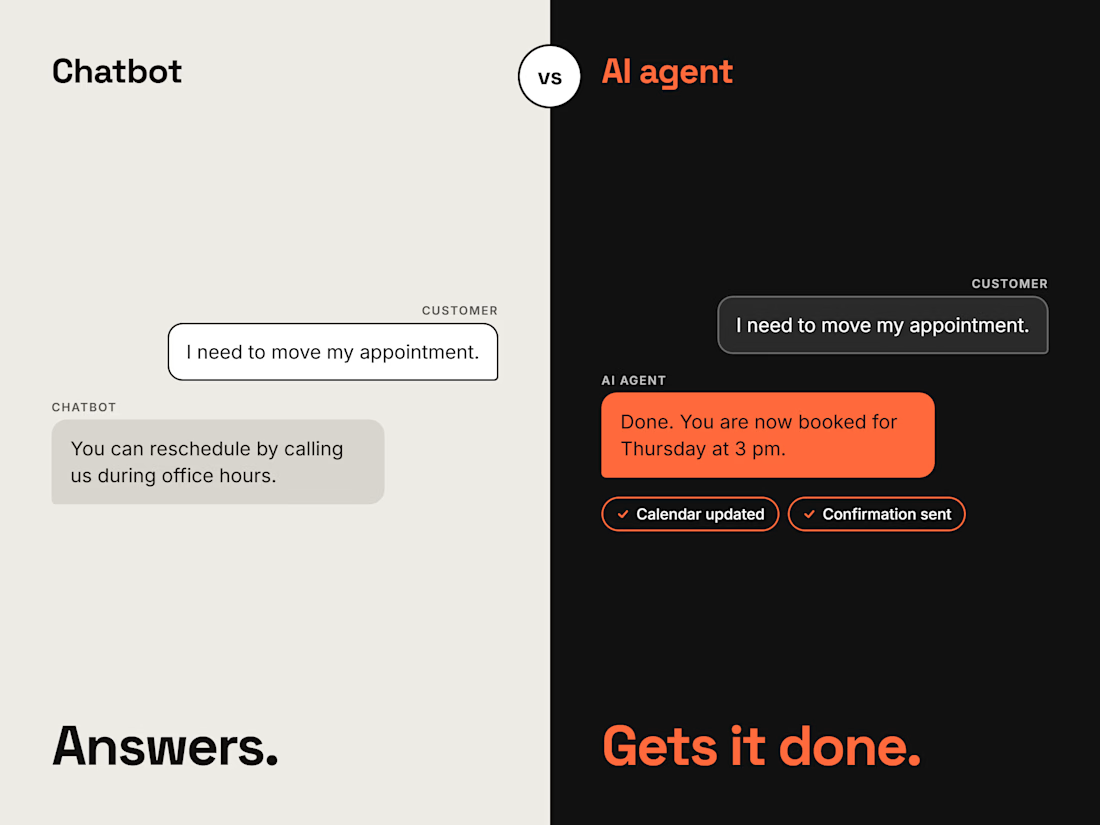
A chatbot answers. An AI agent gets it done.
Take one simple request: “I need to move my appointment.”
A chatbot tells the customer how to do it: call during office hours, wait on hold, hope someone picks up.
An AI agent does it. It checks the calendar, moves the booking, sends the confirmation, and updates the CRM. The customer is finished in ten seconds, and nobody on your team touched it.
That’s the difference I build for businesses. The agent gives the answer and also completes the task behind it.
Which task in your business still ends with “please call us”?