The network for creativity
Join 1.25M professional creatives like you
Connect with clients, get discovered, and run your business 100% commission-free
Creatives on Contra have earned over $150M and we are just getting started
Back to feedPost

Build log. I published my first n8n node.
1pm, the idea: put Jev, TypeSafe's decision model, inside n8n.
Jev does not write text. It reads a field and answers your question with a probability
for every option.
First thing, check whether it already existed. It did: six public packages. I read the
code of all six and noted what none of them did. I found a gap. Nobody measures the
confidence threshold. They all ask you to pick a number between 0 and 1 and hope.
That gap became the third operation in my node, calibration. You give it labeled
examples, it returns accuracy and coverage at every threshold and recommends one. In my
test, 0.5 let one wrong answer through and 0.7 let none.
Before writing the node, I ran a batch of tests on the model. Three things I learned:
• the same call repeated returns different probabilities, and no decision above 0.95
changed between runs
• 24 items in one request give the same answers as 1 item per request, at half the cost
• 28k tokens of unrelated text in the state changed nothing. 2k tokens of text that looked
like one of the options turned two answers wrong
23 unit tests, one live run against the API, three workflows executed inside n8n. By night
my first contribution to the n8n community was live.
Over the next few days I will show it applied: lead triage, extraction checks, content
filtering.
#n8n #automation #ai #jev
The network for creativity
Join 1.25M professional creatives like you
Connect with clients, get discovered, and run your business 100% commission-free
Creatives on Contra have earned over $150M and we are just getting started




Related posts

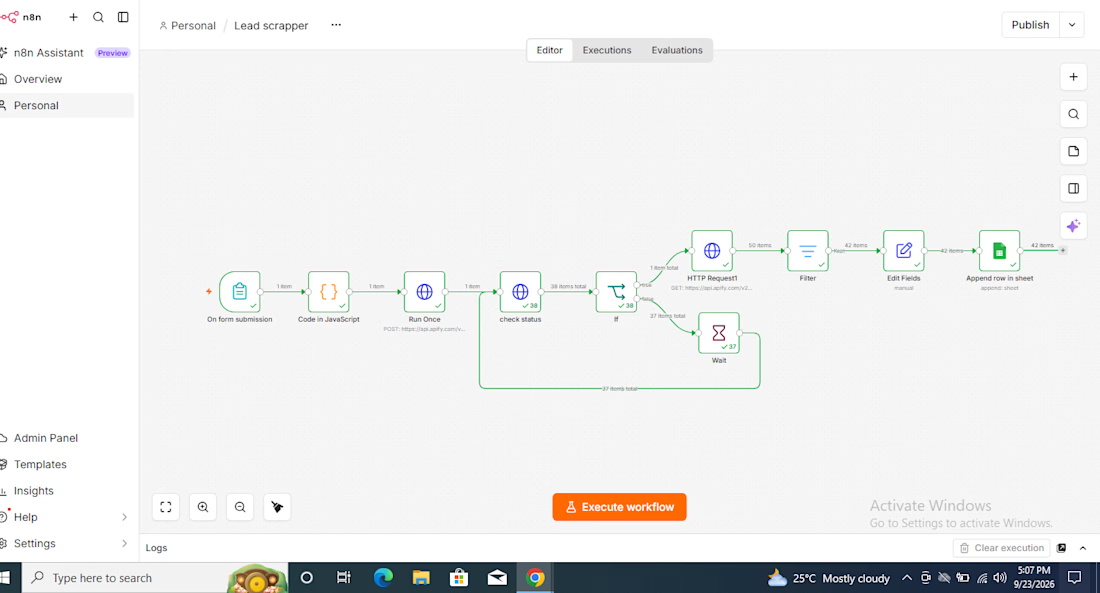
Built a lead-scraping automation in n8n.
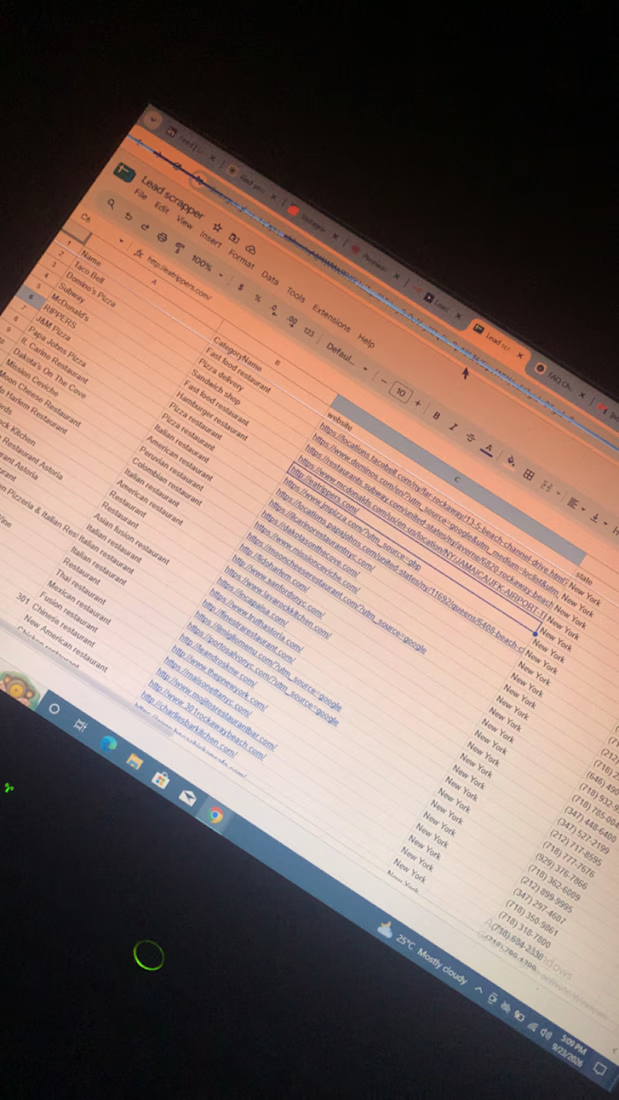
For this one, I focused on local restaurants in New York and automated the process of collecting their business information from Google Maps.
The workflow pulls things like:
Restaurant name
Website
Business category
Instead of manually searching Google Maps, opening businesses one by one, and copying their details into a spreadsheet, the workflow handles the repetitive part automatically and saves the leads directly into Google Sheets.
This is just one use case. The same setup can be adapted for different locations, industries, and lead-generation needs.



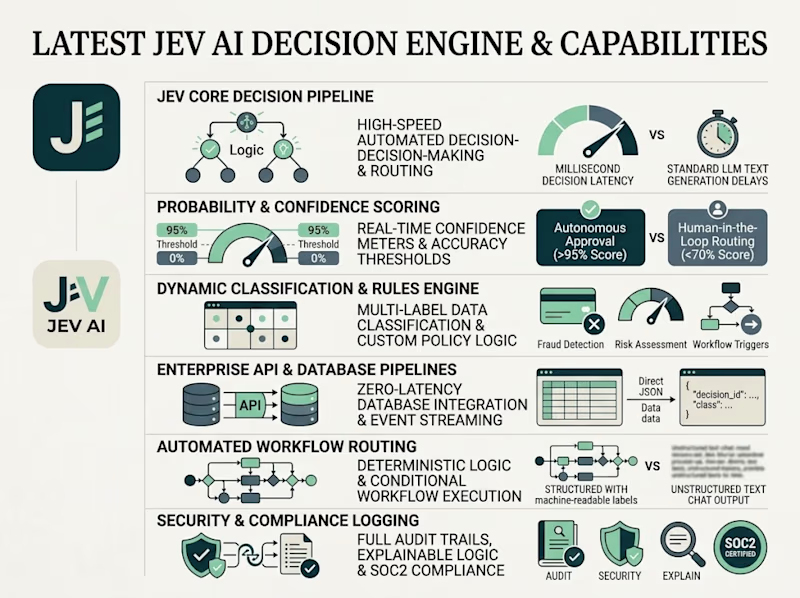
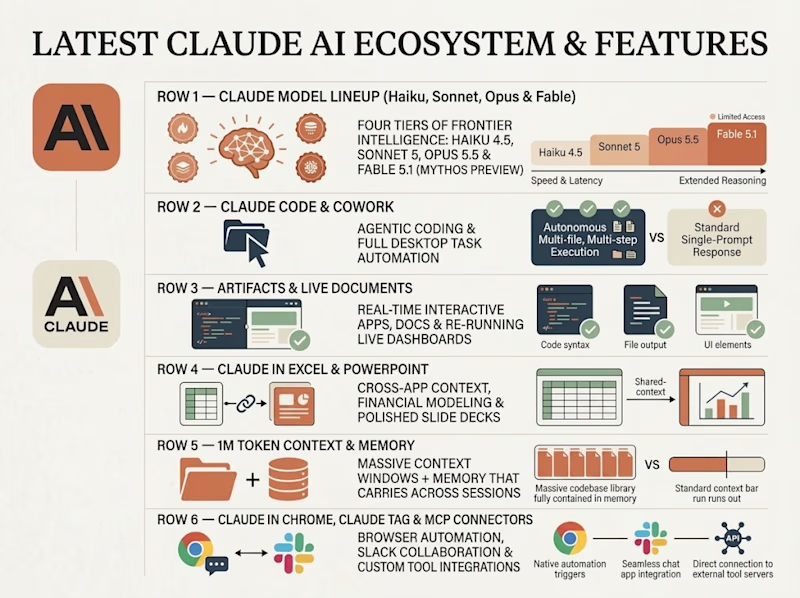
Two different AI ecosystems, side by side.
Jev: built for fast, automated decisions inside your software, scoring, routing, classification, no text generation.
Claude: built for language, reasoning, coding, and full agentic workflows across Chat, Code, Cowork, Excel, PowerPoint, and more.
Not a "which one wins" question. Which ecosystem fits what you're actually building?
2 voted
29%
5 voted
71%
7 votes
Closed


🤖 Built a Telegram AI Agent that understands EVERYTHING!
Send it a voice message → AI replies 🎙️
Send it a photo → AI analyzes it 📸
Send it text → AI responds instantly 💬
One bot. All message types. 24/7 active!
Built with n8n + AI
Want one for your Telegram?