The network for creativity
Join 1.25M professional creatives like you
Connect with clients, get discovered, and run your business 100% commission-free
Creatives on Contra have earned over $150M and we are just getting started
Back to feedPost
AI allows us to write code faster. But that doesn’t necessarily mean we are delivering software faster.
This is one of the most interesting contradictions emerging in software development.
According to GitLab’s 2026 AI Accountability Report, conducted by The Harris Poll among 1,528 developers and technology decision-makers across six countries:
• 78% say developers are writing and committing code faster since adopting AI tools.
• 79% believe individual developer productivity has improved.
• However, 85% agree that the bottleneck has shifted from writing code to reviewing and validating it.
• Additionally, 82% believe AI-generated code could create a new form of technical debt that their organizations are not yet prepared to manage.
GitLab calls this the “AI Paradox”: individual productivity increases, but the overall software delivery process does not accelerate at the same pace.
Research from DORA, Google Cloud’s software delivery performance research program, points in a similar direction.
Its findings show that a 25% increase in AI adoption was associated with a 1.5% decrease in delivery throughput and a 7.2% decrease in delivery stability.
This does not mean that AI always harms software development. These results show an association, not a universal rule or a causal relationship that applies to every team.
The problem is not using AI.
The problem begins when an organization accelerates code generation while leaving the rest of its development process unchanged:
• Slow manual reviews.
• Limited automated testing.
• Ambiguous requirements.
• Oversized pull requests.
• Lack of architectural criteria.
• Poor traceability.
• Unclear ownership of AI-generated code.
If we double the speed of one stage without improving the next ones, we simply move the bottleneck somewhere else.
Manav Khurana, Chief Product and Marketing Officer at GitLab, summarized it clearly:
“Speed without control is a liability, not an advantage.”
As a full-stack developer, I believe AI can genuinely accelerate tasks such as creating components, writing documentation, exploring solutions, refactoring code, or generating an initial set of tests.
But producing more code should never be the main measure of success.
The result should be measured in software that:
• Solves a real need correctly.
• Remains maintainable over time.
• Includes testing and security controls.
• Can be understood by other developers.
• Reaches production without multiplying incidents.
AI does not eliminate the need for architecture, testing, and technical judgment. On the contrary, the faster we can generate code, the more important these elements become.
The next competitive advantage will not be generating more code with AI. It will be verifying it, governing it, and turning it into reliable software.
Has AI actually reduced delivery time for your team, or has it simply increased the amount of code waiting to be reviewed?
And remember: good software starts with good decisions. See you in the next one.
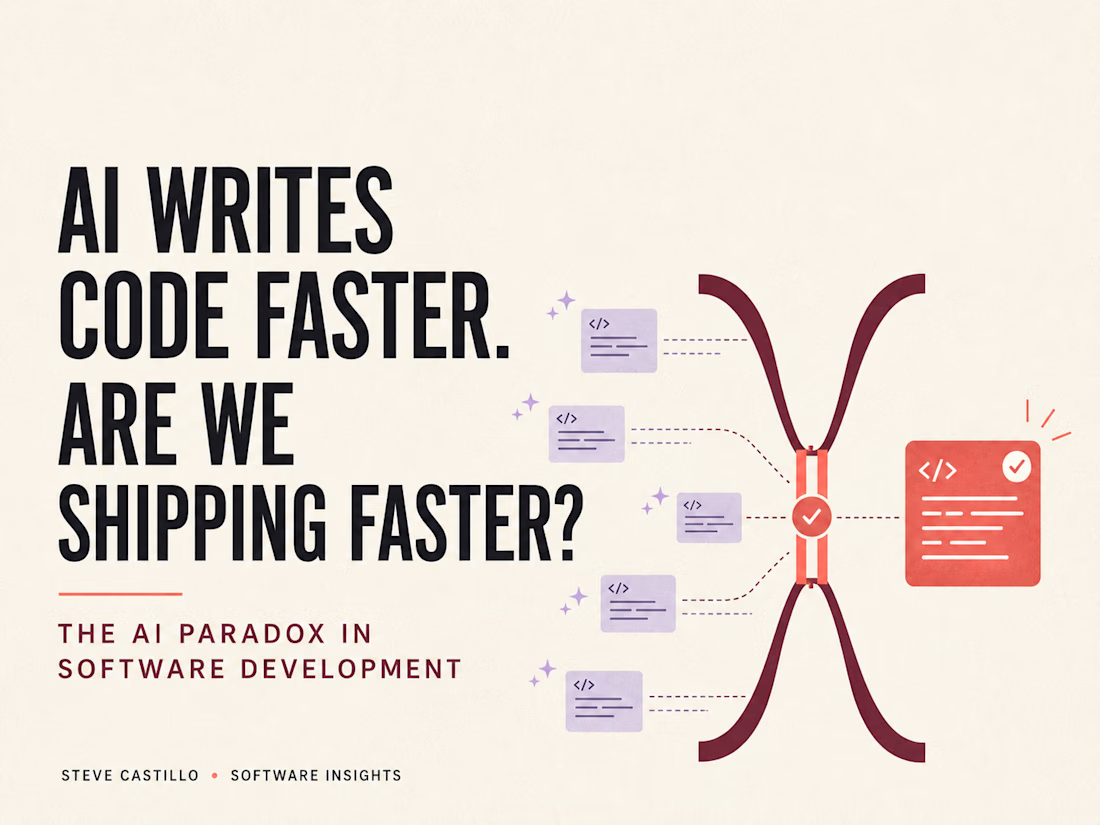

The GitLab AI Paradox stat really lands, 79% feel more productive individually but the delivery stability drops. Do you think this gets fixed with better review tooling, or does it require teams to slow down on purpose?


I think it takes both. Better tools help, but teams also need to know when to pause and review critical changes. It’s not about moving slower, but about moving forward with more control at the end of the day.
The distinction between writing code faster and delivering software faster is exactly where many teams get stuck. Which non-coding bottleneck do you think AI-assisted teams underestimate most?
I think the most underestimated bottleneck is unclear requirements and acceptance criteria. AI can help us build faster, but if the team isn’t clear about the problem it’s solving, it may simply build the wrong solution faster.
The network for creativity
Join 1.25M professional creatives like you
Connect with clients, get discovered, and run your business 100% commission-free
Creatives on Contra have earned over $150M and we are just getting started




Related posts

After a long time finally
New case study: Conduct AI 🖥️
Designed and built in Framer.
Take a look 👇


Love the clean layout.

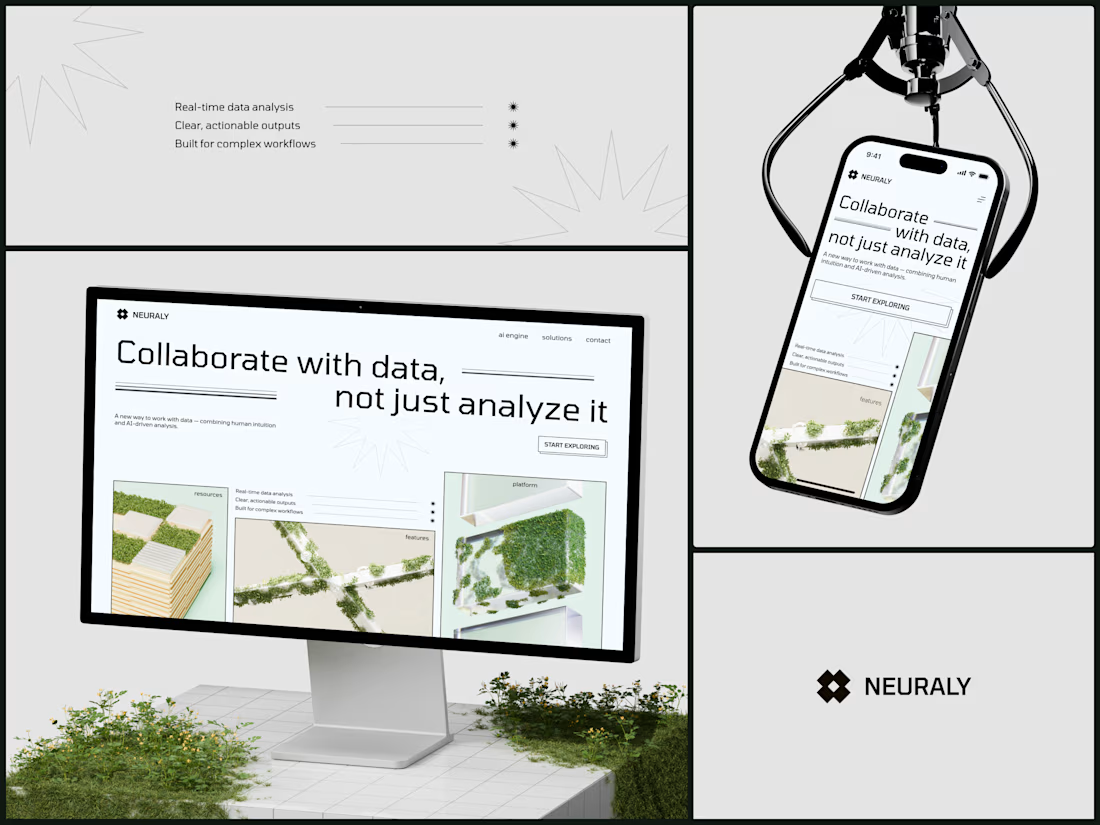
Neuraly - AI Data Analytics Platform
The headline says "Collaborate with data, not just analyze it" and the entire visual system is reinforcing that exact position. Data isn't cold infrastructure you feed queries into. It's something alive that grows when humans interact with it. The moss on architecture is literally that metaphor made visual: natural intelligence layered on top of built systems.
#AIDesign #WebDesign #B2BTech #BrandDesign #EditorialDesign

This one looks quite great honestly

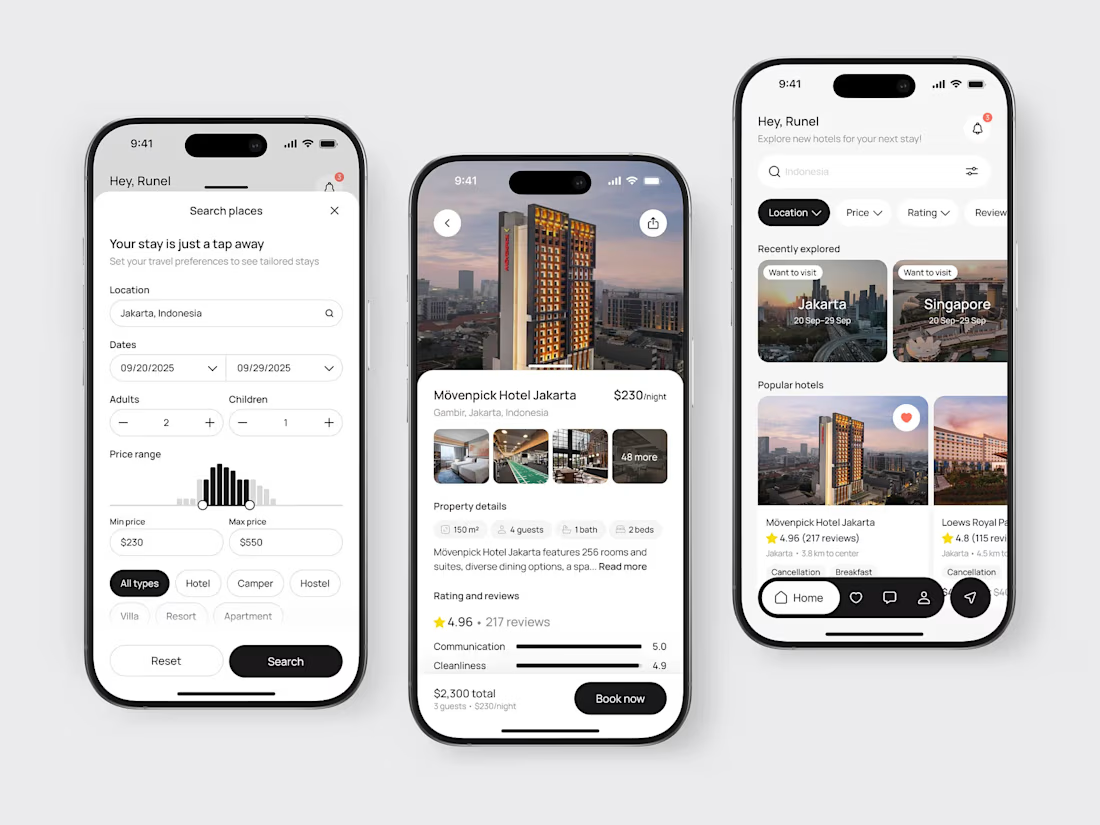
Really clean and polished app design! The booking flow looks intuitive and the overall UI feels modern and easy to use. 👏





good work