The network for creativity
Join 1.25M professional creatives like you
Connect with clients, get discovered, and run your business 100% commission-free
Creatives on Contra have earned over $150M and we are just getting started
Back to feedPost

Marsh Signal — a player with a route to follow
Most video players treat time as a thin bar at the bottom of the screen. I wanted it to feel like a place you can travel through.
Marsh Signal turns playback into a small field map. Each chapter becomes a signal on the route: choose one to triangulate a new moment in the video, then follow the moving beacon as playback continues.
The controls are built like a compact field console: Start, Track Back, Track Ahead, a Wind dial for volume, and Open Sky for fullscreen. The player has its own visual language of pixel maps, radio signals, route markers, and bright sky colors.
Under the pixels, it is still a practical Video.js v10 skin: playback controls, chapter navigation, keyboard shortcuts, visible focus, 44px touch targets, responsive desktop/mobile layouts, player-status feedback, and reduced-motion support.
Made with React, Vite, Video.js v10, and original CSS pixel art.

Chapters as signals on a field map you travel through, nice concept.
The network for creativity
Join 1.25M professional creatives like you
Connect with clients, get discovered, and run your business 100% commission-free
Creatives on Contra have earned over $150M and we are just getting started




Related posts

The Oven
The Oven is a Video.js 10 player you bake with: the film plays in the oven door, the handle plays and pauses, the bread peel is the seek bar and a bench scraper is the playhead.
Dials for volume and speed, an order slip for captions, a wall switch for full screen and a soft night of sound around the film; every part is a standard Video.js control, so it works by keyboard, touch and screen reader.
https://the-oven-videojs.vercel.app
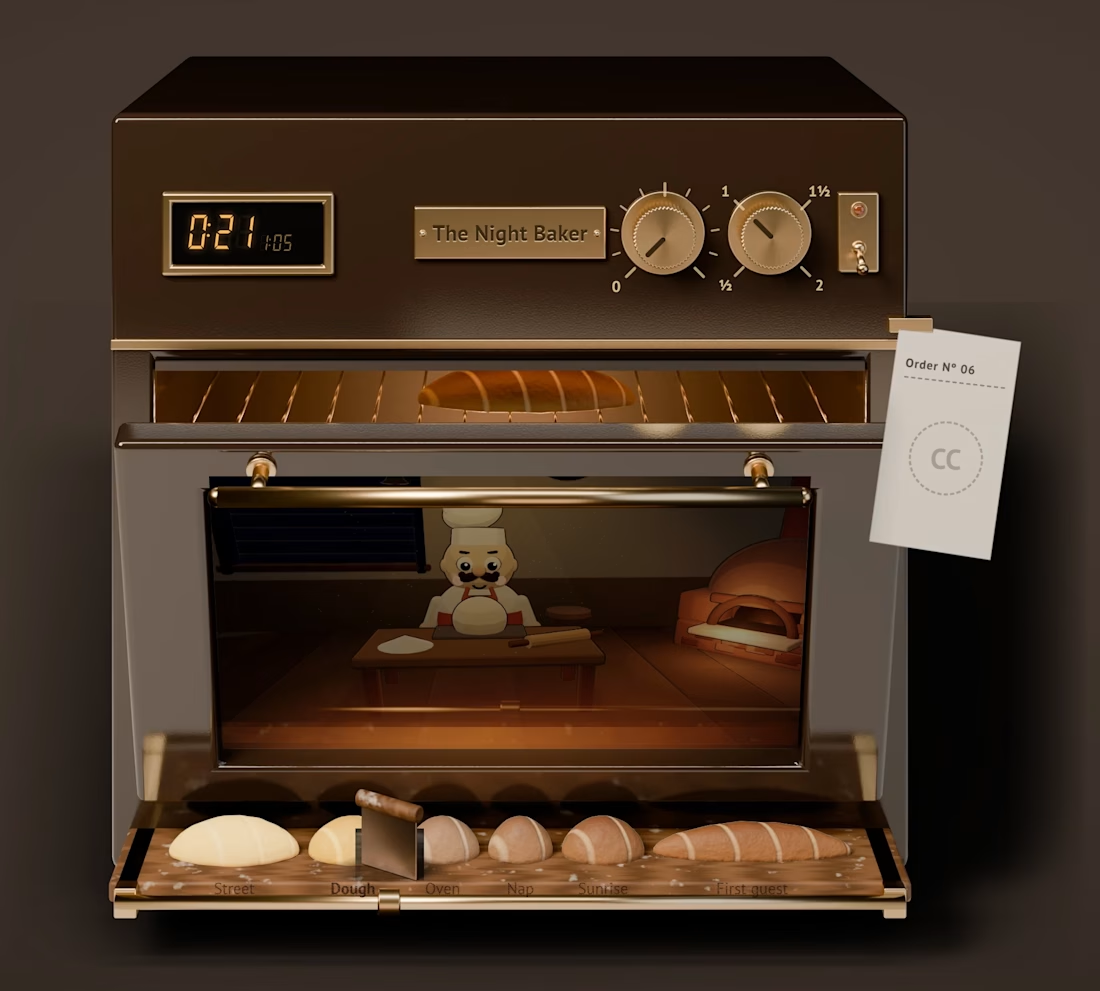

The order slip for captions is the detail I love most — captions as a bakery order ticket is such a natural fit, and the wall switch for full screen keeps the same logic: every control is a real object from the kitchen, not a button dressed up as one. And the bench scraper as...

I made a skin that turns the video player into liquid glass.
The controls are a row of glass cards along the bottom. Hover one and it opens into a window holding its control, while play stays fixed.
link - https://coco-max.vercel.app/
Github repo - https://github.com/suvo-sos/coco-max

High level woah...that’s evil homie.

I turned a DJ deck into a video player. Every control does a real player job: the jog wheel scrubs, the tempo fader sets playback speed, eight hot-cue pads jump between chapters and light the current one, and the waveform strip is the seek bar, built from the film's real audio peaks.
The deck sits below the video, never on it, and anyone finds play, volume and fullscreen in a second.
I built it on Video.js v10 in plain CSS and 4 KB of TypeScript, with no images or web fonts. It's keyboard-operable, respects reduced motion, contrast and forced colors, and re-brands through a few tokens.
The look is my own Baltic palette: deep green deck, cream labels and amber LED glow.
Try it: https://videojs-cdj-skin.vercel.app, also live on my site: https://modestasgrz.github.io
Film: Tears of Steel © Blender Foundation, CC BY 3.0, streamed from Mux (playback ID lNg95EGnssc00hkLLQSCG02an2R3Ss702005HBDpEXYPBZk).
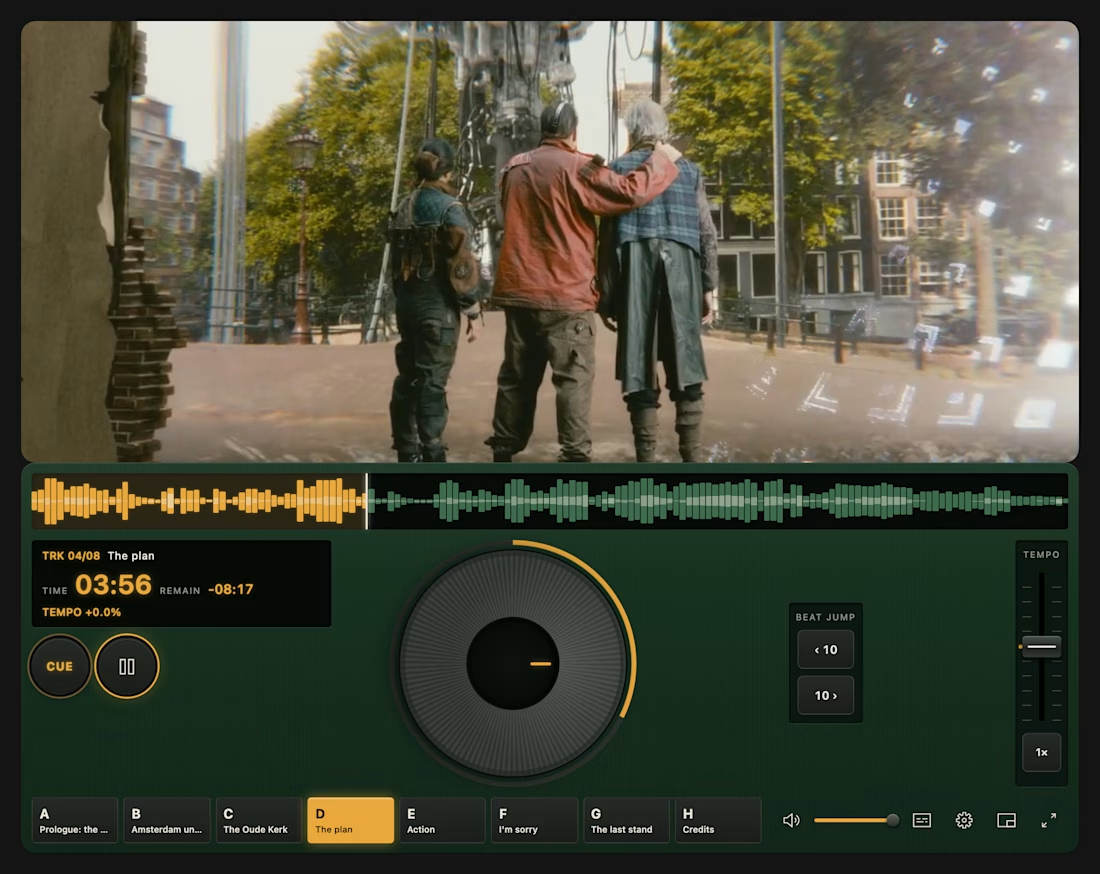
Hot-cue pads for chapters and a real audio waveform, every control earns its place.