The network for creativity
Join 1.25M professional creatives like you
Connect with clients, get discovered, and run your business 100% commission-free
Creatives on Contra have earned over $150M and we are just getting started
Back to feedPost

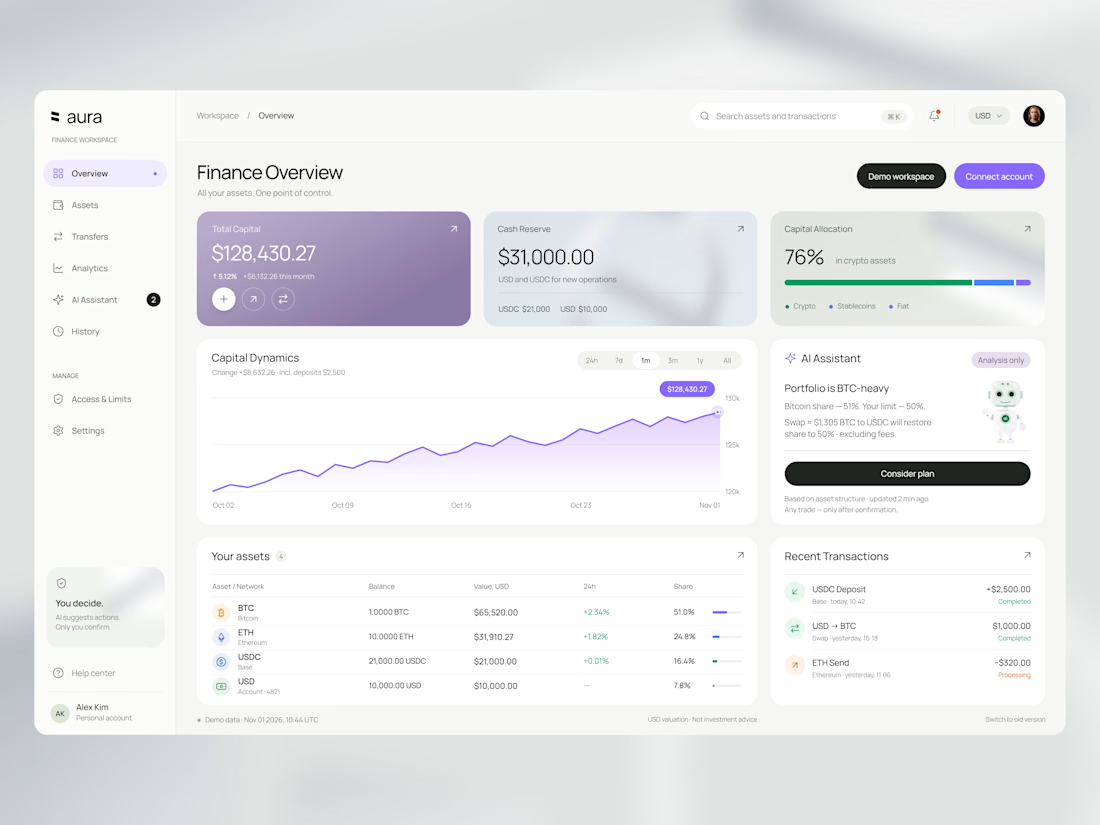
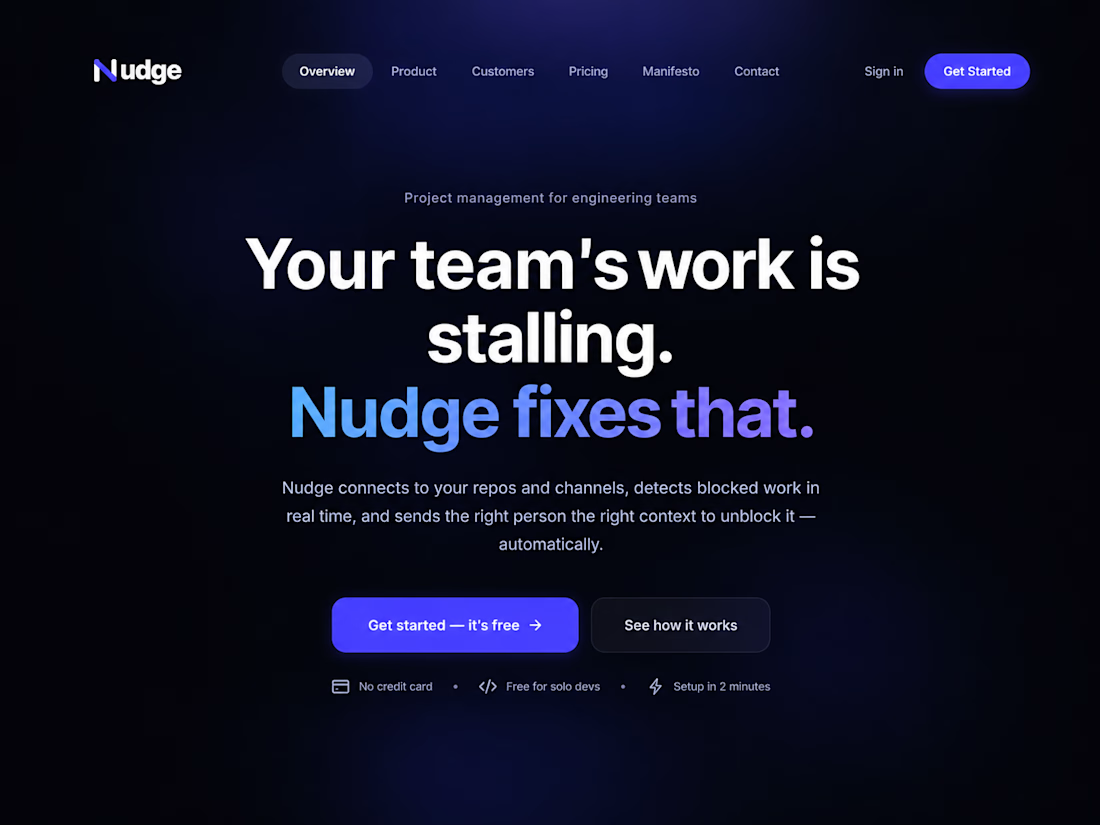
Nudge is an AI powered workspace collaboration platform and Founder's OS designed for software teams and product owners to manage the entire lifecycle from idea to market.
It unifies real time team communication, task management, live video calling, and GitHub telemetry with an autonomous AI engine that proactively detects project bottlenecks and keeps teams shipping on schedule.
Key Technical Highlights:
Frontend & UX: Built a real-time multi tenant workspace using Next.js, React, TypeScript, Tailwind CSS, and Framer Motion.
AI Engine: Developed an autonomous background agent system using Python (FastAPI) and LangChain for real-time task stall detection and predictive nudges.
Real-Time Infrastructure: Integrated Supabase Realtime for instant messaging/presence and LiveKit for embedded WebRTC video conferencing.
Integrations & Cross-Platform: Implemented deep GitHub API integration for commit/PR tracking, VAPID Web Push notifications, PWA installability


The network for creativity
Join 1.25M professional creatives like you
Connect with clients, get discovered, and run your business 100% commission-free
Creatives on Contra have earned over $150M and we are just getting started



Related posts

This is what I COOKED UP🔥 for my clients Pool Restoration Company website 🔥 The Lead Generation is A1🚀


a pool restoration site with lead generation built in makes a lot of sense. how did that client come your way

NO SIGNAL — experimenting with 3D, AI & web design. 🛹
Created this 3D skateboard in Spline with a little help from AI, then turned it into an interactive website — also with AI's help.
Just exploring new tools, trying things out, and seeing where creativity takes me.
Follow me — I'll be sharing the 3D skateboard model for free soon!


Absolutely stunning!!🔥

This is officially my first interface designed not with my hands, but with my voice.
We talk a lot about AI changing our workflows, but experiencing it firsthand shifts your entire perspective. I wanted to see how far I could push a pure AI-to-UI pipeline for a complex digital asset management workspace, prioritizing LLM logic and voice commands over manual pixel manipulation.
Here is how this hybrid process actually played out:
01 / The Logic: Instead of sketching, I started by mapping out the structural architecture and edge cases in Claude, generating a solid low-fidelity blueprint.
02 / The Voice: This was the wild part. Armed with detailed usability specs and moodboards, I used voice prompts in Figma AI to establish the high-fidelity visual foundation. I literally spoke the core UI into existence.
03 / The Human Touch: I processed the raw output through Claude again to adjust specific UI parameters, and then finally stepped in for a strict manual polish. Perfect grid alignment and sharp visual hierarchy still require a designer's eye.
04 / The System: To wrap it up, I reverse-engineered the polished interface back through Claude to automatically construct a fully scalable atomic design system, complete with defined components and local variables.
The role of a product designer is fundamentally shifting. We are spending less time executing and more time directing architectural logic and curating systems.
I would love to hear how you all are integrating these new AI pipelines into your daily sprints. Let's discuss in the comments.
#ProductDesign #Claude