The network for creativity
Join 1.25M professional creatives like you
Connect with clients, get discovered, and run your business 100% commission-free
Creatives on Contra have earned over $150M and we are just getting started
Back to feedPost

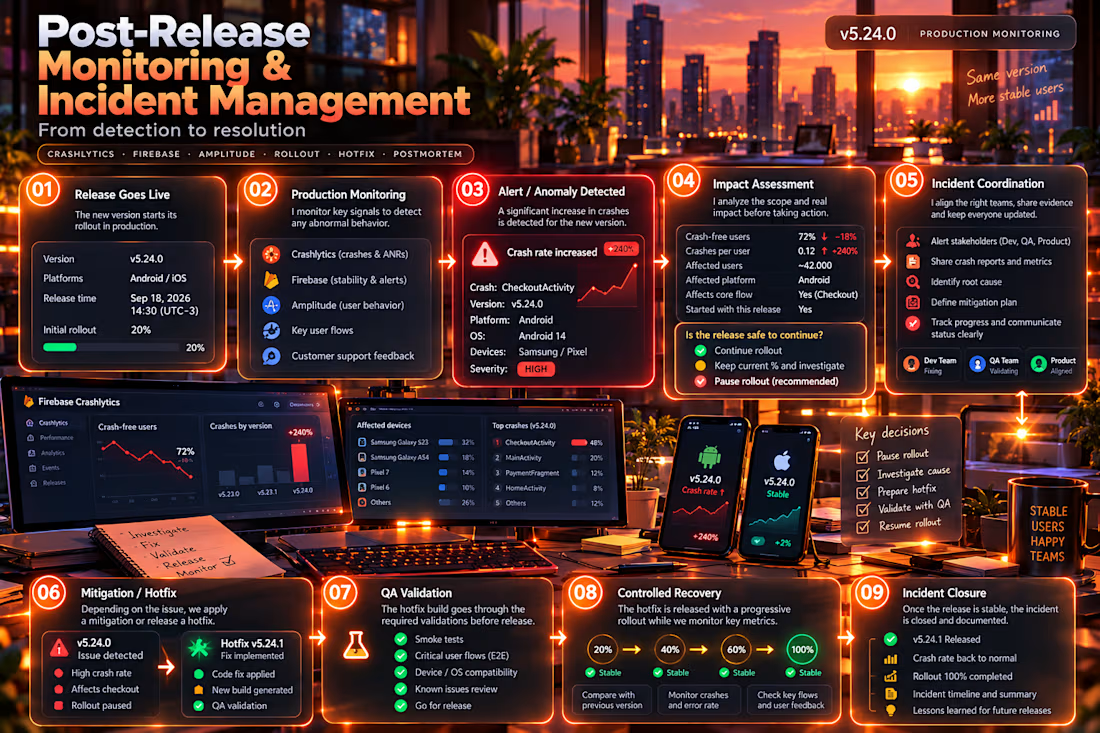
Post-Release Monitoring & Incident Management
A successful release does not end when a new version reaches production.
The goal of the post-release stage is to confirm that the version behaves as expected under real production conditions, detect unexpected behavior early, control its impact, and restore stability when an incident occurs.
01 — Release Goes Live
The new version begins its production rollout.
From this point, the release is exposed to real users and real production conditions. The version, platforms, rollout percentage and release status become the reference for everything that follows.
Expected result: a controlled production launch with a clearly identified version and rollout state.
02 — Production Monitoring
Once the release is live, its behavior is observed through the available production signals.
Crash rates, errors, stability indicators, critical user flows, analytics and user feedback help establish whether the new version is behaving normally.
The important part is not only looking at individual metrics, but understanding whether something changed after the release.
Expected result: enough visibility to distinguish normal production behavior from a potential problem.
03 — Alert / Anomaly Detection
If crashes, errors or another important signal increase unexpectedly, the release enters an investigation state.
The anomaly should be connected to its context: affected version, platform, operating system, devices, users and functionality.
Expected result: an observable production problem becomes a clearly defined incident instead of an isolated alert.
04 — Impact Assessment
Before deciding what to do, the real impact of the incident must be understood.
How many users are affected? Is a critical flow broken? Is the problem limited to a specific platform or OS? Did it begin with the new version? Is the impact increasing as rollout expands?
This leads to one of the most important post-release decisions:
Can the rollout safely continue?
🔷 Stable → continue rollout
🔶 Uncertain → hold the current percentage and investigate
♦️ Critical impact → pause rollout and respond
Expected result: production exposure is controlled according to actual risk.
05 — Incident Coordination
Once an incident requires action, the relevant teams need a shared understanding of what is happening.
Evidence, impact, affected versions, current rollout status and investigation progress should remain visible while Development, QA, Product and other involved teams work toward resolution.
Expected result: one coordinated response instead of multiple teams investigating the same problem without context.
06 — Mitigation / Hotfix
The response depends on the nature and severity of the incident.
Some situations can be mitigated while the existing version remains active. Others require stopping expansion and preparing a hotfix.
When a new build is required, the problematic version transitions toward a corrected release:
v5.24.0 ⚠️ → Fix → Hotfix v5.24.1
Expected result: reduce the impact of the incident and produce a safe path back to a stable release.
07 — QA Validation
A hotfix should not solve one production problem by introducing another.
The corrected build goes through the necessary validation, including the original failing scenario, critical flows, smoke testing and relevant regression coverage.
Expected result: evidence that the original issue is resolved and the new build is safe enough to return to production.
08 — Controlled Recovery
After validation, production exposure increases gradually again.
20% → 40% → 60% → 100%
At each stage, the same signals that revealed the original incident are observed again and compared with the affected version.
The rollout only continues while stability remains within the expected range.
Expected result: confidence is rebuilt progressively instead of immediately exposing every user to the new build.
09 — Incident Closure
The incident is closed when the corrected version is stable, rollout is complete and the affected production signals have returned to an acceptable state.
The final timeline, impact, decisions, resolution and lessons learned are documented so the incident can improve future releases.
The ideal outcome is not simply fixing a crash.
It is detecting production problems early, limiting their impact, restoring stability safely and leaving the next release better prepared than the previous one.
Note: The versions, interfaces, metrics and scenarios shown in this project are illustrative and were created exclusively to represent a post-release workflow. For confidentiality reasons, no internal data, documentation or proprietary materials from the companies and products I have worked with are displayed.


The network for creativity
Join 1.25M professional creatives like you
Connect with clients, get discovered, and run your business 100% commission-free
Creatives on Contra have earned over $150M and we are just getting started





Related posts


ESG reporting is a workflow problem as much as a data problem: teams need applicability rules, evidence, consolidation, review, and approvals before a report is ready.
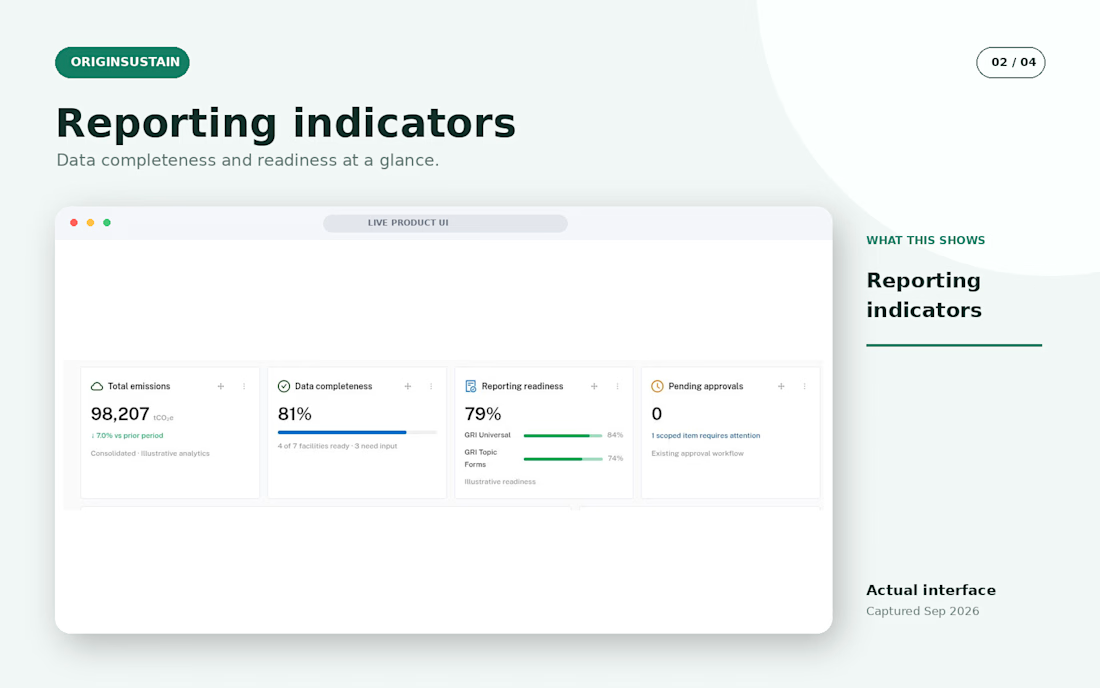
For OriginSustain, I built NestJS/TypeScript backend services, PostgreSQL and Redis/BullMQ processing, and AWS/Docker delivery with CI/CD. OpenAI API and RAG support part of the reporting flow. The screens here are from the product’s illustrative command center; the numbers are demo values, not client outcomes.
The full backend case study: https://contra.com/p/WvNXbmQR-origin-sustain-or-multi-tenant-esg-reporting-backend



We’re building something new for creators who make serious digital products—playbooks, software, 3D assets, and high-value tools.
Introducing Strum ⚡️
Most marketplaces take huge cuts or flood buyers with low-quality clutter. We’re building a curated, performance-based launchpad designed to put real revenue back into creators' pockets.
• 80% creator revenue split
• Dedicated launch marketing & ad strategy
• Curated catalog of high-impact digital products
We’re currently hand-selecting our 10 Founding Creators for the official launch.
If you build high-converting digital assets or software tools, DM me or comment below.
Big things dropping soon—stay tuned. 👀🚀





Switching a client site to automatic production deploys is rarely a decision anyone made. It was the platform default, left on, then defended later as philosophy.
What it saves is a click and the awkward message asking a client to open the preview URL again. Both land on the developer. What it costs is the publish decision, handed to whoever merges next, with whatever the branch holds.
On a product team that's fine. On client work the merger owns the code and the client owns the brand.
Every host ships the fix. Netlify locks the published deploy. Vercel stages the push once you turn off auto-assigned production domains. Actions uses environment protection rules when the approver shouldn't be the author.
If your live deploy turned out to be wrong right now, could you name the deploy ID you'd roll back to?
https://www.duskolicanin.com/blog/manual-production-deploy-client-websites