The network for creativity
Join 1.25M professional creatives like you
Connect with clients, get discovered, and run your business 100% commission-free
Creatives on Contra have earned over $150M and we are just getting started
Back to feedPost

This project was created as part of a Spline Holiday Challenge, where I decided to draw inspiration from Nigerian holiday celebrations and reimagine them as an interactive virtual experience.
I designed and created all the characters from scratch, then built and arranged the entire 3D environment using Spline. From there, I focused on crafting the interaction flow—defining how users engage with the scene and what happens with each click, ensuring every action triggers a playful and meaningful response.
Although this project didn’t win the challenge, it became a valuable learning experience. I gained hands-on experience building a complete scene from scratch in Spline, and more importantly, I learned the importance of optimization. Through trial and error, I discovered how using fewer elements and a more controlled color palette significantly improves performance and overall usability of interactive scenes.
This project reflects both my creative exploration and my growth in building efficient, interactive 3D experiences.
Try the interaction and explore the scene 👇
https://my.spline.design/nigerianholidayseason-Co1MfKqR6l6TcdlEC3GDtZ2X/

The network for creativity
Join 1.25M professional creatives like you
Connect with clients, get discovered, and run your business 100% commission-free
Creatives on Contra have earned over $150M and we are just getting started





Related posts

Nike × Champions League Ball Concept
An independent concept exploring what a Champions League ball could look like through Nike’s visual language.
The idea starts with a star containing a Swoosh in the negative space, then extends into a complete ball system using Nike’s existing panel construction.
Designed and animated with Spline, After Effects, and a custom 3D ball tool built for the project.
Unofficial concept. Not affiliated with Nike or UEFA.


This is very well thought of and creative


Which Kajabi lesson page would you rather learn in?
Same lesson. Two layouts: more room for the video, or the course outline always in view.
Vote below—what helps you stay focused?

19 voted
51%
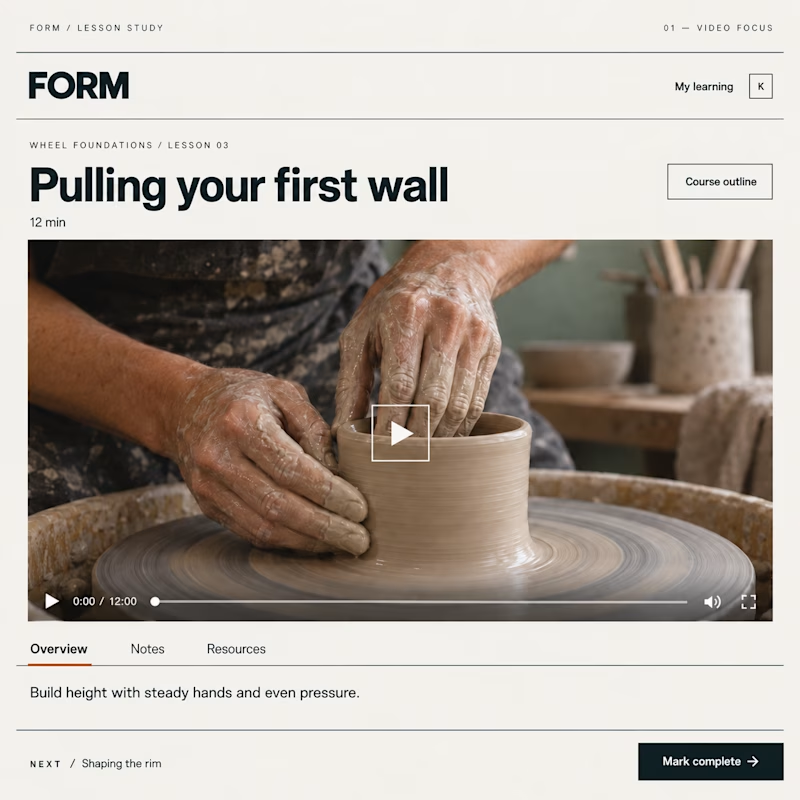
18 voted
49%
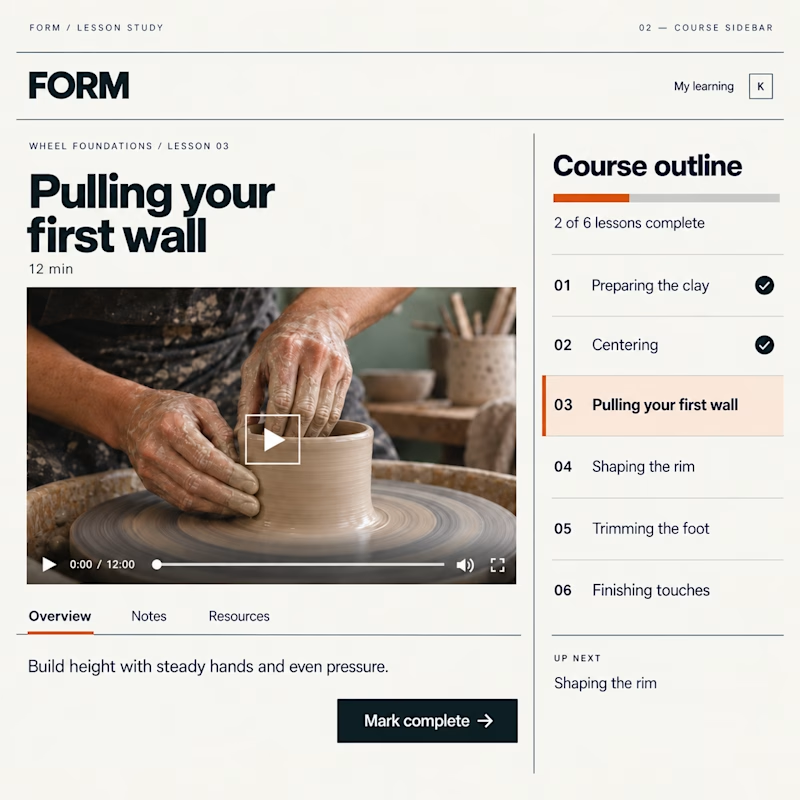
37 votes
Closed

Course sidebar for me — when working through compliance training or technical documentation, seeing exactly where you are in the curriculum removes the mental overhead of 'how much is left?' The video focus layout makes more sense for story-driven content where you want the...

This is Mikuna. From WhatsApp chaos to a confirmed lesson.
Small language studios shouldn't have to manage every student through WhatsApp.
Mikuna started from a simple problem: a student wants to book a lesson, but the process quickly becomes a chain of messages about language, goals, tutors, availability, payment, changes and confirmations.
So I designed a system where the student handles the coordination themselves, while the tutor gets a ready-to-teach agenda.
The student can:
→ Choose a language and learning goal
→ Find the right tutor
→ Pick an available time
→ Purchase credits
→ Book the lesson
→ See their upcoming lessons and remaining credits
The tutor gets:
→ An organized agenda
→ Upcoming and past lessons
→ Relevant student context
→ One-click access to the lesson
Behind the interface, the system also handles tutor availability, booking conflicts, credits, payments and cancellation rules.
The idea was simple:
From managing conversations to managing lessons.
Mikuna was built for the Contra × Lovable Challenge, starting from an existing brand identity created at SUR Studio and reimagining it as a complete appointment-based product.


Love this! Such a clean solution to a very real problem for language studios. The shift from WhatsApp chaos to a seamless booking experience is brilliant.