The network for creativity
Join 1.25M professional creatives like you
Connect with clients, get discovered, and run your business 100% commission-free
Creatives on Contra have earned over $150M and we are just getting started
Back to feedPost

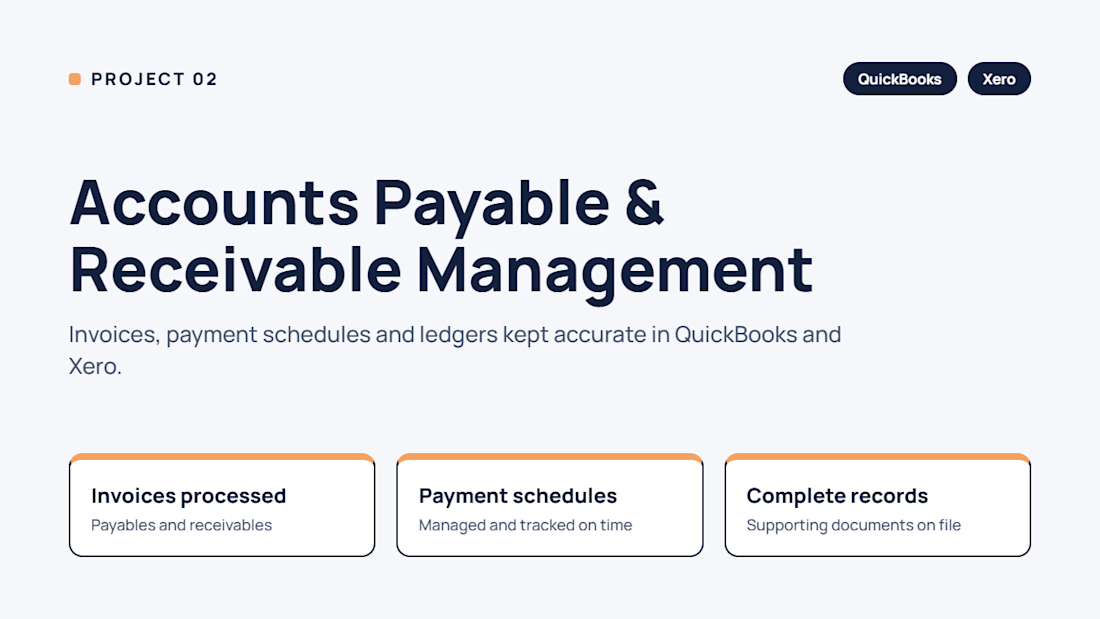
Accounts Payable and Receivable Management
Processed supplier and client invoices, managed payment schedules, and kept complete records for every transaction. I used QuickBooks and Xero to enter data, produce reports, and keep the ledgers accurate.

The network for creativity
Join 1.25M professional creatives like you
Connect with clients, get discovered, and run your business 100% commission-free
Creatives on Contra have earned over $150M and we are just getting started











Related posts

Unpaid invoices are hurting your cash flow
You delivered the service. You sent the invoice. So why haven't you been paid?
Late customer payments can put pressure on even a profitable business.
When invoices remain unpaid:
Cash becomes harder to manage.
Supplier payments may be delayed.
Business owners spend time chasing customers.
Financial planning becomes less reliable.
Here are three practical steps:
Review your accounts receivable regularly.
Set clear payment terms and send timely reminders.
Track overdue invoices and follow up consistently.
Accurate accounts receivable records help you understand what's outstanding and where action is needed.
Your sales are important. Collecting the money you're owed is just as important.
📩 Need help tracking invoices and managing your bookkeeping? Let's connect.
#AccountsReceivable #CashFlow #BookkeepingServices #BusinessFinance


So true! Making a sale feels great, but getting paid is what keeps the business running 😅 Regular follow-ups can make a huge difference!
Episode 7: Your bank balance is not your income. 💸
As a designer, money reaches you from Stripe, PayPal, Wise, direct transfers and Contra. By the time it lands, fees, currency conversion and delays have already taken a cut, and some of it never gets recorded.
That’s why a monthly bank reconciliation matters. It means matching your bank statement to your books, line by line, so you can:
✅ Spot the client invoice that was never paid
✅ Catch the software subscription you forgot to cancel
✅ Find the processor fees nobody recorded
✅ Know your real profit per project
✅ Reach tax time with clean numbers instead of a panic
It takes about 30 minutes a month. A gap you catch in October is easy to fix. A gap you find a year later is expensive.
#bookkeeping #freelancedesigner #designbusiness #freelancefinance #smallbusiness


You are giving real concepts how finances can be handled

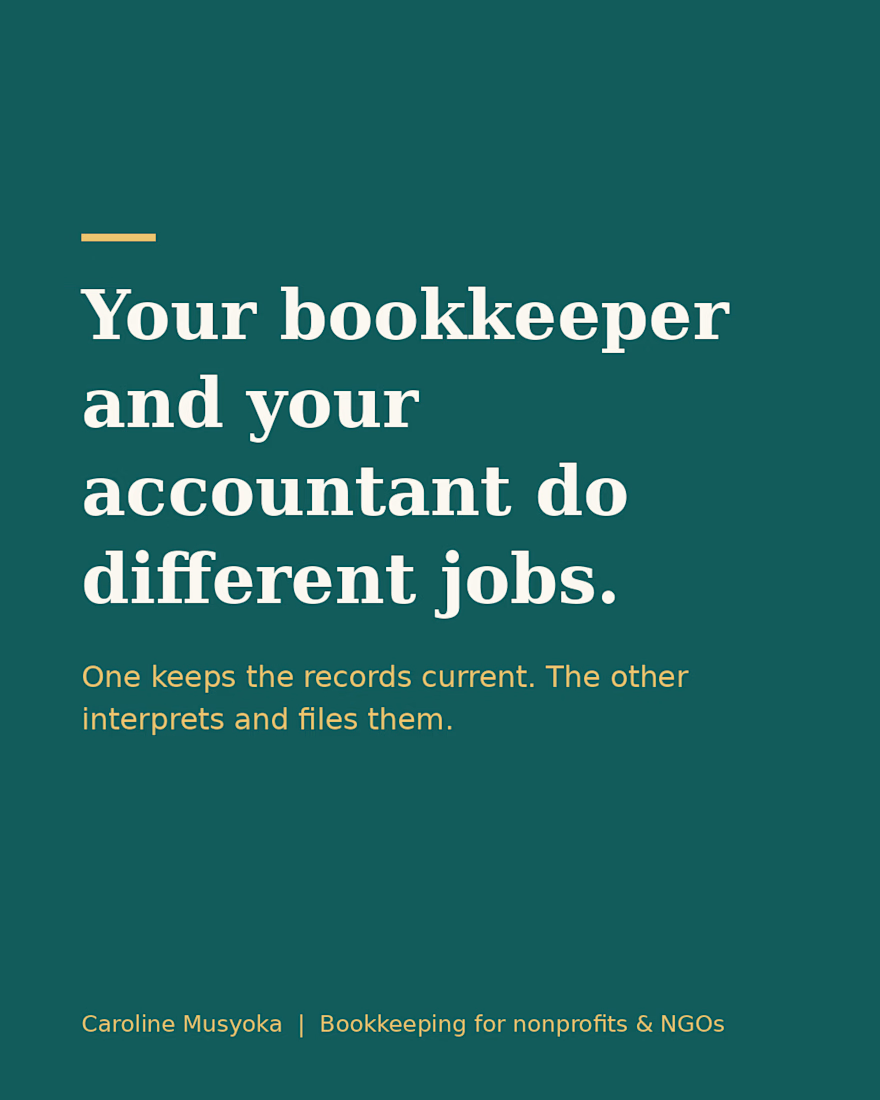
Your bookkeeper and your accountant do different jobs, and many organizations only find that out at tax time.
A bookkeeper keeps the records current all year: transactions categorized, accounts reconciled, reports ready. An accountant interprets those records, advises on them and handles filings.
When the first job isn't done well, the second one gets slower and more expensive. Clean monthly books are what make year-end a quick conversation instead of a rescue project.
So true! Clean books throughout the year make a huge difference. Regular bookkeeping saves time, reduces stress, and makes year-end much smoother for everyone. 👏