The network for creativity
Join 1.25M professional creatives like you
Connect with clients, get discovered, and run your business 100% commission-free
Creatives on Contra have earned over $150M and we are just getting started
Back to feedPost

One File to Rule Your Directus Integration
When connecting TanStack Start to Directus, I keep all SDK calls in a single directus.ts file. Here's what that looks like in practice.
Setting up the client
The client is initialized once with session-based authentication and REST support. Credentials are included so cookies are handled automatically across requests.
Typed data fetching
Each collection gets its own exported async function with a typed return value. The SDK's readItems does the work, and you cast to your local type.
Filtering is first-class
The SDK's filter syntax maps directly to Directus's query engine — no raw query strings, no URL building.
The same file also handles createItem, updateItem, deleteItem, uploadFiles, and user registration — all imported directly from @directus/sdk. One client, one file, full CRUD coverage with complete type safety.


The network for creativity
Join 1.25M professional creatives like you
Connect with clients, get discovered, and run your business 100% commission-free
Creatives on Contra have earned over $150M and we are just getting started
Related posts


This is the level we bring when you give us the room to bring it :)


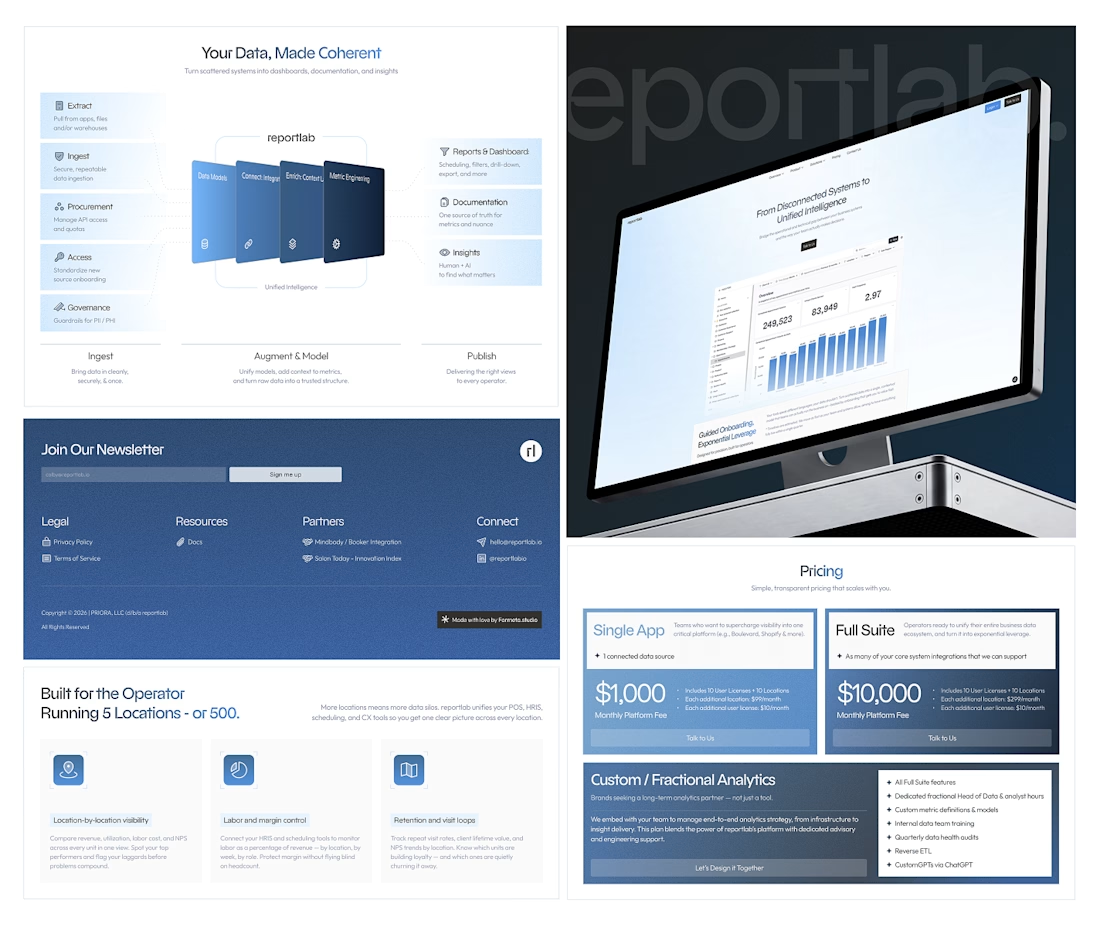

The dashboard mockup with the bar chart and pricing tiers side by side tells a really clear product story at a glance. Was Reportlab a client project or something you're building out yourselves?
This is what happens when a client trusts you completely and gets out of the way.
Colby gave us the product, the brief, and the freedom. We gave it everything back:)
The kind of project where you stop watching the clock and start chasing the feeling.
✔️Frosted glass
✔️Beautiful and functional components
✔️Full mobile fidelity, all of it built from scratch because it deserved to be!
This is what design feels like when it's allowed to just be design:)

This is a great reminder of what creative freedom can lead to. Awesome work!

When I worked on USABMX in it was a real wake-up call to realize that real projects aren’t always about beautiful screens, but about solving real problems with a lot of constraints. That’s when I started developing a broader view of business, strategy, and limitations, while also considering what the tech team could realistically build.
I’m currently open to new freelance projects, so tell me what you’re working on 😁

I like the honesty in treating constraints as part of the product problem, not an obstacle to prettier screens. Which USABMX constraint changed your original direction the most?











Trending

Claude
Claude has entered the design space. How are you using Claude Design?

Contra University
Learn from expert creatives how to earn more using next-gen AI tools.
creativeaiflow
Creative AI workflows are evolving. What tools do you use, and what are their strengths and weaknesses?
freelancerlife
Freelancer life is wins, pivots, and everything in between. What’s yours right now?